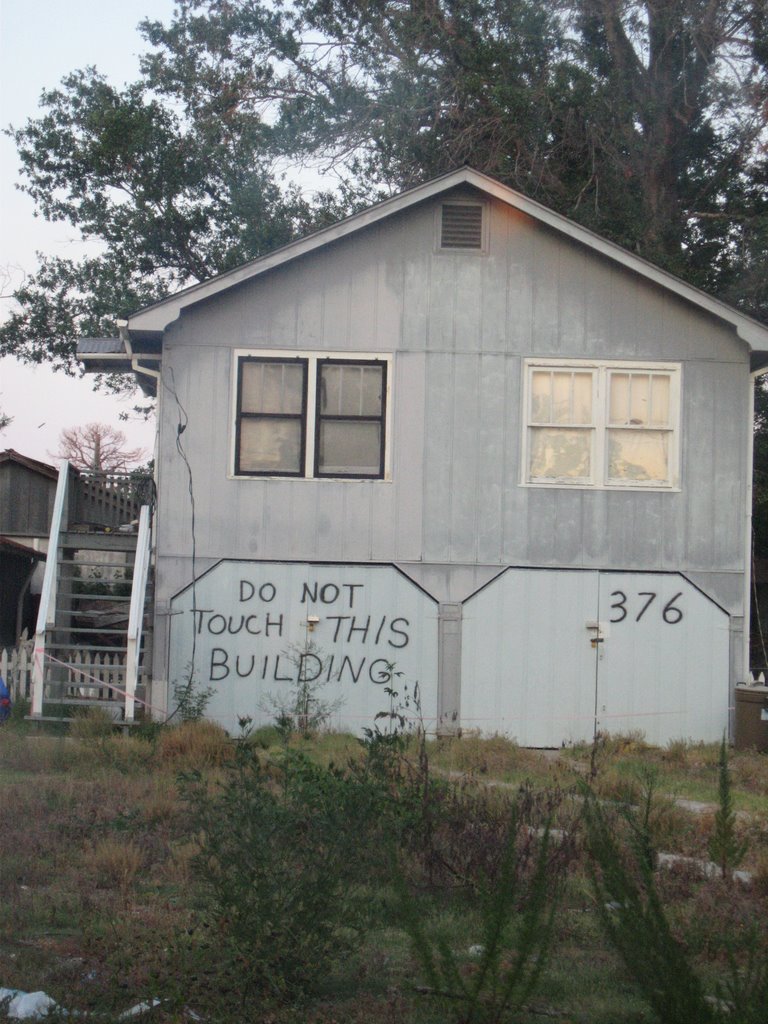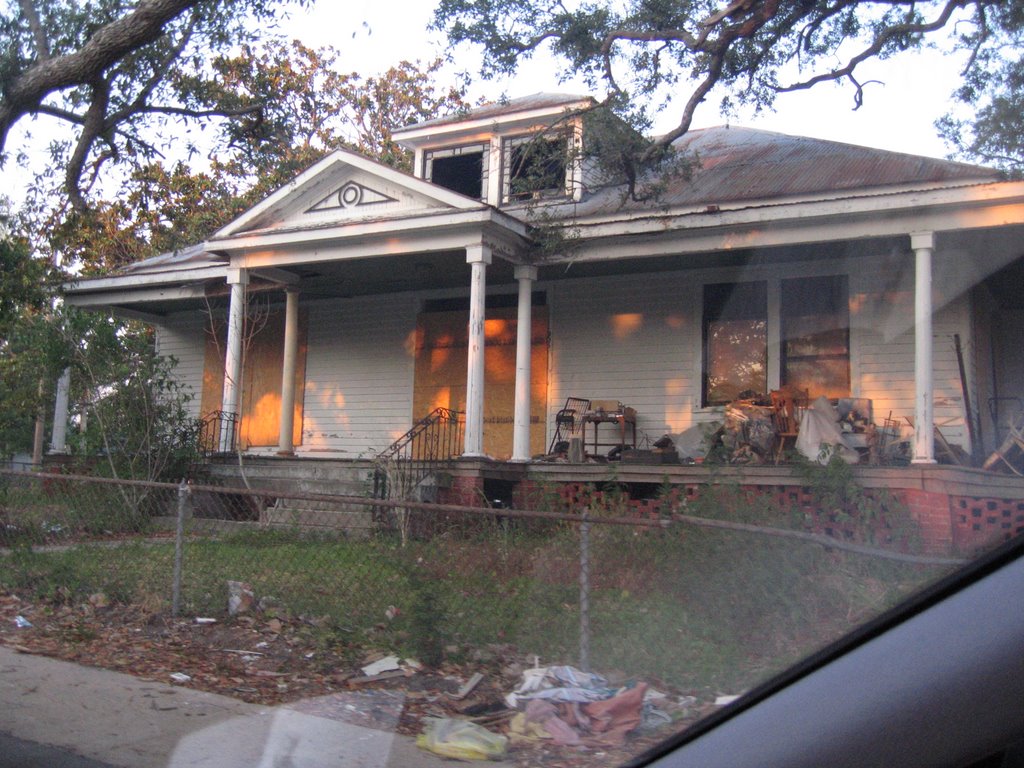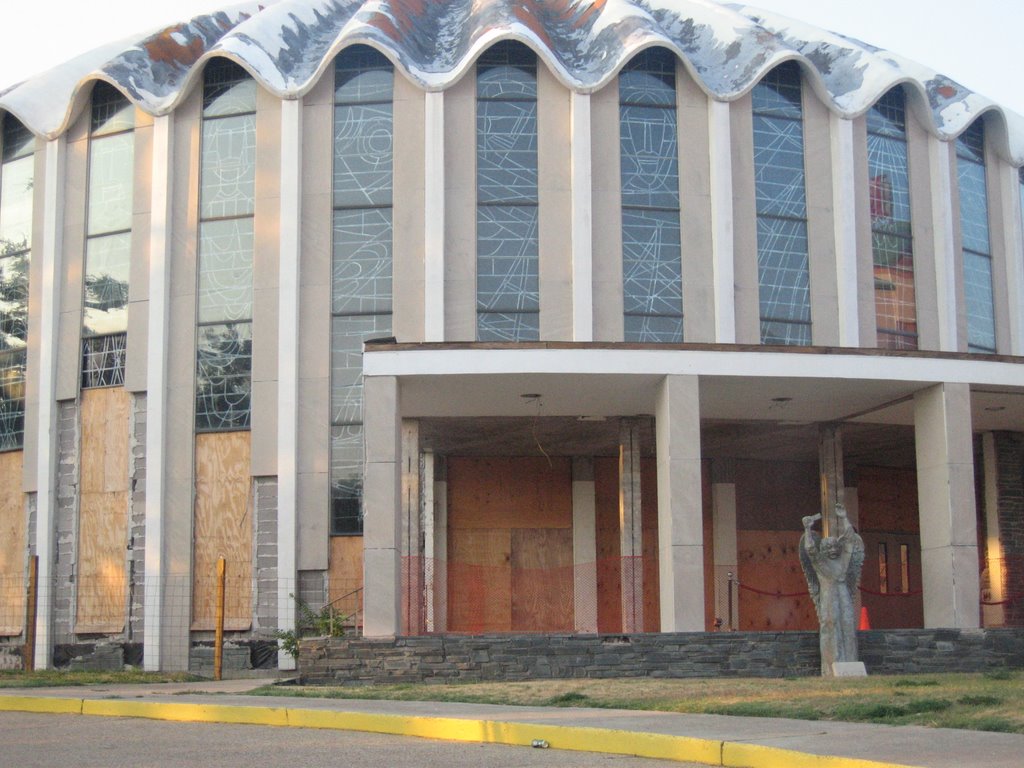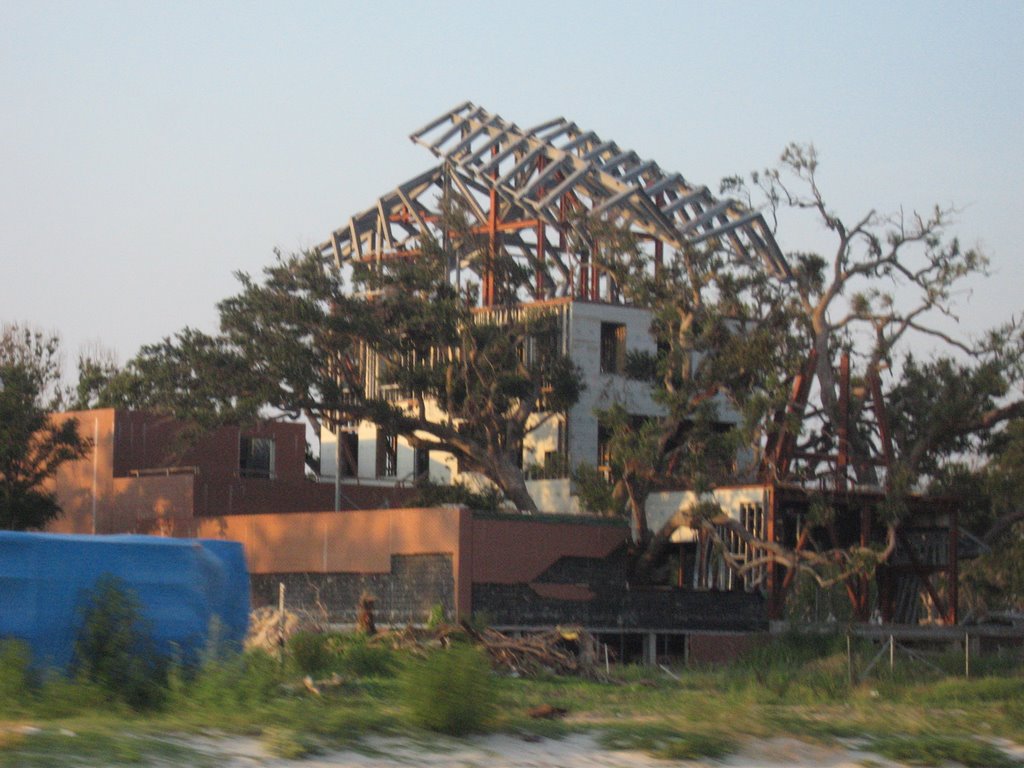
This isn't real, obviously.
It's surprising that, during my first hour in Celebration, I find the town kind of pleasant. Well, not kind of—pleasant, despite the oppressive humidity that hasn't let up since I left Gibsonton. This is surprising for two reasons. First, that Celebration is a new, planned community. Second, that its developer is the Walt Disney Company.
I have nothing against Disney in particular. I may or may not be a stockholder, in fact, because my grandmother used to buy my brother and I small bits of stock— shares, or 7 shares, or 1 share—as Christmas presents, leaving the nicely printed and embossed certificates in 8 ½ x 11 envelopes (or occasionally in No. 10's) for us to not play with and give to Dad to put in a safe deposit box. Still, can you imagine living in a community where the wreath on your door is not a standard circle, but three circles joined together to look like Mickey Mouse ears?1
Actually, I have something against Walt Disney, but Walt Disney the man, not Walt Disney Company. Jerome Pohlen's Oddball Florida, which has an entry on Celebration, quotes Walt Disney's vision for EPCOT, that Experimental Prototype Community Of Tomorrow, as “a city that caters to the people as a service function. It will be a planned, controlled community. . . . In EPCOT there will be no landowners and therefore no voting control. People will rent houses instead of buying them. . . . There will be no retirees. Everyone must be employed.” In the 50s Walt was also a rapid “anti-communist,” meaning that he was friendly to Joe McCarthy and House Un-American Activities Committee.
Instead of becoming what Pohlen calls a “voterless, work-until-you're-dead” paradise, EPCOT effectively became a branch of Disneyworld (sp?), and Disney's plans were unfulfilled. Until Celebration, that is. But Celebration doesn't share much of Walt's ideas, instead buying into New Urbanism, the idea that people are actually happier in communities that are walkable, denser, and less sprawling. And this is why, I think, Celebration seems so nice for what it is.
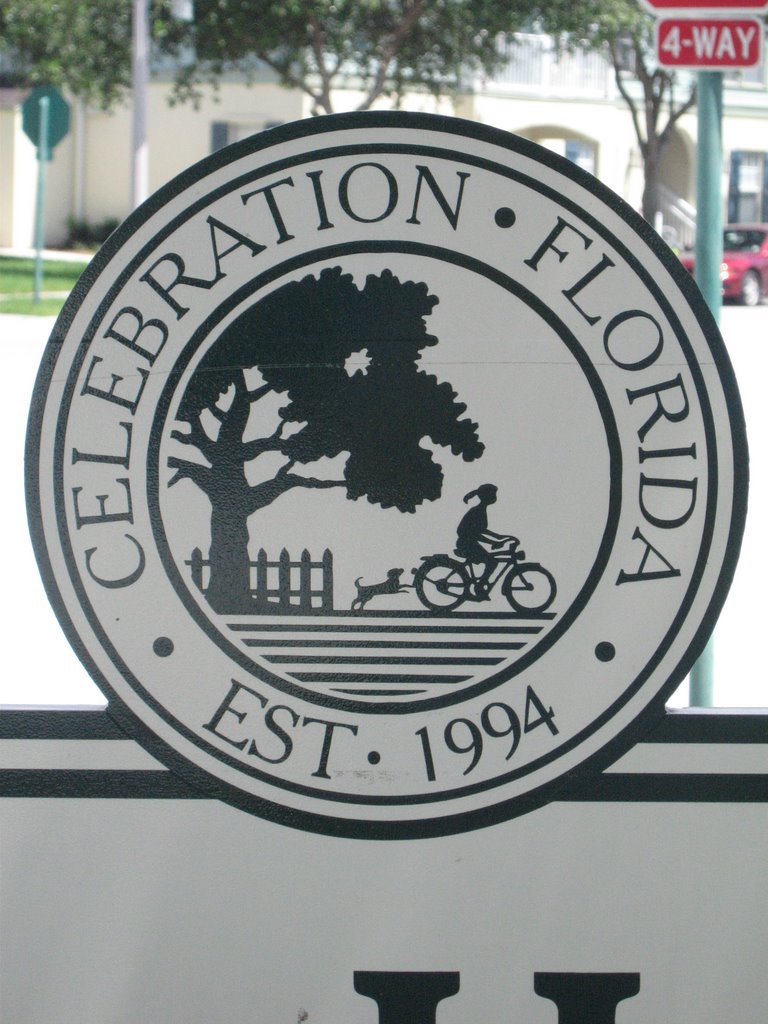
“I thought you might be pulling out before,” says a middle-aged man in a blue polo shirt outside of the Cafe d'Antonio. Celebration isn't really short on parking, but if you need to park less than a block from your destination, sometimes it can involve a lot of waiting. “Your car, I mean, in the parking lot. I thought I could just follow you to a space.” The man is smoking a cigarette casually and looks like he's on break.
Which he is. His name is Steve and he's the Entertainer for a timeshare company, taking the prospects all around town, though he tells me that he makes most of his money these days by flipping real estate, buying properties on eBay and then selling somewhere else. When I ask him why he sells timeshares, he shrugs and says that it's steady, and easy.
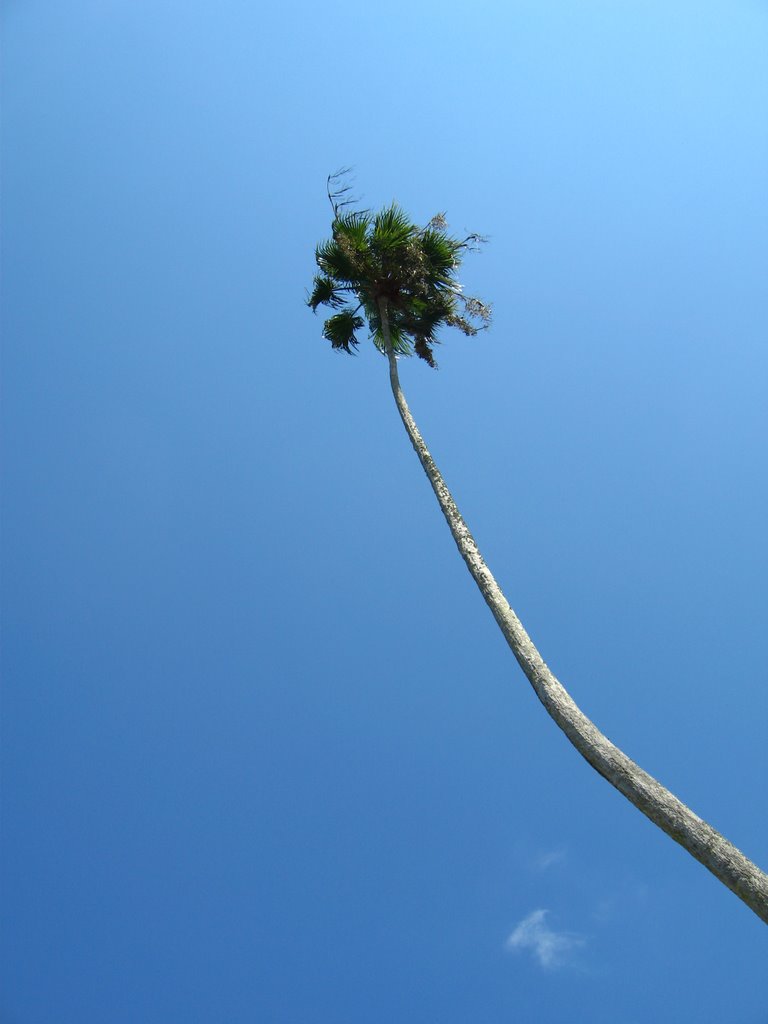
Entering Celebration you drive along a long, green stretch of Highway 192, marked by regular palms and, if you look closely, regularly spaced curb cuts. It's actually quite charming, and gives space to the town that adds to its appeal: The space makes the town feel like a discrete area, like a town. But the curb cuts are suspicious.
“I saw the cuts in the sidewalk coming in,” I say and describe the road. “Is all that going to be developed?”
Steve takes a last drag from his cigarette and heads back inside. “Disney'll always develop every square inch they can get their hands on,” he says. “You can count on that.”

Market Street, after two hours in Celebration, is the beginning of my disenchantment. Market Street is the main commercial drag, mixed-use, with housing above the shops, and parking hidden behind the buildings. It's very walkable, and to encourage that, music, mostly smooth jazz, comes from speakers in the sidewalk. Except that it's irritating, and things don't feel very real. But what's there, however bland it is, is not nearly as important as what's not, and indeed, what the town doesn't have at all.
Market Street:
and across the street, moving up now:
So it's mostly souvenirs. But the town doesn't have a hardware store, doesn't have a pharmacy, doesn't have a supermarket. That is, for all the New Urbanist speak, the town is missing the very things that a town needs to survive.
Actually, I misspeak. Let's be fair: The town is missing the very things that people need to survive.
1 Actual Celebration wreaths do, on occasion, look like this.
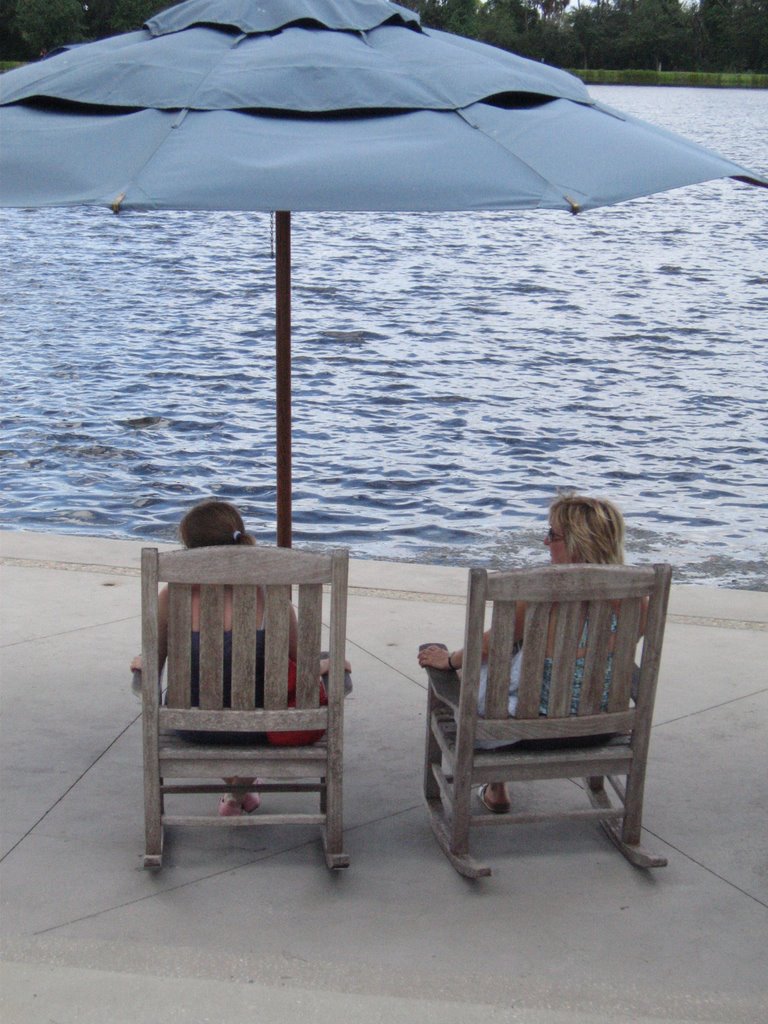

I am officially calling shenanigans on the Gulf. Water warm enough to bathe in—what's that? I'll tell you what it is—it's an ocean for the weak.


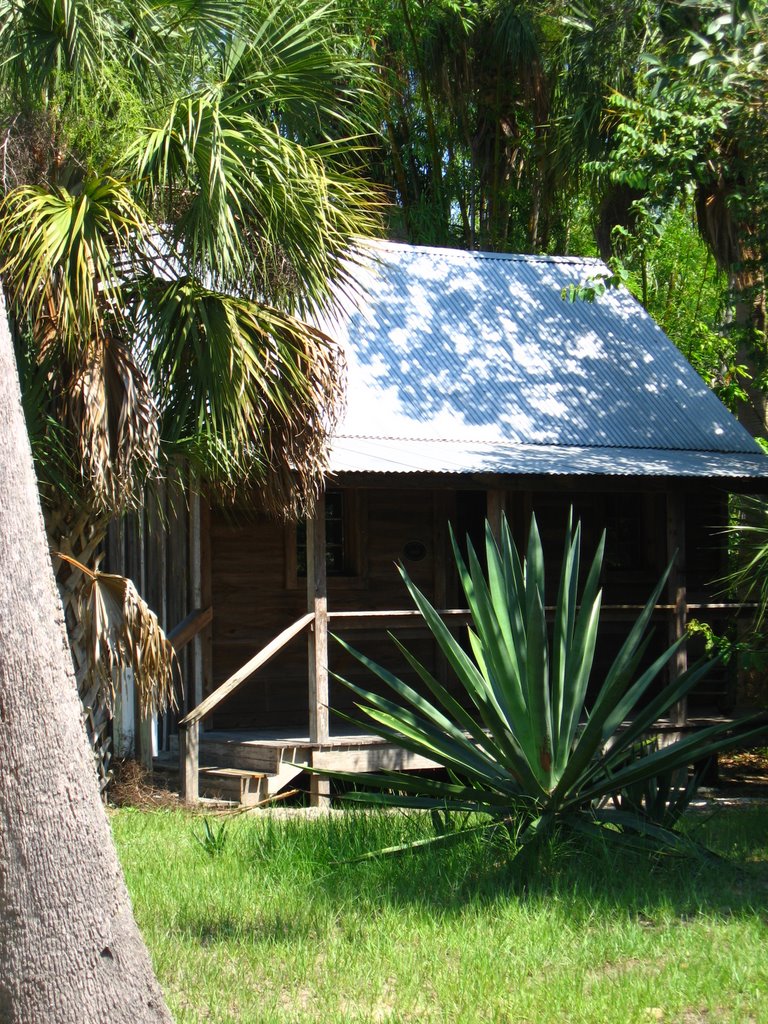
It was in 1869 that Cyrus Teed had his “divine illumination.” The time, generally speaking, was right for divine illuminations: Teed's contemporaries, groups like the Mormons, the Harmonists, and the Oneida Community, all began based on communal property and a certainty that God's work was not yet being carried out on earth. Of course, one former member of the utopian Oneida Community—a man named Charles Guiteau—shot President James Garfield because God commanded him to.
In any case, while the Koreshan Unity began in New York, as did the Mormons, the Oneidans, and many others during the Great Awakening, the Koreshans quickly moved to Chicago. From there, after a gift from homesteader Gustav Damkohler, Teed moved the group to Estero in 1896 to form the New Jerusalem.
Teed was a bit kooky, but his heart was in the right place. He believed himself immortal, for one thing, and when he died in 1908, his followers waited up for days for him to, well, resurrect himself. It didn't happen, and eventually they buried him. For another, he preached that the earth was actually the inside of a hollow sphere with the sun in the middle, which at least one of his members believed until the moon landing in 1969.
Still, many of his ideas are attractive, and the Koreshans did not produce even a failed presidential assassin.1 Teed encouraged learning and the arts, and the Koreshans had schooling for their children, lectures on subjects from music composition to osteopathy, and planned for a lending library, though it was never built. Additionally the Art Hall held orchestra concerts, theater productions, and all sorts of other events for the happiness of the settlers.
But the Koreshans, obviously, died out. The last four members deeded their land to the State of Florida in 1961 in Teed's memory, and the State has since preserved the buildings and grounds to a reasonable degree. But why did the Mormons thrive in Utah and the Koreshans fail in Florida?
The answer, I think, is in reproduction, specifically that the most fervent Koreshan believers did not reproduce while the most fervent Mormons had more children than fingers. Teed divided the Koreshans into two orders: the Cooperative Order, whose members lived outside the settlement and could maintain their families; and the Religious Order, whose members were divided by sex, required to live in the settlement, and celibate.
The Koreshans never numbered more than a few hundred, if that many. With no or few little Koreshans running around, Teed's grand city—New Jerusalem was supposed to be able to accommodate 10 million people—and his grand new religion failed to leave behind more than a handful of machinery, wood frame buildings, and a population of adherents who could protect the settlement from the huge, amoebic strip mall that is growing across the road.
1 On the other hand, the Oneida Community became Oneida, Ltd., which still makes dinnerware today.

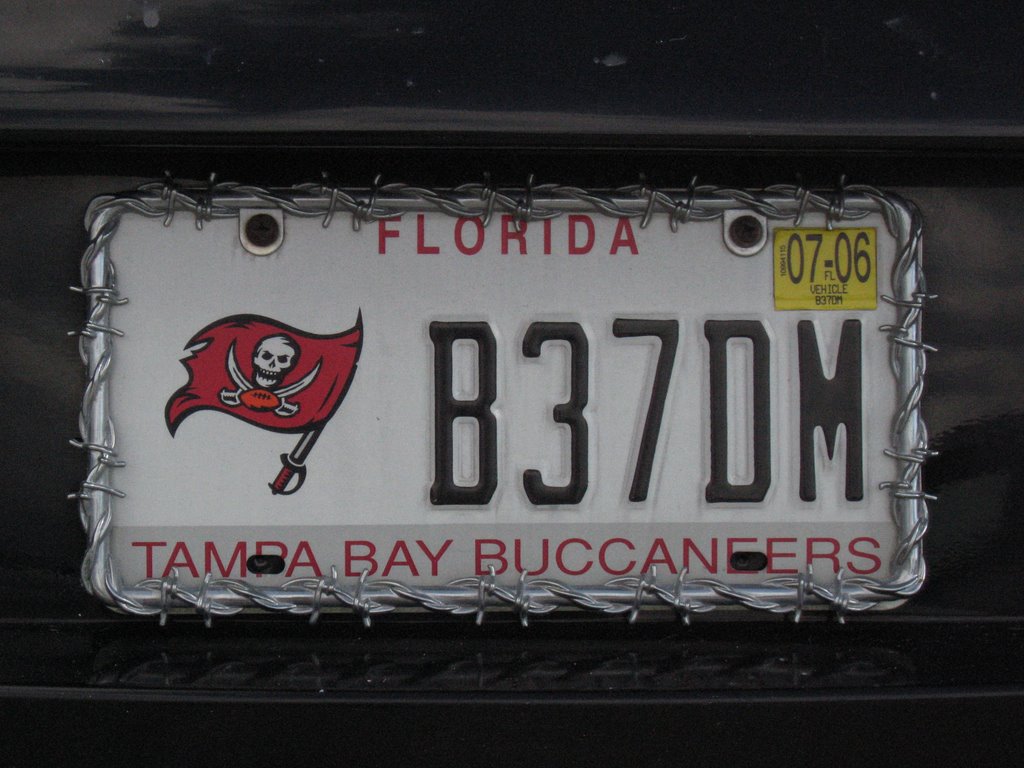
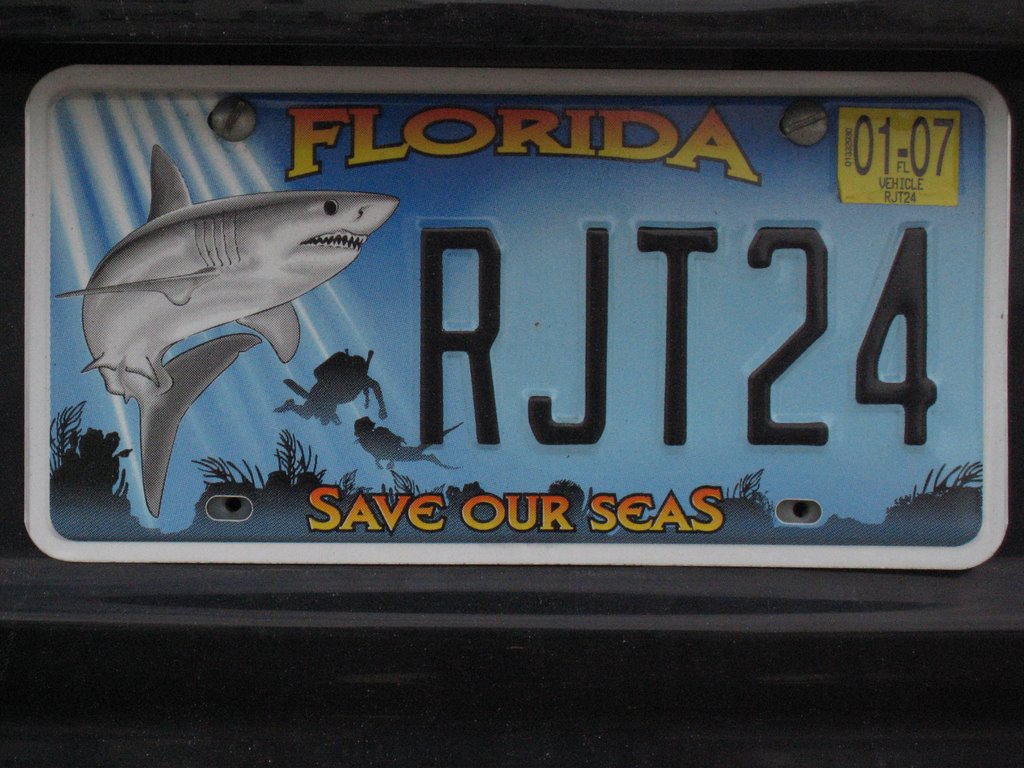
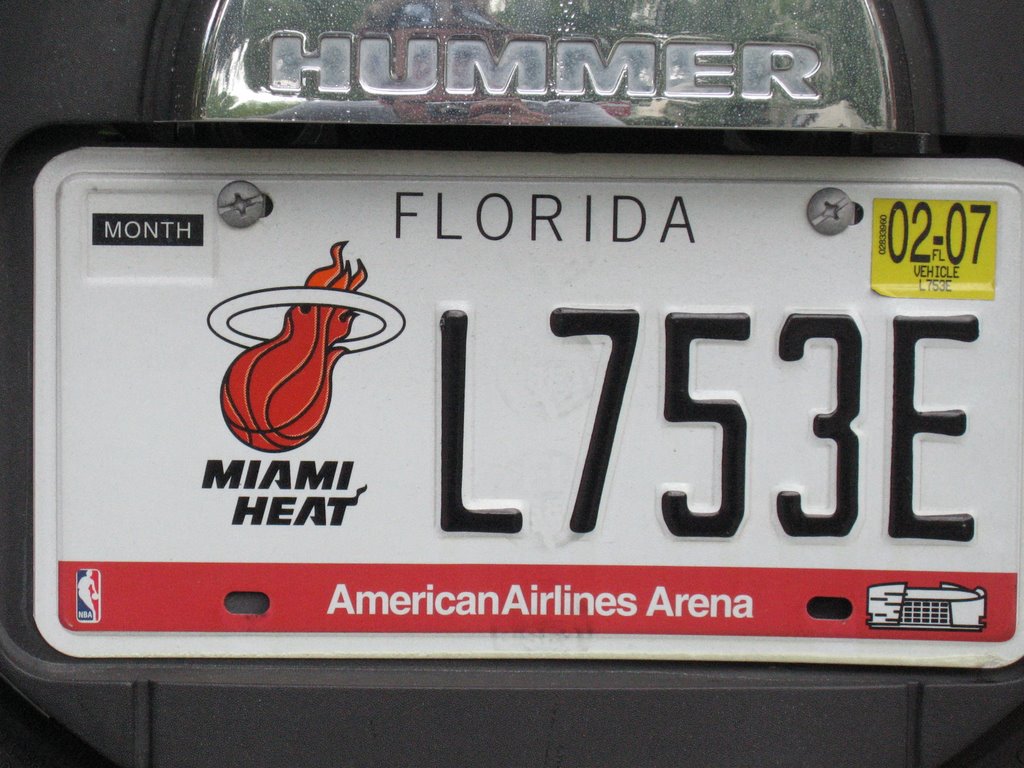
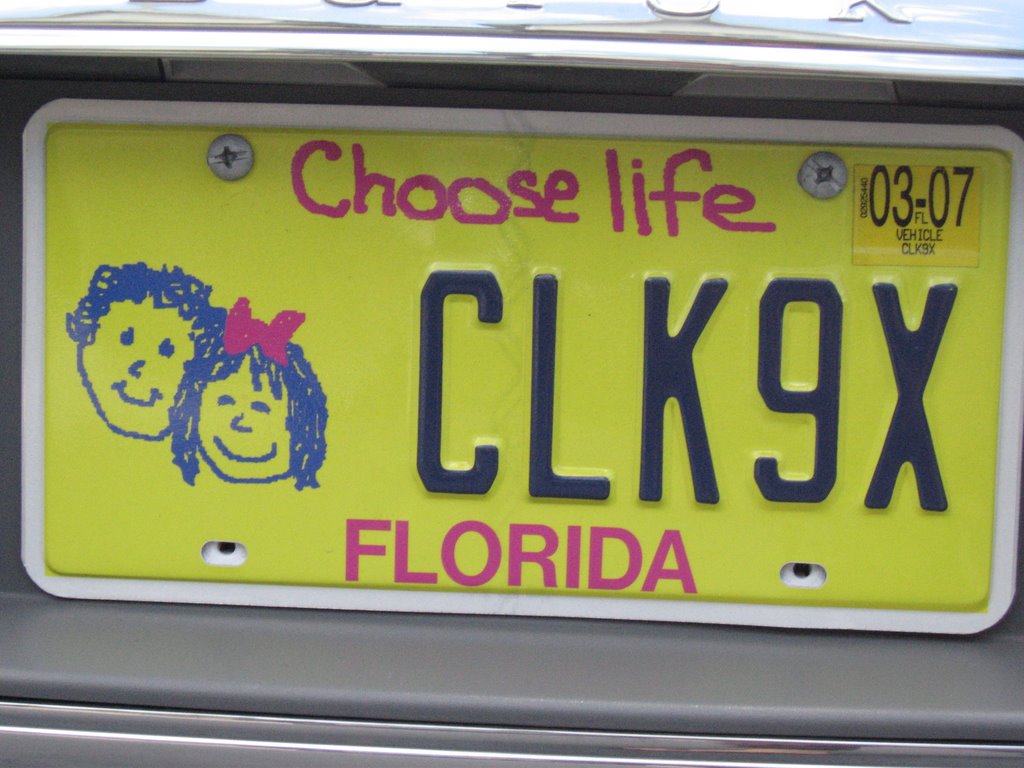
It is my sincere belief that Florida leads the nation in license plates. Numerically, that is. Michael's father—Michael's entire nuclear family has since arrived, and the five of us are now sharing Michael's two-bedroom condo—claims that Florida license plate templates cover the walls of the branches of the Florida DMV, every possible plate there for you to see and compare and buy. Further, there are an impossibly high number of these, he says, a thousand, perhaps. I am a little doubtful that there are this many, but they are everywhere.
What to make of this? No moral, just a contrast.
Florida's view is that the state shouldn't give up easy sources of revenue, like these plates for the Jacksonville Jaguars or Support Education or Save the Manatees or what-have-you. If the customer—here, the driver&$8212wants it, and it is of no additional cost to the state, only good can result. It is, in essence, economics at work.
The other view is that the state is not for sale.


The car bucks a good amount on the way to Lake Placid, rougher and rougher; and then the rain comes. Well, more that the rain comes, and that I drive directly into it.
There is, apparently, a phenomenon that occurs in the middle of Florida, about equidistant from both coasts, in which, because Florida has no elevation, no hills or mountains of any sort,1 moist offshore air from both coasts comes together along the "spine" (if you will) of the peninsula. This combined air is oversaturated with water, and storms result. This is why it rains every afternoon in Orlando, for instance, or so I understand.
Whether I've been misinformed or not—and whether or not I'm misinforming others now—the rain on the way to Lake Placid is torrential. Water covers the road, both puddling in depressions and flowing off to the sides, but I can't see how much because I am, at this point, exceedingly concerned about following the white lines and not driving off the road or into the opposite lane. Still, at 35 mph with the hazards on, I'm being passed by Floridians, mostly in pickups, going 60. In two more minutes the rain comes down so hard that my wipers can barely clear away enough water for me to see anything at all.
After what is assuredly much too much driving without being able to see properly, I pull off of Highway 27 and into a Citgo to wait out the storm. I have company—all the parking spaces by the minimart are now occupied, and a couple of people have parked at the edges of the concrete lot. Hardly anyone gets out of the car. My hope—not knowing anything about cars—is that the rain will help cool the engine and make the car stop bucking.
It's a waiting game, this.
Through the sheets of water flowing over the windshield and the back window and, truth be told, over the side windows as well, I can make out a sign: Welcome to Lake Placid, Town of Murals. Or so I think it says. Or so I want it to say.
After 15 minutes in which the rain has slowed slightly, picked up slightly, and so on in inexorable repetition, I give up. Patience—that is to say, waiting games— have never been a particular strength of mine. Especially when I have nothing to do.
The main road into Lake Placid is no more than two miles farther along Highway 27, though I don't know it at the time. The view along the highway, even in the rain, is a typical Florida jumble of rectangles set back from the road at varying distances, advertising, more than anything else, an incredible surfeit of parking.2 The main road to Lake Placid climbs a small rise to the right, and then descends very gently as you come into town.
And into town I go. After all, it's the one thing that can't possibly be closed, since the murals are outside the buildings. The rain is now intermittent, sometimes a hard spray, sometimes a light sprinkle, and sometimes no more than a faint drizzle that almost evaporates, virga-like, before it reaches the ground, the type of drizzle that you can barely feel on your lips and fingertips but not on your shoulders or the tops of your feet.
I drive slowly, deliberately, through Lake Placid, since I don't really know where I'm going, and the tourist office is closed, since, even though the sun is still high in the sky, it's now after 5 pm. The car is still bucking, the RPMs shooting up and then precipitously dropping, the engine losing torque, but things always seem to recover.
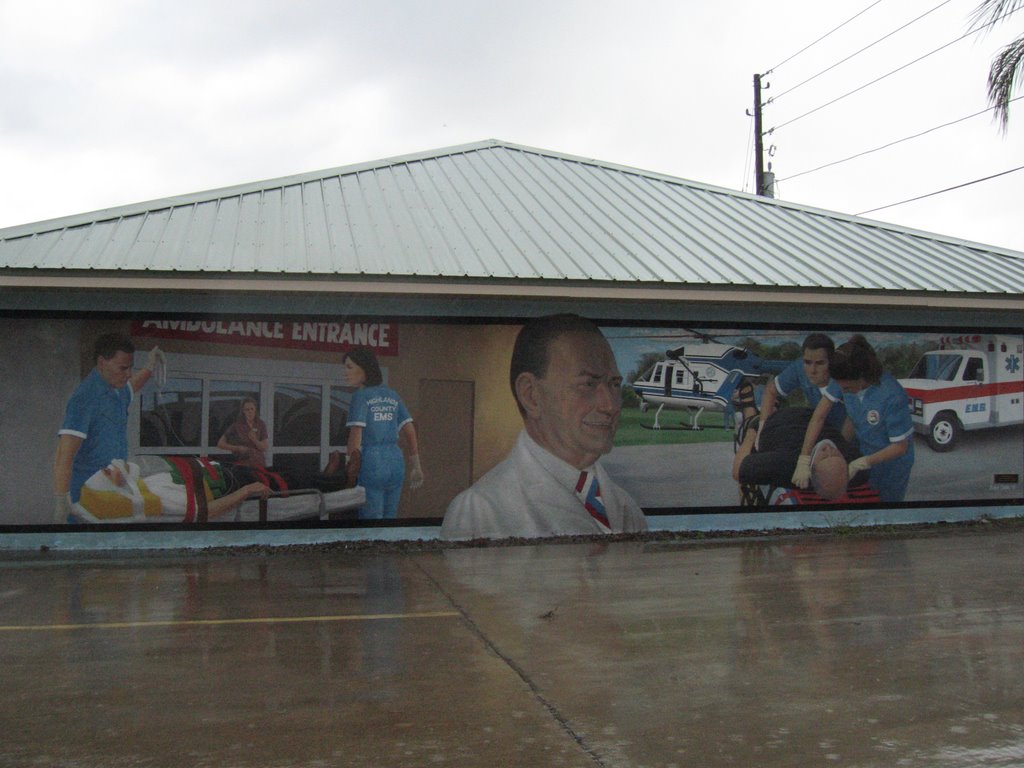
That is, until I have to wait at a stoplight in another downpour. This time, as the car bucks, suddenly the engine goes quiet and all the warning lights—including the seatbelt light—go on. At first I don't really understand what has happened; but then I coast the car around the corner and across four empty parking spaces. I am parked next to the second of the two murals that I see in Lake Placid.
Twenty minutes later, after a call to my mother to ask advice3 and a call to Michael to warn him that I may need him to come get me if the car doesn't make it the two hours back to his house, I am on the road again, following, for some reason, my original plan through Florida rather than the fastest or most populated, and ergo sensible, route. This takes me—or would take me, rather—along Highway 70 to the outskirts of Bradenton, then the last 20 miles north on I-95 to Michael's house in Gibsonton.
But I only make it 20 miles away from Lake Placid. The car is bucking almost constantly, and it makes me sick to my stomach, like being on the world's most uncomfortable roller coaster. The car, now traveling on mostly-dry asphalt in the sunshine, turns itself off at 50 miles per hour. No one is behind me, and cars come so rarely that I think about walking towards Arcadia, the next town. I have no idea how far it is,4 mostly because I have no idea how far I've come from Lake Placid. Soon, however, a police officer rolls up; I am no more than a mile from a Florida State Correctional Institution, so he waits with me for 45 minutes until the tow truck comes to take the car into Arcadia.
This is just the beginning, just one day.
1 Highest point in Florida: Britton Hill, in the panhandle, 345 feet above sea level.
2 The thought occurred to me as I was driving that there may well be more commercial parking spaces in Highlands County, Florida than there are registered vehicles.
3 My parents both read this, which is fine, but it's necessary, I think, to point out the ways in which I unconsciously or semi-consciously try to divvy up calls like this between them. Notice that I called my dad three days earlier with the first bit of car trouble; now I call my mother. Even though I may be, legally, an adult, I'm still trying to triangulate between both parents.
It's possible that I'll always be this way, of course.
4 17 miles.
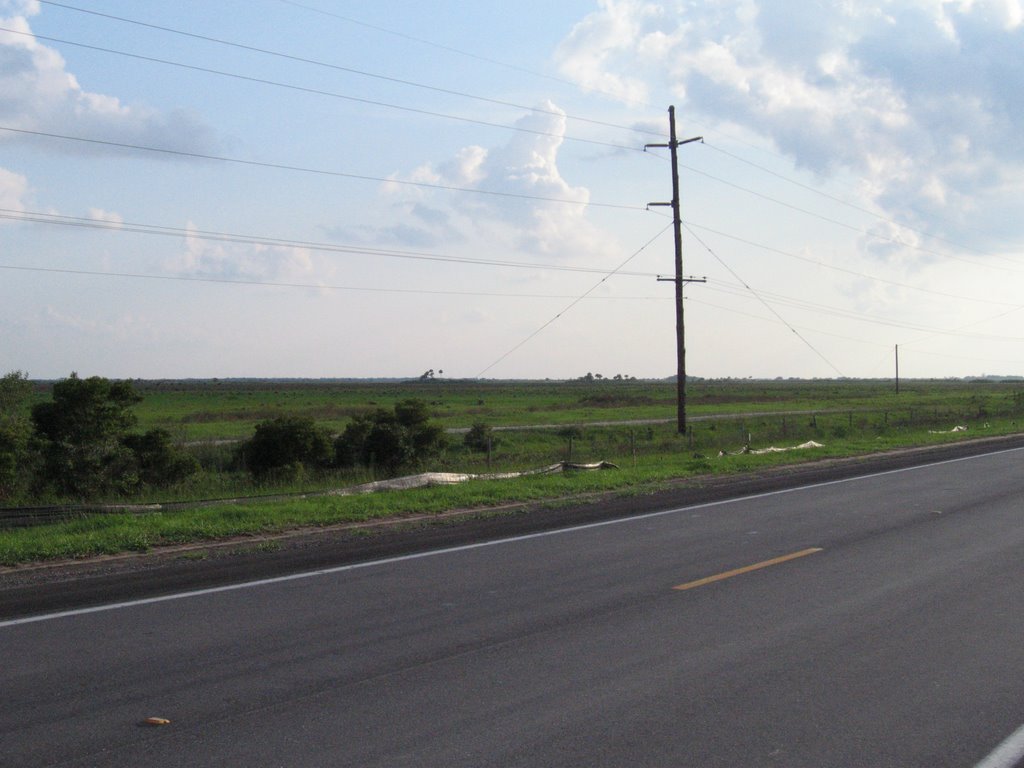
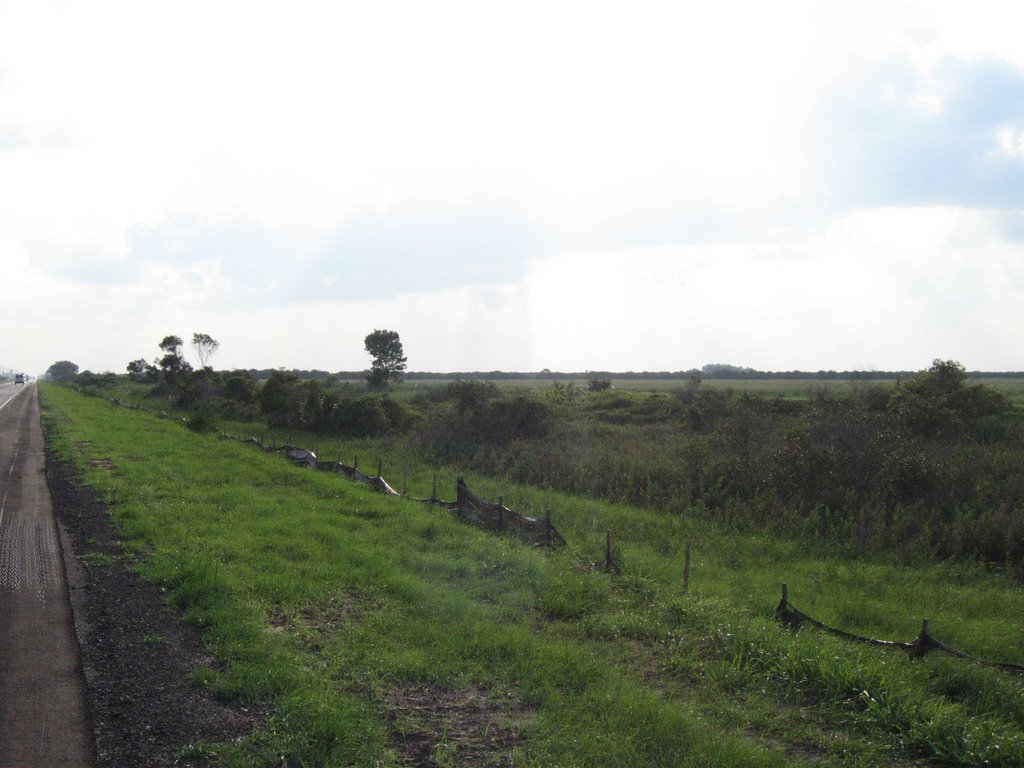
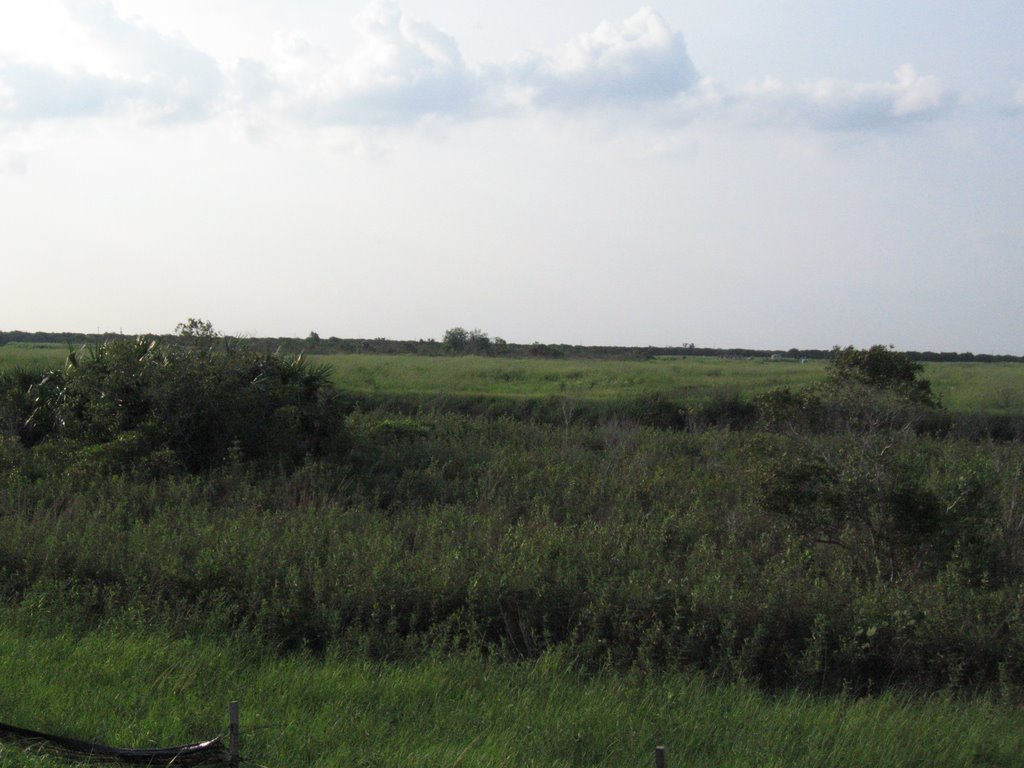
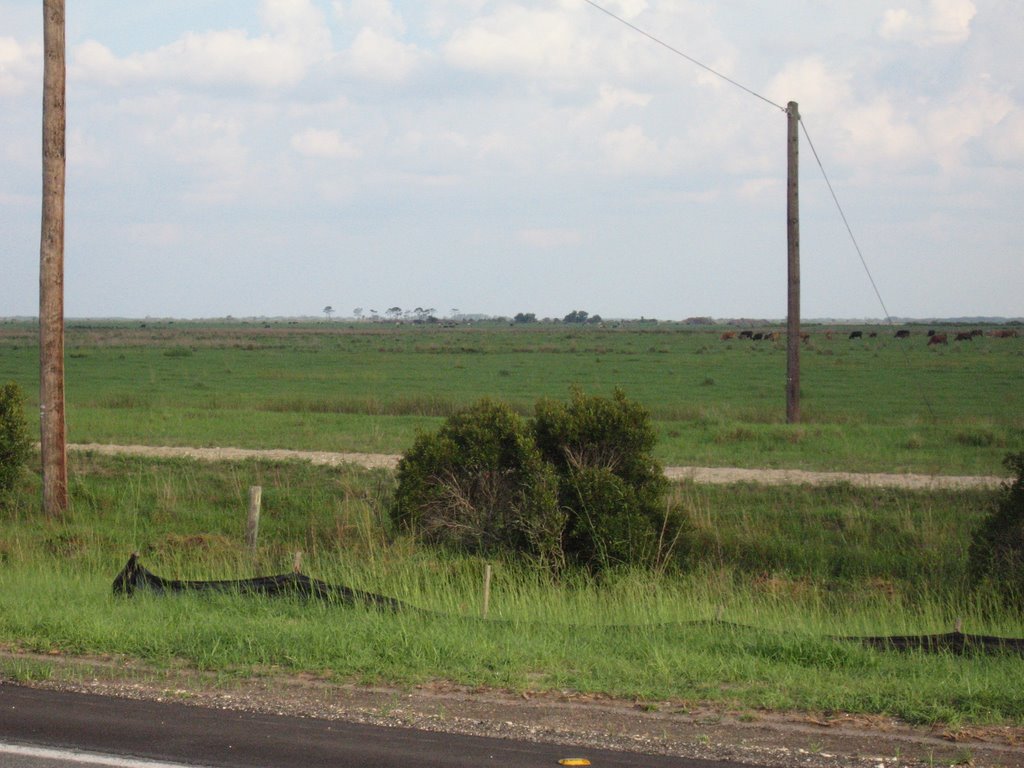
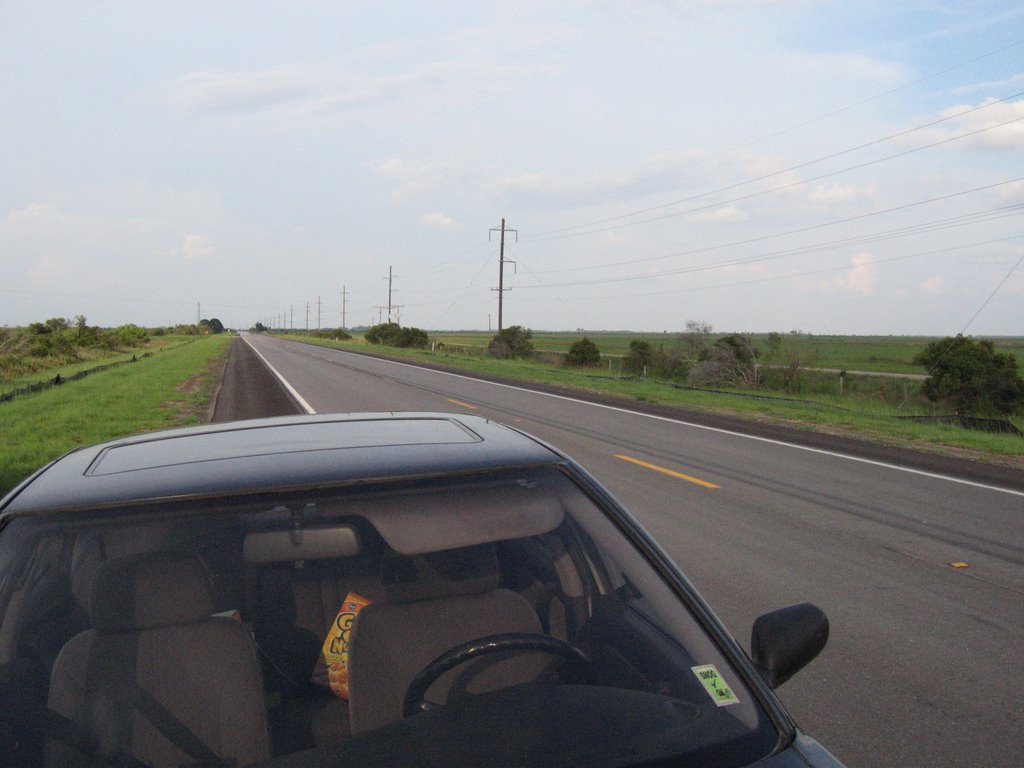
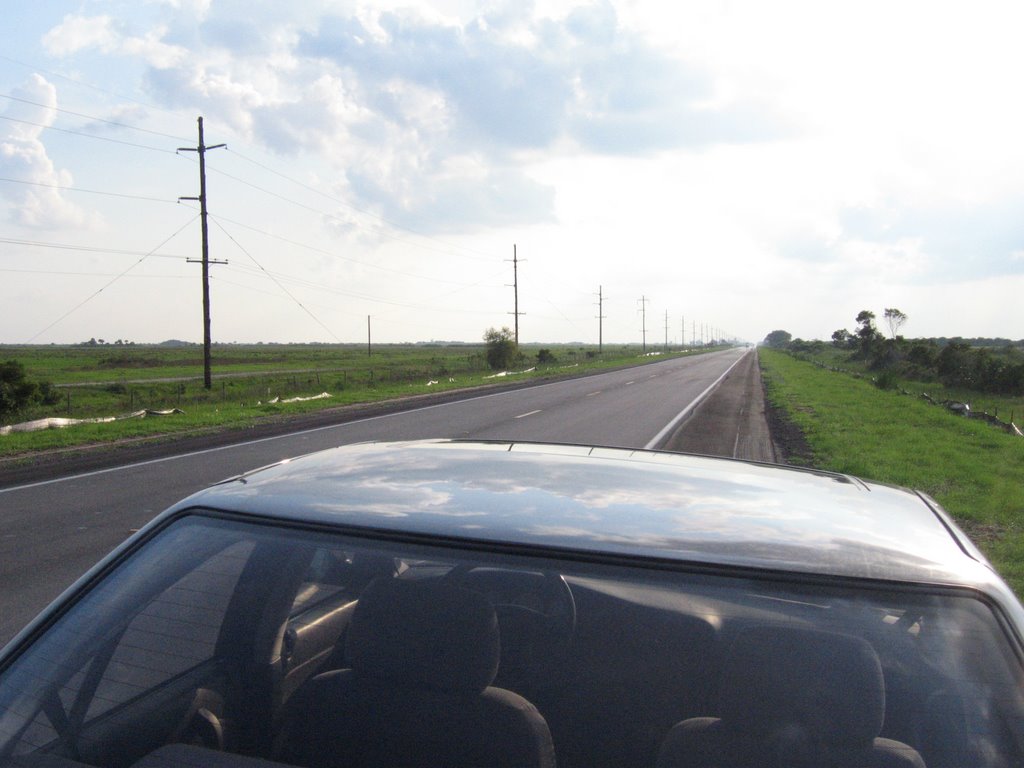
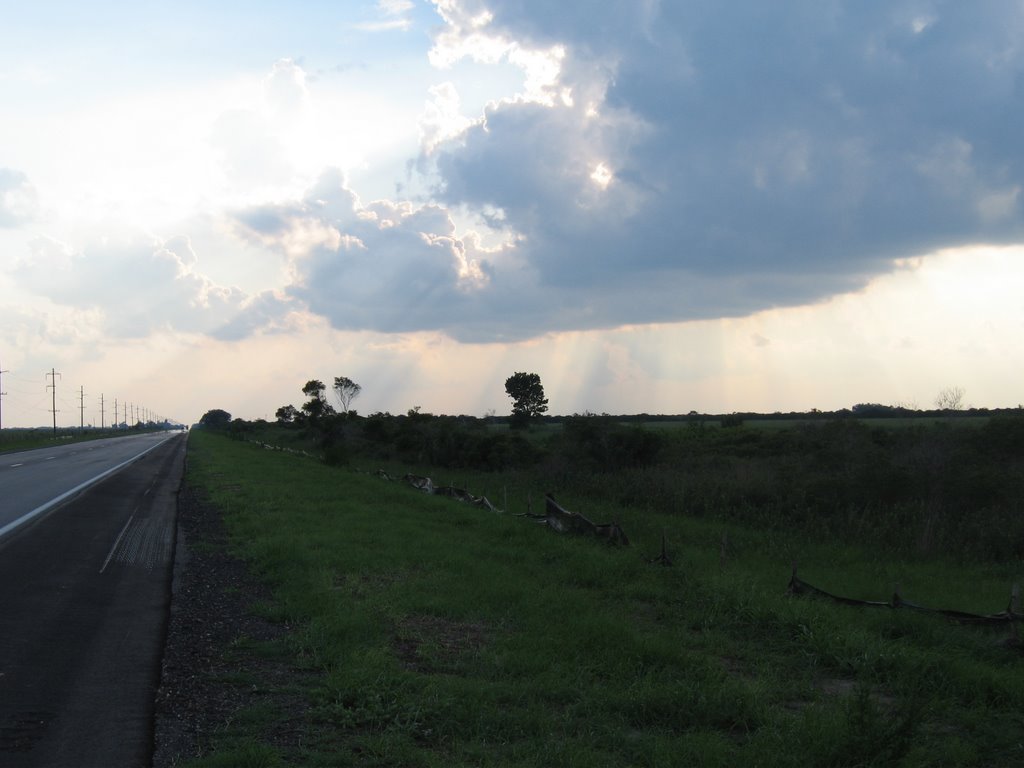
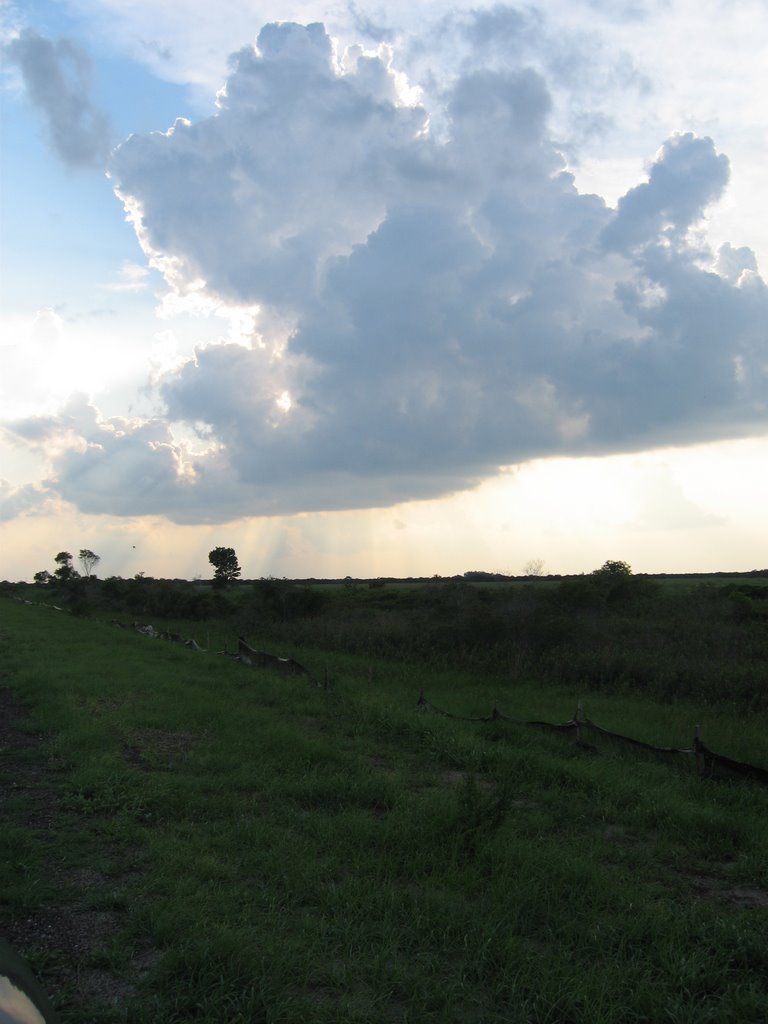
The view of Florida from my broken-down car.
Three days later I am in my car again. It's a late start for me--I leave Michael's air conditioned house just after noon--and outside the weather is typically oppressive, in the 90s with high humidity, the type of bright sunlight that bleaches the hair on my arms and legs and enough moisture that the condenser for the air conditioning keeps dripping cool water on my feet as I drive, which would be nice if it didn't make my already-slimy feet just that much more slimier.
I meant to get out much earlier, because even at that point I didn't fully trust my car. Even through the vast empty plains in New Mexico and Texas, and through the empty not-so-plains of Utah, I had tried to drive at dusk or, God forbid, at dawn. Anything to not drive in the worst heat of the day, with a used car that might break down at any time.1
So driving during the hottest time of the day was, perhaps, a mistake. Or perhaps not. In any case, the drive to Solomon's Castle, near the town of Ona, was uneventful. Off of I-75, the roads are long and flat, and while they often sweep to one side or another, there's no real reason for this, because there's absolutely no topography that a road needs to avoid. Also, due to the flatness, there are no landmarks, which I suspect makes driving in Florida more difficult for those with a poor sense of direction.
The turnoff for Solomon's castle is maybe two miles before you come to Ona, but traveling on SR 75, it can be hard to believe that you haven't already passed the turnoff, onto a little road that gives off the impression of a dirt road rutted by tire tracks that has only been recently paved. This road--occasionally covered my a canopy of scrub trees, but mostly open--wends through another vast flat expanse, but with more vegetation, until it takes a sidearm to the left and intersects with the road that takes you to Solomon's Castle.
Solomon's Castle, I've read, is the home of a not-that-eccentric named Howard Solomon, who has been building in since 1972. The exterior is entirely covered in aluminum printing plates, which can make it blinding in the Florida sun. It's more a piece of commercial kitsch than folk art, but even knowing this, I decided to make the journey today.
But I don't actually get to see it. The gates are shut and Solomon's Castle is, well, closed. This is because today is Monday, and Solomon's Castle is closed to visitors on Mondays, which I completely failed to notice in either of the two guidebooks that pointed me here. That sucks, I think, and turn the car around. With nothing left to do, I head back to the main road, to continue on toward Ona.
Ona, it should be said, isn't so much a town as it is a gas station, at least as seen from SR 75. A man drives a riding mower along the edge of the asphalt, clipping the high grasses so that, in the event of car trouble, you can safely and easily drive your car off the road and into the drainage ditch on either side. The gas station doesn't take cards at the pump, which might be an example of good business sense in Ona, since the station has no competition and having to walk inside successfully enticed me to buy a couple Jumex fruit nectars.
The car bucks a couple of times, slightly, on the way out toward Zolfo Springs, which is not far from Ona. Zolfo Springs is home to the Cracker Trail Museum, which I believe celebrates the history of Floridians drving cattle along the Cracker Trail from the east side of Florida to Bradenton on the west. Or perhaps the other direction. It's difficult for me to say; I should know, since I've been to the Cracker Trail Museum, but the museum's closed.
This one is not my fault. On the door of the museum, the sign says open; and according to another sign nearby, I am here during open hours. Everything is empty, and the displays outside the small, squat building all seem to be large items donated by people who no longer had a place to put them. I walk around, get bit by a single fire ant--it hurts, a lot--and, after 15 minutes, make toward Lake Placid.
I'm headed toward Lake Placid because the thing to see there--the murals--can't possibly be closed. They're on public buildings, after all. But Lake Placid is similar to Solomon's Castle, in that the murals aren't so much for their own sake as they are a way to advertise the town as a resort destination throughout the South and Midwest. Indeed, apparently the town used to employ--perhaps still does employ--billboard trucks to brand Lake Placid as the "Town of Murals."
(See part 3, above.)
1 The issue, of course, is really that I don't know anything about cars,and specifically that I don't know how to prevent Bad Things from happening to my car. I consider myself pretty easy on my car--no harsh accelerations unless absolutely necessary (like spontaneously merging lanes on a freeway, something that Utah specializes in), proper tire pressure, regular oil changes, and so on--but I have no idea what is actually necessary and what isn't. And no idea what else I should be doing.

The car had made it to Gibsonton, only bucking slightly twice and both times just after I had had the spark plug wires inspected and the spark plugs changed at Ahrens Z-Car Specialist in Gainesville, so I could imagine that the problem was gone. “I can’t guarantee that this is the problem,” Don Ahrens had said, “but anything else is going to involve taking apart the engine, and that’ll cost 400 bucks.” Since the spark plugs were marginal when I left California, and since Ahrens had already spent half an hour driving and overdriving along rural Florida roads with me, and since I actually had absolutely no idea why the car was acting up, $97 inclusive had seemed very reasonable.
*
Gibsonton, where Michael lives, is not actually a town, technically, but a census-designated place in a county. It was once famed—if that’s the right word—as the winter home for sideshow performers from the Ringling Brothers circus, which had its winter home in Sarasota, about 30 miles south. In other words—and, I stress, not mine—“Gibtown” was the circus freak capital of the world.
Those days are dying out, just like sideshows themselves. Or the original sideshows, rather: Today the word signifies an illegal drag race that takes place late at night, irregularly, locations changing before the police can find them, souped up cars revving engines and flying through streets that you hope are empty.
Gibsonton couldn’t support this new type of sideshow, not if it wanted to. For one thing, the roads mostly cul-de-sac in beige and white tract homes, or, in the older areas, turn to dirt. The main street is 41, the old Tamiami Trail, which was the main link between Tampa and Miami when it opened in 1926 (?). On 41 you’ll find an area that looks much the same as everything else between Tampa and Naples, really, and probably like a lot of the rest of Florida as well. This is fast roads with no sidewalks and no shoulder; strip malls large and small, anchored by a Publix supermarket or a Dollar General; and the support structures for an automotive world: brake specialists, air conditioning specialists, gas stations, oil change and tune up factories.
The post office in Gibsonton may once have had a counter specially made for dwarves, but even a meek question to the clerk about it will elicit a brusque reply. “That was a long time ago,” she’ll say, and then walk off.
Michael lives in one of the new developments, a gated area named King’s Lake Townhomes. The condo association has just put in a fountain in front, which Michael hates, and the gates don’t really work, and the fees keep increasing. In front of the development is a sidewalk that goes nowhere, ending in small bushes and trees to one side and overgrown grass to the other. Eventually these open spaces may be turned to developments as well, and the sidewalk continued, but a fundamental problem will remain: there isn’t anywhere to walk to.
So while Michael loves his physical place, loves the inside of the apartment, he’s not in love with its location. Mostly when he comes home from work he stays inside. Going to a movie, or biking, or doing a hundred other things all involves a drive. Not that Michael, or anyone else there, is without blame, for their agency is, obviously, their own, but it’s frighteningly easy to understand how you can get caught up in a lifestyle where you never leave your house.
One last thing about the name. It doesn’t fit at all, so much so that it would be shocking, if only it weren’t so typical.1 As a visitor, as someone not used to it, the actual shameless suggestiveness of the name—a kindly king, a lake, a town, a home—was and is surprising. But nothing about it is real. There’s no king, of course, since the development is new; and the lake is really more of a pond that takes a good 18 minutes to circumnavigate by foot; and they aren’t really townhouses so much as row houses, but I suspect the developer, and perhaps the residents, don’t know the difference.
To be fair, to their owners, they are most certainly home.
1 A development nearby—a landlocked development in typical American tract home style—is called Tuscany Bay.
I''m sorry the posts have been sporadic lately. The entire saga of my car will come soon, but I'm still finishing it up. With luck, I'll post it this evening.
~Mario
Michael and I were lost a few times along the way, but eventually we found Jesus. He was on the side of a building in Bradenton, which we knew, but finding him was a journey that we'll remember forever.
But only because it took so long for something not so difficult to find.
The story, according to Oddball Florida, is that the workers pressure washing the building discovered the face of Jesus on the church. Soon hundreds of people stopped by to see the miracle. This is on the Palma Sola Presbyterian Church after all, and Protestants aren't so used to finding Jesus' image as Catholics are.
But the image, according to the book, only appears when the brick is wet, so the church has had to hold regular wettings. Michael and I came in midafternoon, between wettings. "There it is!" Michael said when we went around the corner of the church. We took pictures, and in one Michael made the sign of the cross with his water bottles.
Later, Michael suspects that my car breaks down because we were so blasphemous.


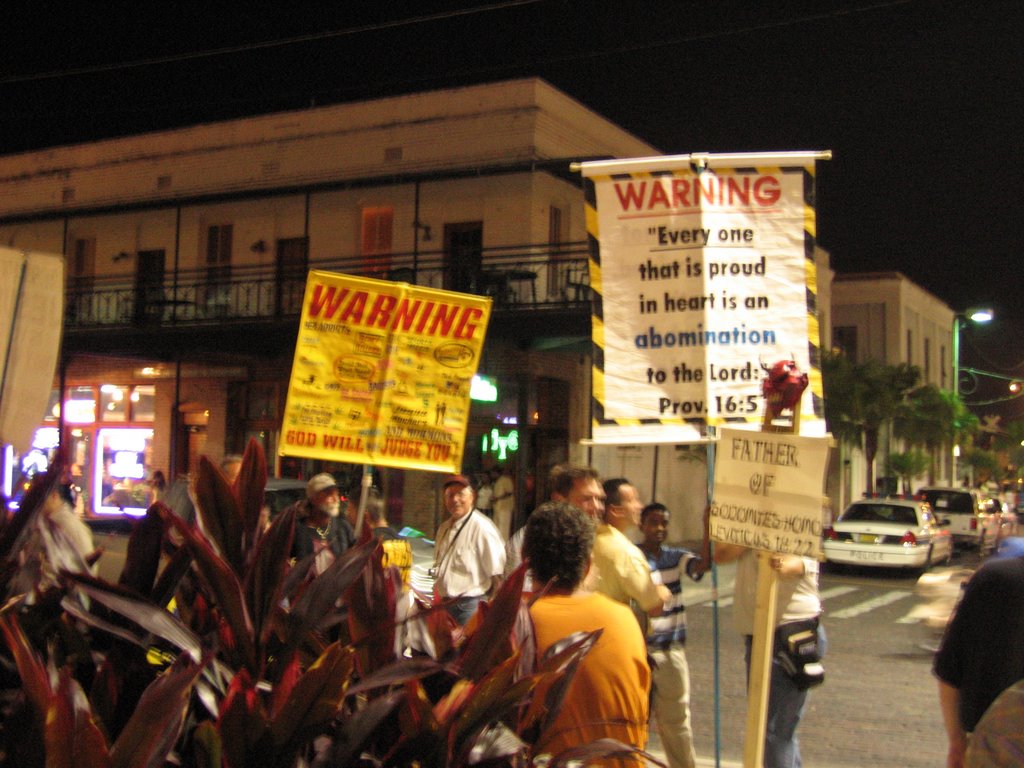
On the surface, there's nothing unusual about the evangelicals who come to protest every Friday night in Ybor City. Ybor City is the old cigar making district of Tampa, named after Vicente Martinez-Ybor, who built his cigar factory there in 1886, and it has made the transition from Latin American and Italian social clubs to out-and-out discotheques and bars open to all. Obviously all of that drinking and dancing leads to sinning—if you don't consider the drinking and dancing sins themselves.
So the signs—Warning! God Will Judge You—aren't that surprising, especially for those who have lived in other dens of sin. (Ahem: Berkeley; Oberlin, Ohio; Seattle; San Francisco.) Being shouted at and molested by the righteous is depressingly normal.
I am in Ybor with Michael Krasilovsky, who was a roommate of mine in college and is now a grad student at the University of Florida, and his coworkers. Michael works at a satellite lab about 20 miles south of here, in Ruskin, and has just finished counting thousands of fish for his most recent study. He's taken everyone out for drinks, and now a gaggle of us are walking down 7th Avenue, obnoxious in general but not obnoxious for Ybor.
7th Avenue is a long line of spoilers and spinning rims, sport bikes, and, on the sidewalk, women in short, backless dresses holding the arms of men in pastel polo shirts. There's also a very pronounced racial component: If you go too far east, the white people disappear. The same is true of going too far west, but there everyone disappears and the projects start.
The middle section, which somewhere is probably known as the Heart of Ybor City, is a jumble of bars (the Green Iguana, the James Joyce Irish Pub), clubs (Prana, Pleasuredome), and overpriced restaurants. In the day, Ybor is home to a number of antique shops, but at night the dark windows reflect the nightlife and you never notice what's inside. Here you go cruising, or bar hopping, or people watching—you can sit and watch people walk, or watch them get tattooed at Valhalla, which has big windows that let gawkers look on as the patrons curse and writhe.
Back at the Ybor Brewing Company, I tried to ask where the artsy kids hang out. “You know,” I said, “black frame glasses, tattoos that don't make any sense—arrows and can openers and vegetables. Funny haircuts.”
“I don't think we have any of them here,” Ryan had said. Ryan is 20 and has lived around Tampa Bay his whole life. He's a nice guy, big, firm handshake. He loves Florida and wishes, goodheartedly, that all the Yankees would go home. “Yeah, I think here that's like a phase in high school that people get over. You don't really see them.”
If they exist in Tampa—and I suspect that, in small numbers, they must—they certainly aren't in Ybor City tonight. The people mostly look like suburbanites out for a big night out on the town. That's not surprising, considering that the centerpiece of Ybor City is Centro Ybor, which is more like an outdoor mall than a cultural hub. Which is the point: “For years,” the Ybor Times website says, “Tampa's historic Ybor City has been a magnet for night clubbers, wandering teens and rowdy college kids. Centro Ybor aims to add suburbanites and families to the mix by offering shopping, entertainment and food all day long, not just late at night.”
On the sidewalk outside Centro Ybor, the evangelicals gather with their signs. As out group passes them, one of them actually says, to no one in particular, “Repent, the Rapture is coming!” For the most part, people ignore them, walking with shoulders back and eyes straight ahead.
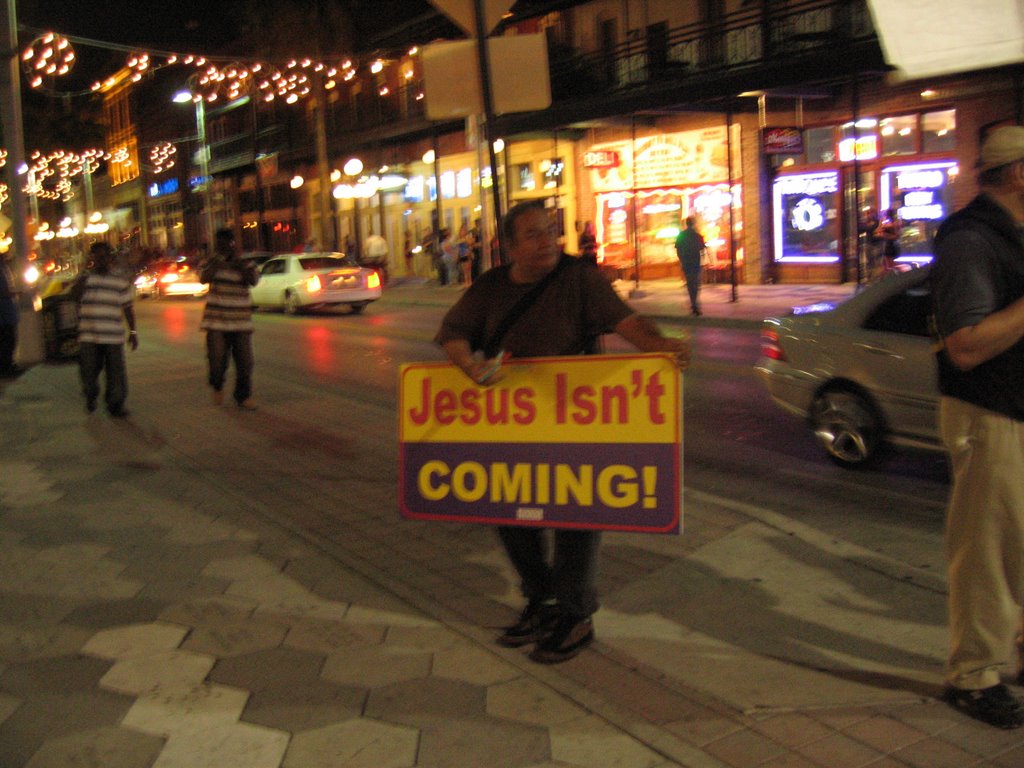
Not everyone, though. In Ybor tonight, the atheists are counter protesting. God is Fake. Jesus Isn't Coming!
Michael's coworkers are among the great majority that ignore the protesters. I try and make conversation, point out how absurd everything is, but Sherrie, who I'm talking to, isn't amused. Even Michael says, “Those people make me uncomfortable—all of them.”
Everyone goes into Coyote Ugly, because that's the one place where Ryan can get in. The cover is $5, and since I think Coyote Ugly is silly and Michael doesn't like paying money to go spend money on overpriced drinks, we bail. I drag him over to talk the atheists, but he stands far away, as if they're going to infect him with something. “You have to engage your discomfort,” I tell him later.
The first man I talk to is holding the sign that says Jesus Isn't Coming! His name is Carlos, and he used to be Catholic priest. I am surprised. He's happy to relate his life story to me, how he found Jesus and found atheism. When he has finished, he hands me all sorts of atheist materials—a CD, flyers, a card.
Michael and I walk around a little more, but we can't really avoid passing Centro Ybor, and this time, Michael comes with me. The atheists will be there, Carlos has told me, as long as the fundamentalists are.
We talk this time to a man named Jerry, who I come to understand is the leader of this group of Tampa Bay atheists. He's a former Pentecostal minister in St. Pete, grew up in the church, was going to make it his calling. But it's fake, he says, a lie. People need comfort, but they don't need to be told that who they are is wrong.
Both Carlos and Jerry talk with a missionary fervor, something Michael picks up on as well. Their certainty is uncomfortable, Michael says. They think they know they're right.
I thank Jerry for his time, and he invites me to visit them tomorrow, which is Gay Pride day in St. Petersburg. We go, he says, wherever they go, and points with his thumb at the evangelicals. I tell him that we'll see what we've got on the table tomorrow and see.
When I step back to take pictures, the atheists model and smile. The evangelicals, perhaps because I've been talking to the atheists, turn away, shy, uncomfortable, as if ashamed.


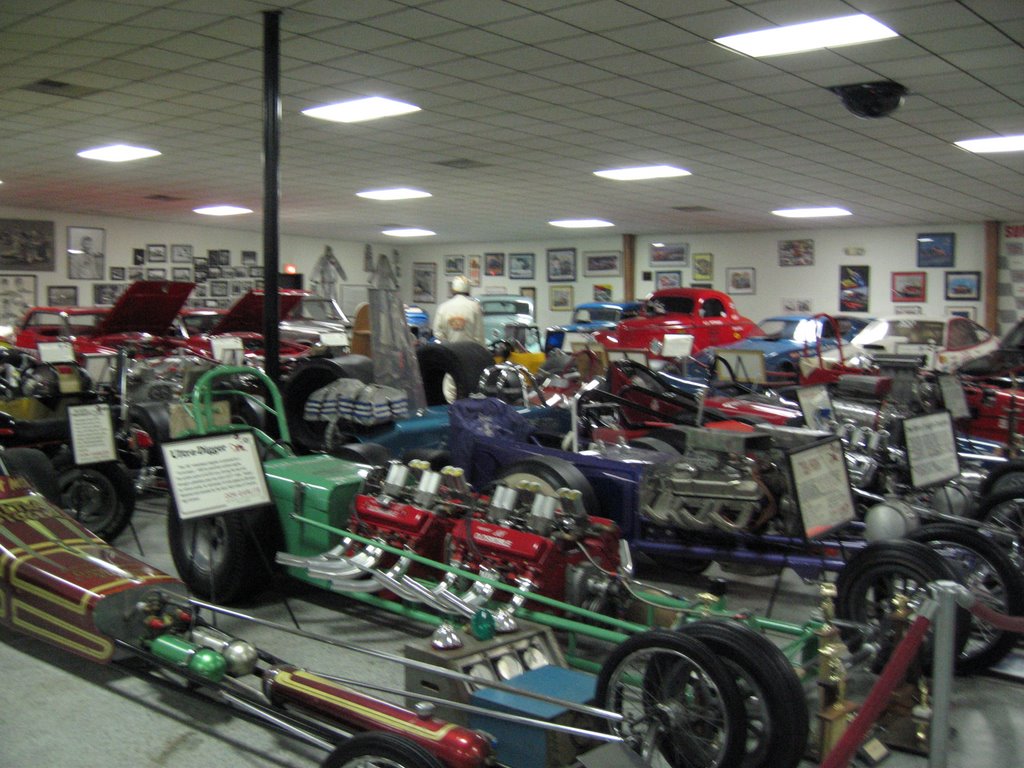
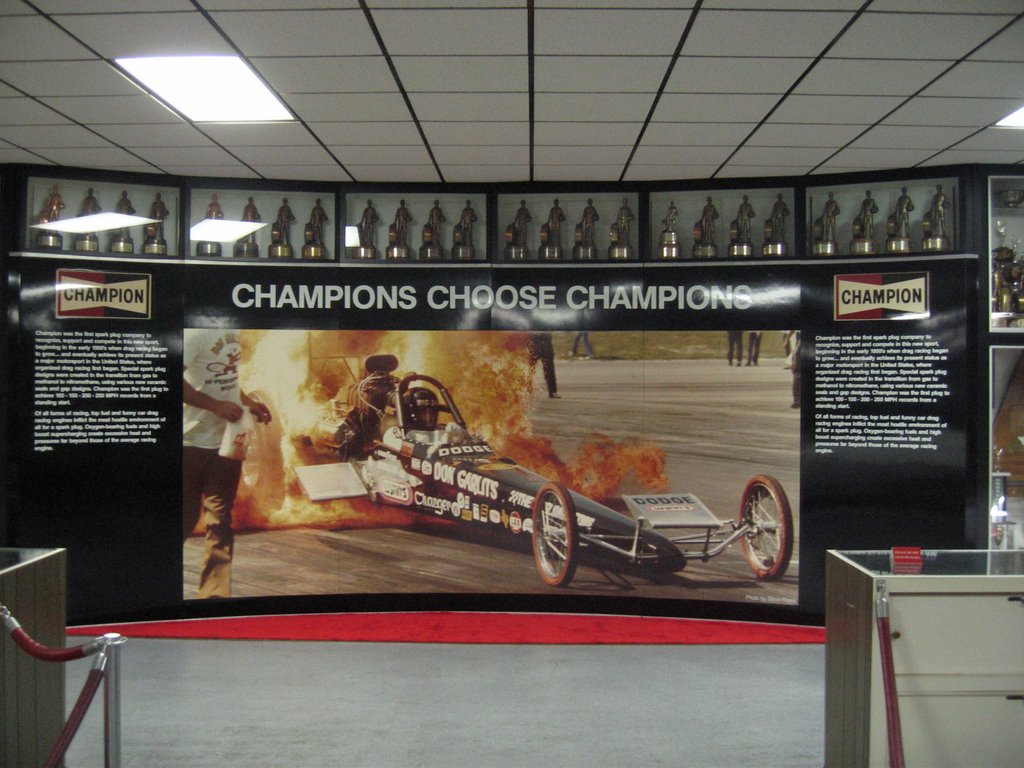
The wonderful thing about the Don Garlits Museum and Drag Racing Hall of Fame is that it is almost completely incomprehensible. The displays are haphazard and out of sequence, as if the interior were arranged with the great care and complete idiosyncrasy of a child arranging a museum of his Hot Wheels. Tucked in the middle of an aisle is Joe Amato's 1984 Top Fuel car, the first to reach 260 mph on a quarter mile track. (It uses 45 gallons of gas per minute.) Elsewhere, the Navy Rocket Car, which has run over 300 mph more than any other car in the world. The placards list specifications that may or may not be useful: Isky Roller Cam and Rev Kit; Jim Diest 16 Ft. Ring Slot Chute; Dart Water Heads; Hamburger 12 qt. pan.
Garlits's actual cars are all named “Swamp Rat”—but at the museum, Swamp Rat XXX might come before Swamp Rat III but after Swamp Rat XII. They have long aluminum bodies and massive rear tires and bicycle wheels on the front. The same sponsor logos that cover his cars cover the walls of the museum, competing for eye space with exhibits you are there to see.
What I like best about the museum is that there is no coherent narrative whatsoever. It's not difficult to make one out of Garlits' life, whether his transition from Garbage Don to Big Daddy Garlits or he story of the partial loss of his foot in a drag racing explosion. And there are other stories as well: Drag racers are nicknamed Snake and The Mongoose, and Garlits's collection has a mess of experimental cars that cost thousands of dollars and never quite worked out. Oh, and the World's Largest Drag Trophy, which is, appropriately, from Texas.
Not having a narrative keeps outsiders out. We don't know why Swamp Rat XX is worth looking at, don't know why Garlits likes Dodge engines so much. It's an exclusivity, and way of making sure that those who don't get it continue not to get it. It's a way of keeping something for yourself.


It's just after 6 am when I call my father. Pacific time, that is; here in Florida, it's just after 9, and I have been on the road for 3 hours already. The phone rings; as I'm driving the car bucks at random, and I'm scared that something is going to explode out through the hood. It feels like a violent form of shift shock, so violent that it gives me the feeling in my stomach that comes when you go over a bump and feel weightless.
Dad picks up.
“Hi, it's Mario,” I say.
“Hey,” Dad says.
“I need you to find me a mechanic in Gainesville, Florida right now.”
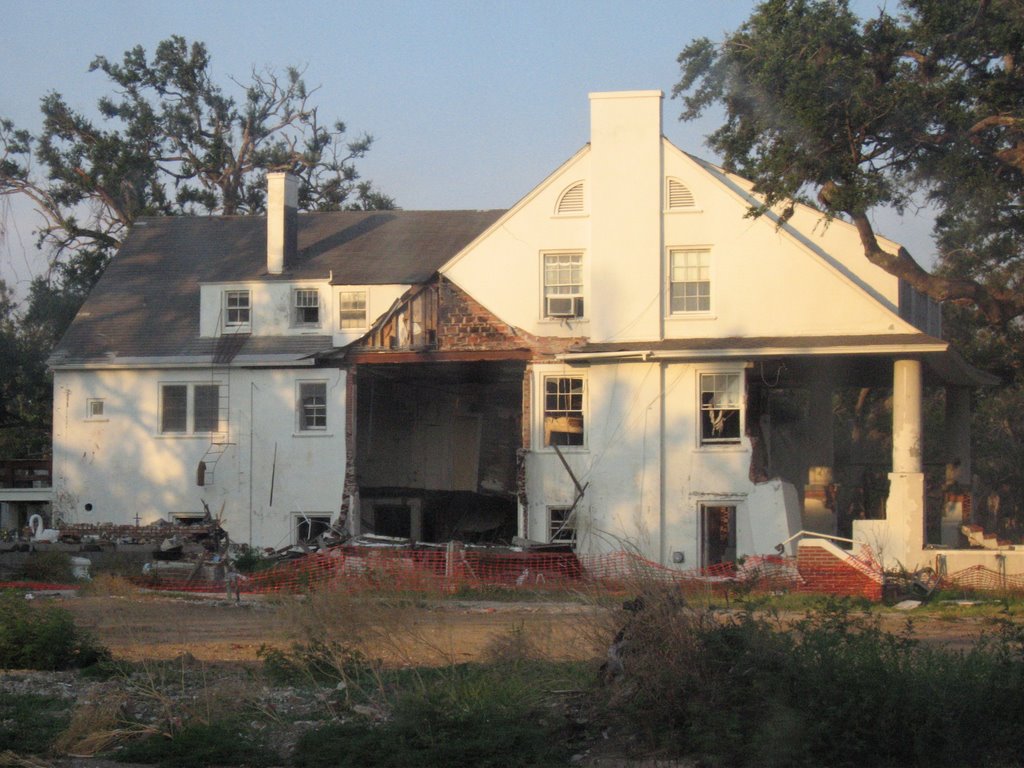
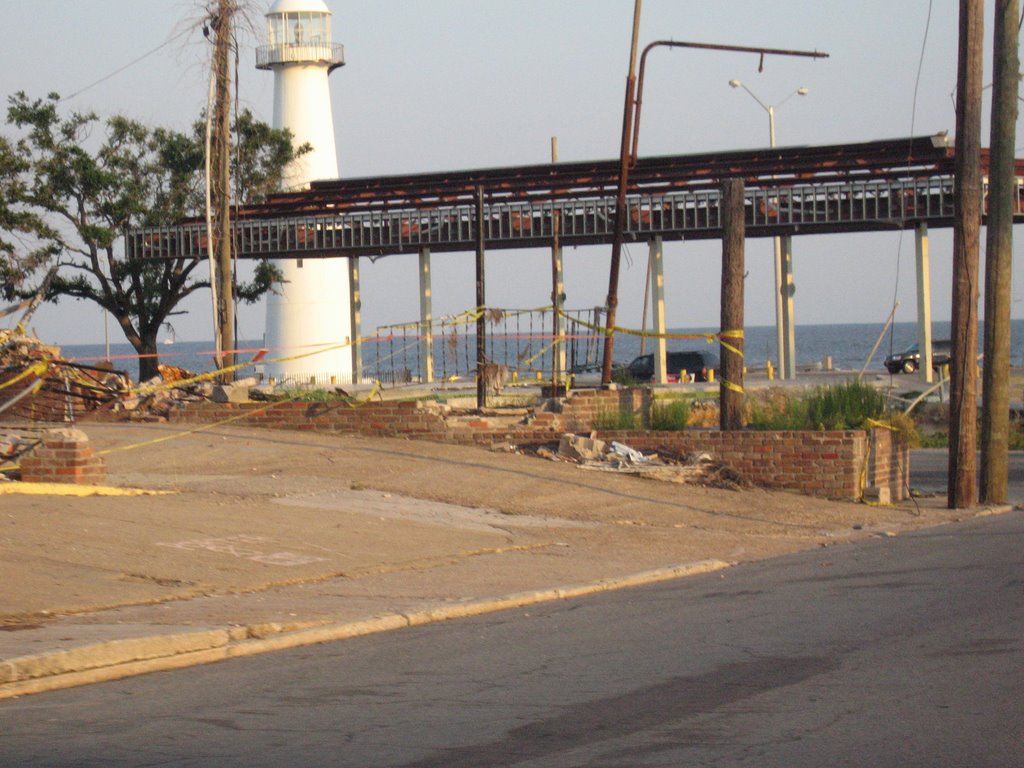
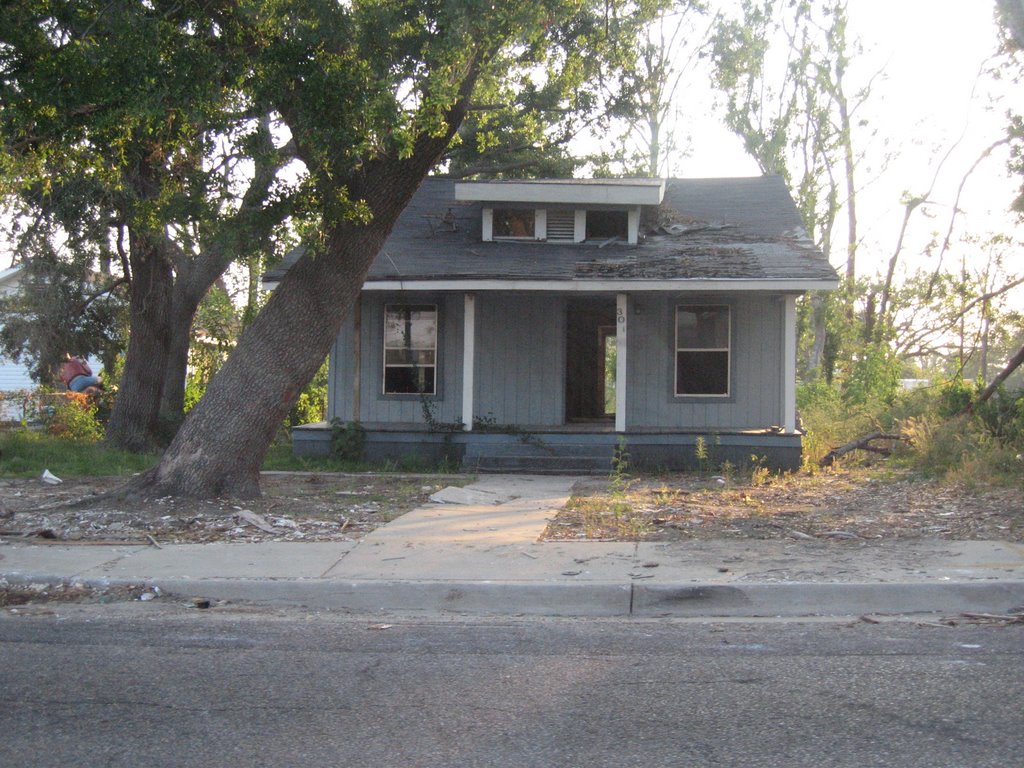
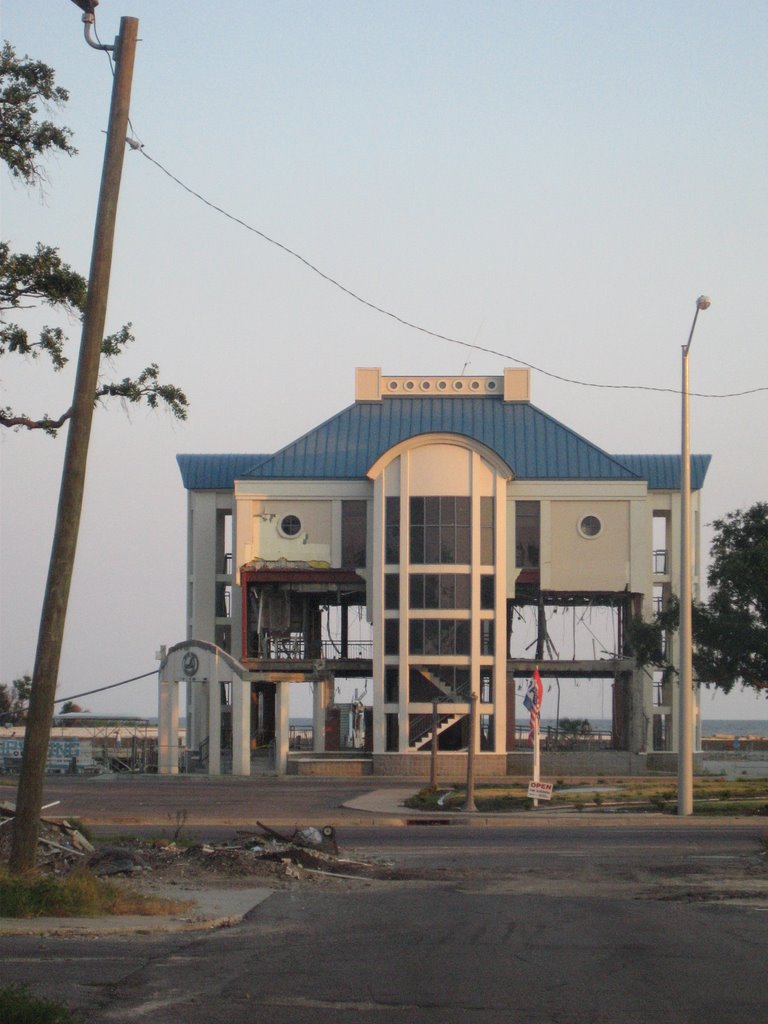
Please excuse our mess, the sign on the waterfront says. We're still cleaning up from the storm. But there's not so much of a mess now, not compared to New Orleans. No piles of trash, no flipped boats on the shore, no blocks of empty, broken houses. The beach, despite the sign, is clean.
Even looking at the wagon train of FEMA trailers, the visible signs of despair are absent.