Saturday, June 17, 2006

Marfa, Texas

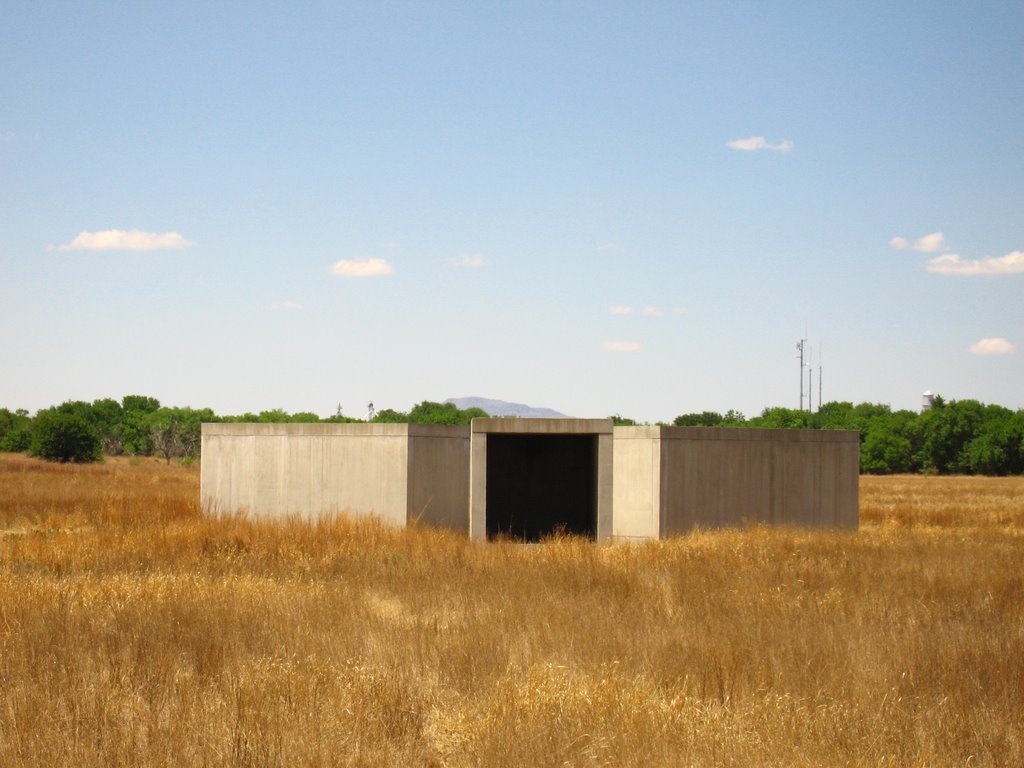
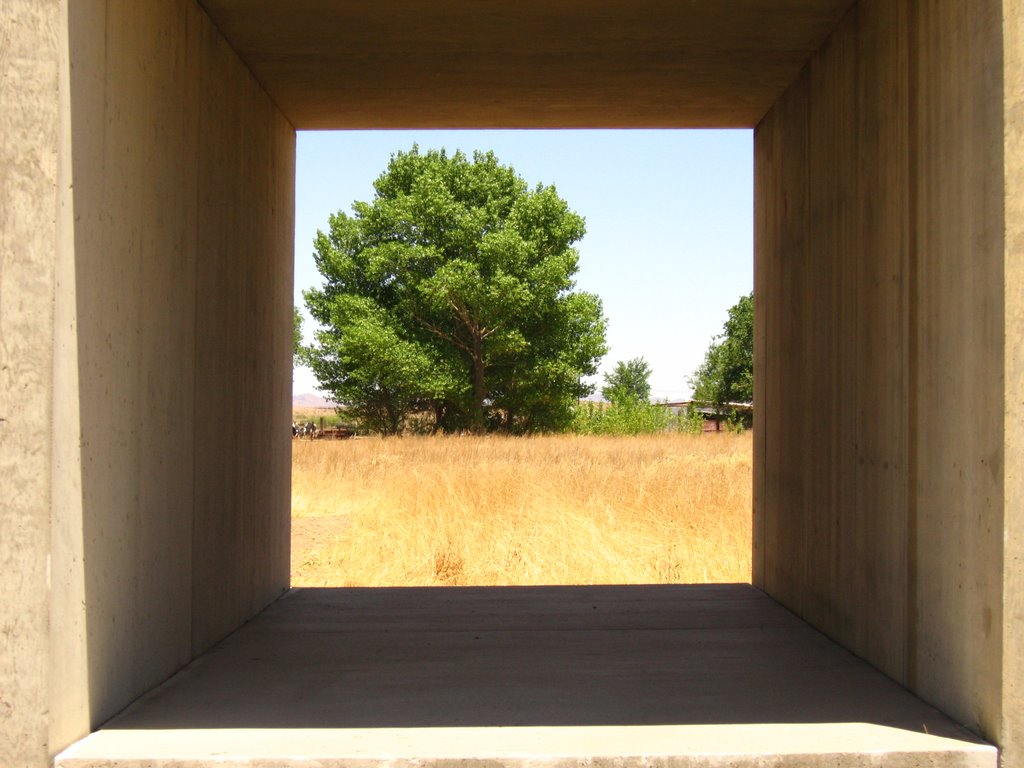
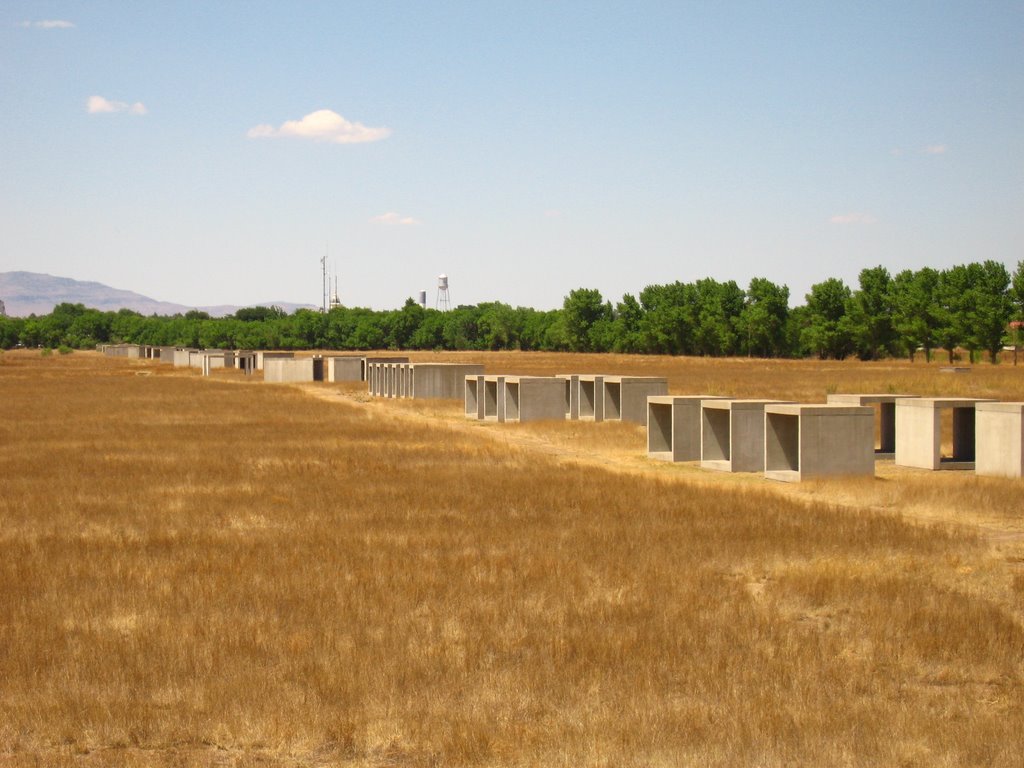
Donald Judd, the New York sculptor, fell in love with Marfa, and it is his contributions that make the town more worth a stop than Carmel or Bisbee or any of a hundred other art towns. It's everything that New York is not: open, lonesome, starry. In summer a sea of yellow grass encircles the town. There's only one stop light, and the library is open Monday to Friday, 9 to 5. Nothing gets delivered on the weekends.

Judd also relocated his children, Flavin and Rainer, to Marfa. It'd difficult to parse this decision, to decide whether it was selfish. (Judd ex-wife, Julie Finch, remained in New York City.) There's nothing to do in Marfa. Pecos is 125 miles away; El Paso 200; San Antonio about 400. Moving the children away changes who they are, takes them from a wealth of influences to a place with very few.

For what it's worth, in a recent article in the New York Times, the Flavin Judd calls New York their childhood home, and both Judd children are on the Board of Directors of the Judd Foundation.
Judd's house in Marfa still contains all of his books, even 12 years after his death. Among these is the full collection of the Loeb Classical Library, hundreds of volumes of Greek and Latin texts, which Judd purchased, the guide reports, off a television commercial. Judd knew no Greek or Latin—no foreign languages of any kind, in fact. He liked the way the books looked.

On the door of Flavin's room, there's a decal for the Marfa High School Shorthorns foorball team. It seems incongruous that a son of Donald Judd would play such an dirty and plebian sport. It seems the type of thing that Judd as a father would discourage.

From the son's perspective, however, it makes perfect sense. It's social, something to be proud of (the pizza parlor keeps yearly photos of the team on the wall), a way to make a life in Marfa.



Friday, June 16, 2006

Pecos, Texas

Money Reward


For DEAD Bank Robbers

A cash reward will be paid for each Bank Robber legally killed while Robbing this bank


The Texas Bankers Association, a'corporation, offers a standing reward for each bank robber legally killed while robbing and holding up a reward subscribing member bank in Texas with firearms during the daytime. Limits of the place and time of such killing are: in the banking house, or as the robbers and holdups leave the bank, while the robbery and holdup threats are being committed within the bank; and as they flee from the bank with the property taken, and are resisting legal pursuit and arrest, within five miles of the bank robbed and within one hour after the robbery and holdup.

  • The amount of the reward for each dead robber will be the total collected from subscribing member banks at $5 per subscriber, but the total amount, in any event, shall not exceed $5,000.00.
  • This reward does not apply to night attacks on Texas banks.
  • The Association will not give one cent for live bank robbers. They are rarely identified, more rarely convicted, and most rarely stay in the penitentiary when sent there--all of which operations are troublesome, burdensome, and costly to our government.
  • In order to protect the lives of people in such banks and to protect the property of such banks, the Association is prepared to pay for any number of such robbers and holdups so killed, while they are robbing and holding up its reward subscribing member banks with firearms in the daytime.
  • It is expressly provided that only the Texas Bankers Association shall determine whether or not payment of this reward shall be made hereunder, and to whom (if anyone) such payment shall be made, and such determination and judgement final, conclusive and not reviewable.
  • This reward is effective January 15th, 1933, and all other rewards, offers and statements are cancelled and superseded hereby.


    THE TEXAS BANKERS ASSOCIATION

  • Thursday, June 15, 2006

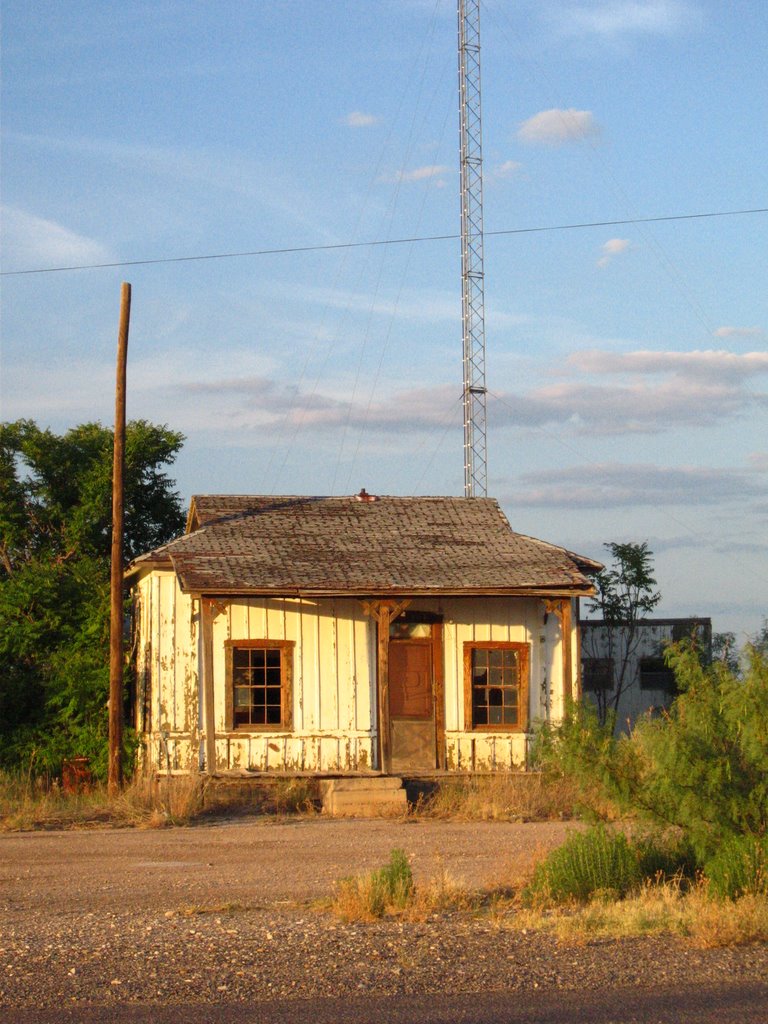
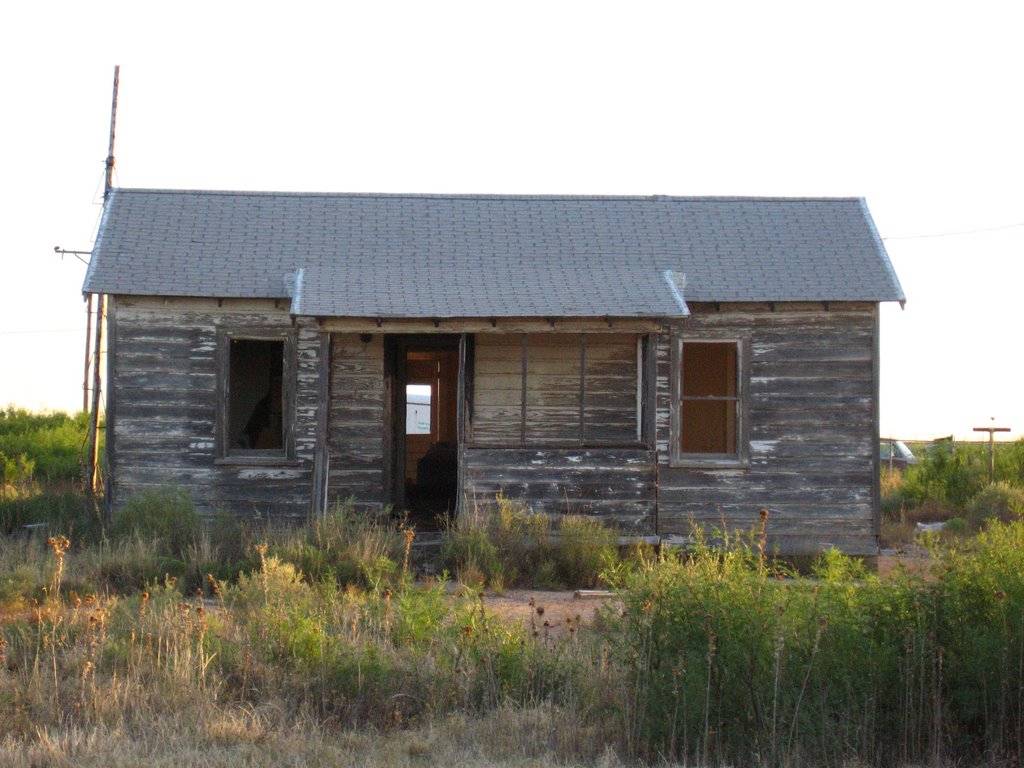
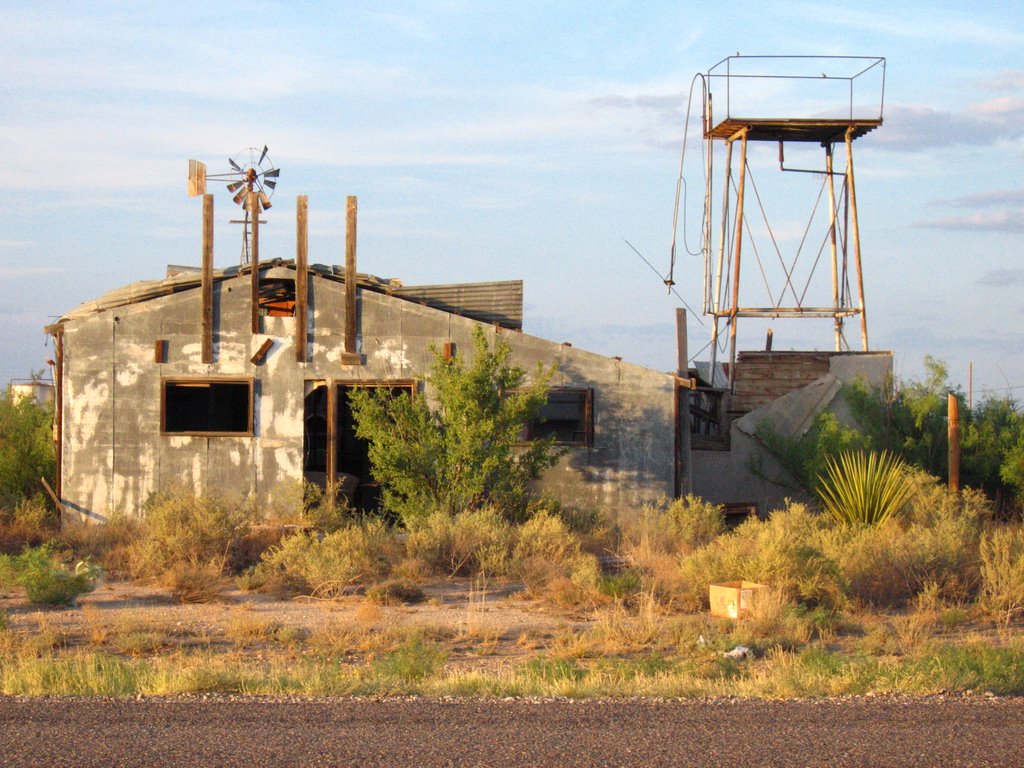
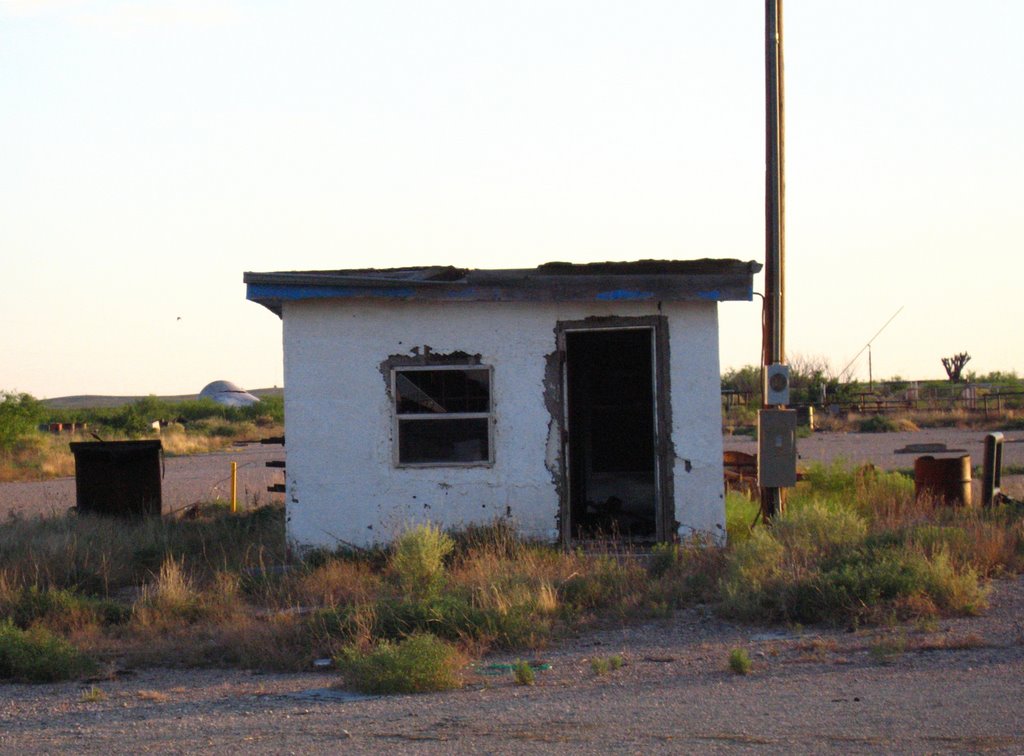
    Orla, Texas

    A couple I met at Brantley Lake State Park in New Mexico prepared me for Orla. "It's like a ghost town," one said. "The only thing left is the gas station."
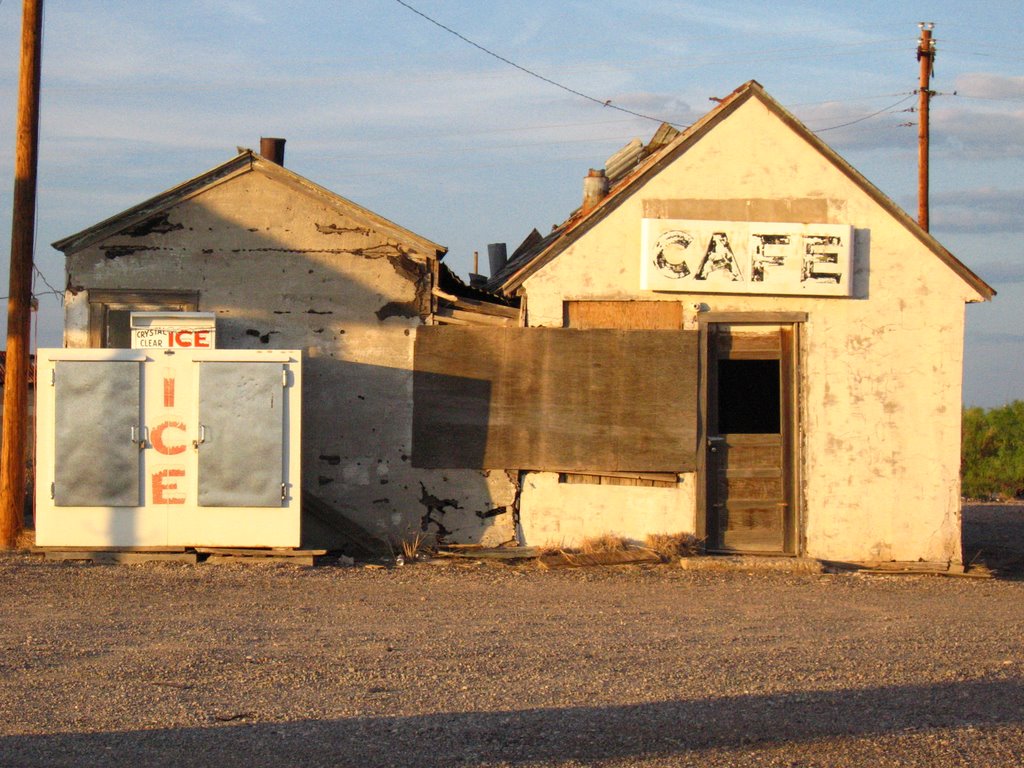
    What I wasn't prepared for: how typical Orla is. Orla's only notable for its concentration of empty buildings.

    Abandoned, collapsing buildings pop up everywhere along the rural roads of west Texas. Perhaps they were abandoned, then collapsed; perhaps they collapsed and then were abandoned. The only ones who can say are no longer here.


    Guadalupe Mountains National Park


    Wednesday, June 14, 2006

    Carlsbad Caverns National Park

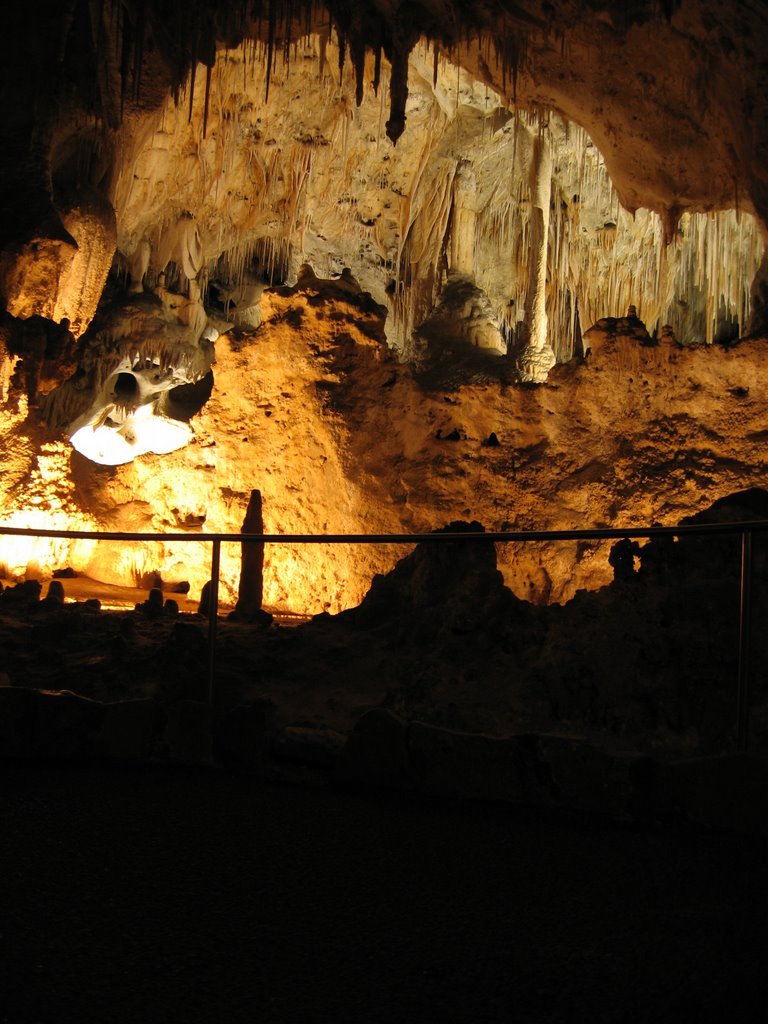
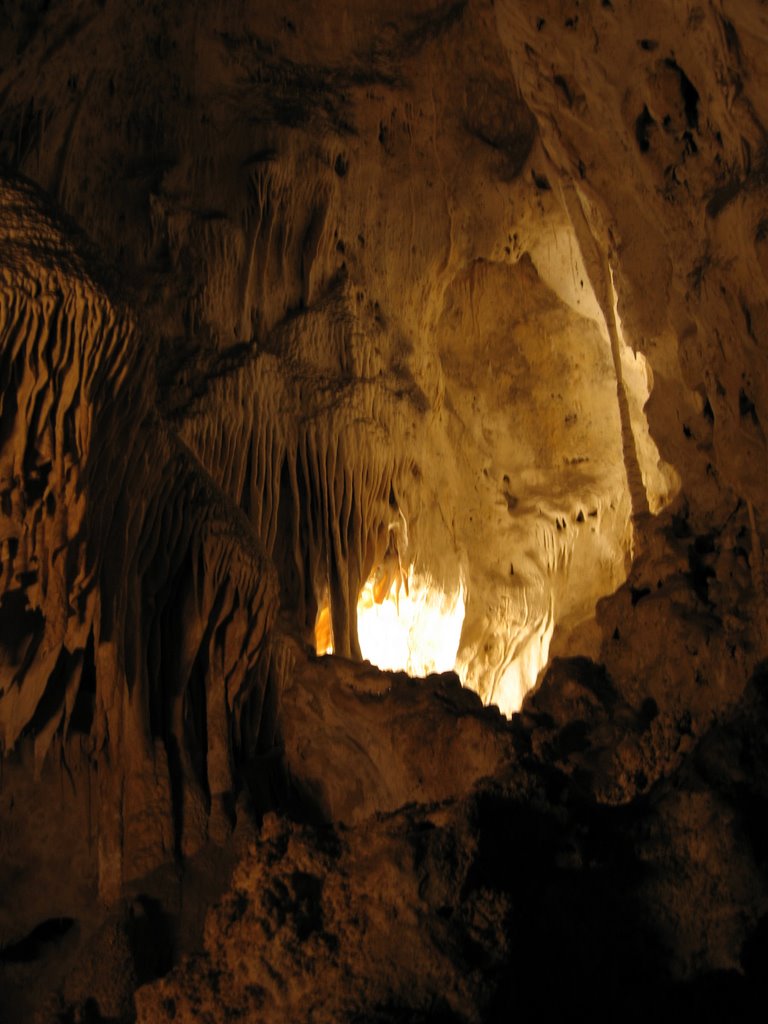
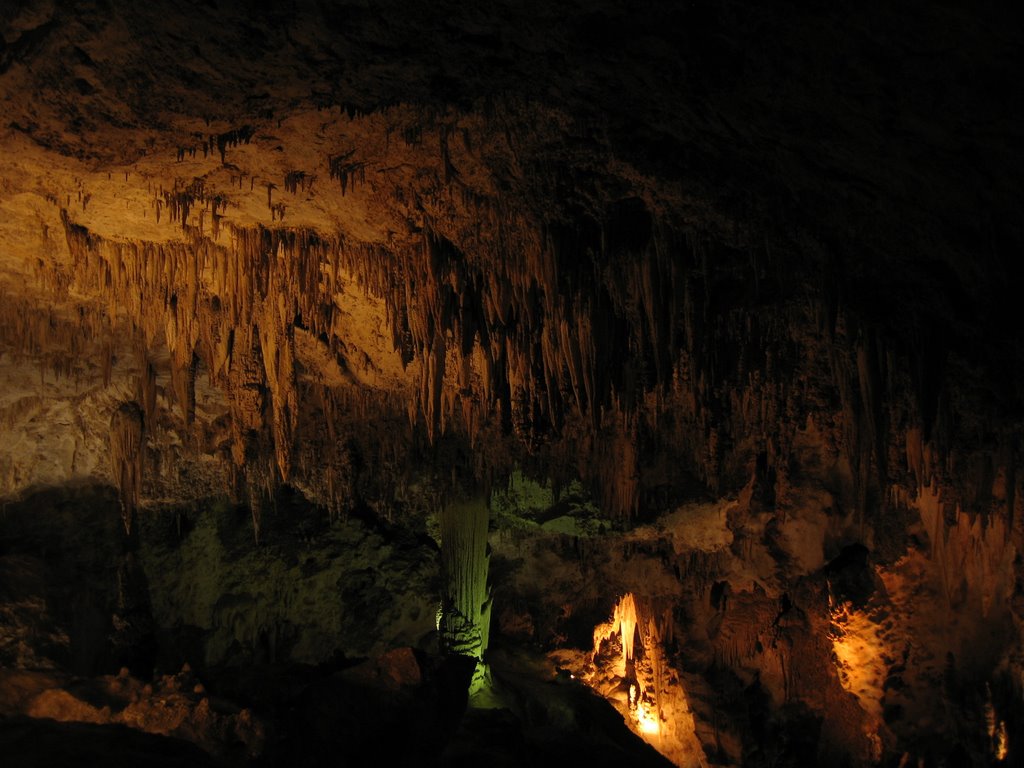
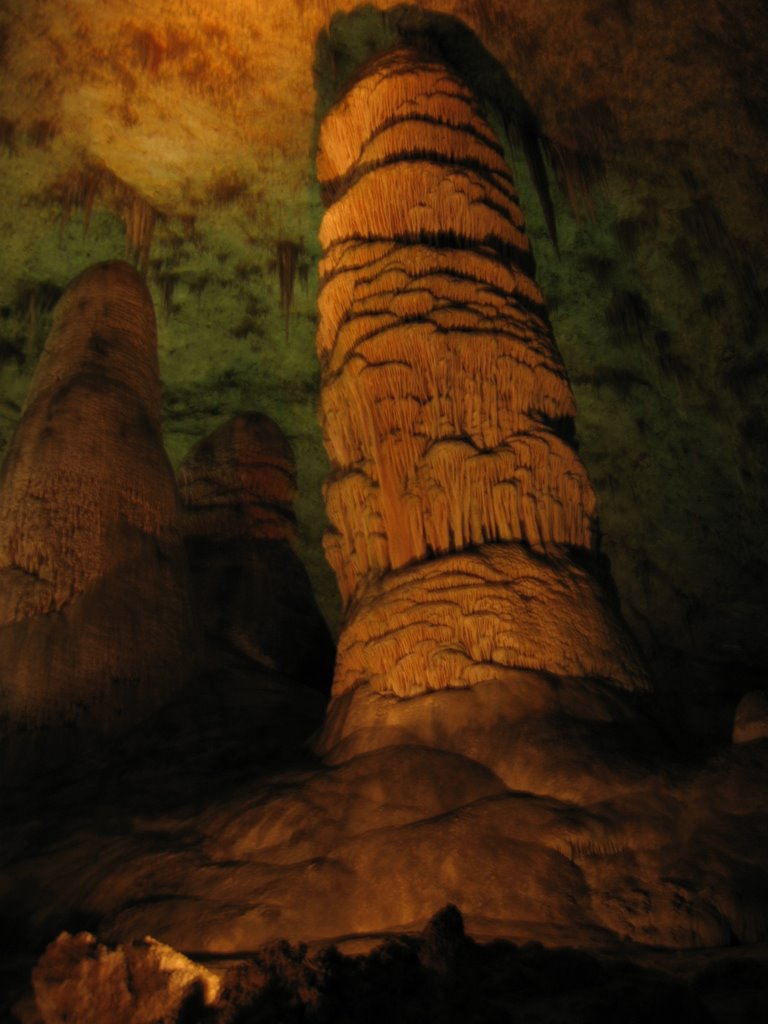
    This is the image I've had of the entrance to Carlsbad Caverns since I was, well, able to imagine the same thing again and again: a massive, Disneyland-scale parking lot, with the heat distorting the light 10 or 14 feet in the air; a sheer, grey-brown cliff; a huge opening at the base of the cliff, like two arcs joined at their base, the same way you might outline an eye.

    In actuality you park on top of the mountain, not at the base, and even though it can get hot, there's a bit of a breeze. The hills are brown, though, at least in early June, and the grasshoppers while like ungreased machinery.

    Now that I've been to Carlsbad, that old picture isn't going away. Instead, it now coexists with my image of the real place because, in my memory, they are equally real.


    Tuesday, June 13, 2006

    Roswell, New Mexico

    At the UFO Museum and Research Center, the woman at the desk sees me write "San Francisco" in the guest register.

    "So you're from San Francisco," she says. She is older and move as if any motion could break a bone.

    I tell her I am. She looks around to see if anyone is paying attention, then leans in to me. "You know what the truckers call San Francisco, don't you?"

    I don't, but I'd be interested to hear it.

    "The Gay Bay," she says, smiling broadly and then sitting back.

    I had never heard that one before.

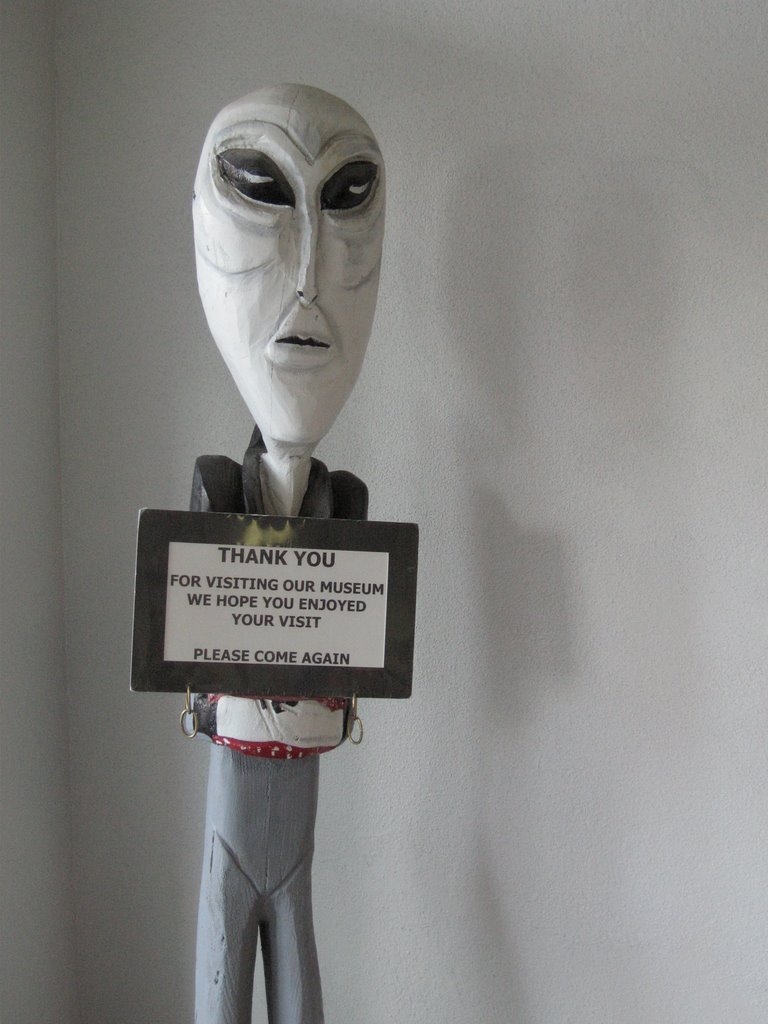
    My favorite part of the UFO museum—other than the inclusion of bigfoot as an alien with absolutely no citation or reference whatsoever—is the graffiti on the wall of the men's bathroom. There's this wonderful optimistic quality to it that I can't really describe:

    AUSTIN, TX believes '68

    *

    WE ARE THE ALIENS

    *

    God will protect us from the aliens
    and "aliens" has been scratched out, so it actually reads:

    God will protect us from the aliens
    They're not aliens!

    *

    They may have "created" Jesus

    *

    DONALD HARRISON
    FMGT, NM
    WE ARE NOT ALONE
    666 NATIONAL ID ACT

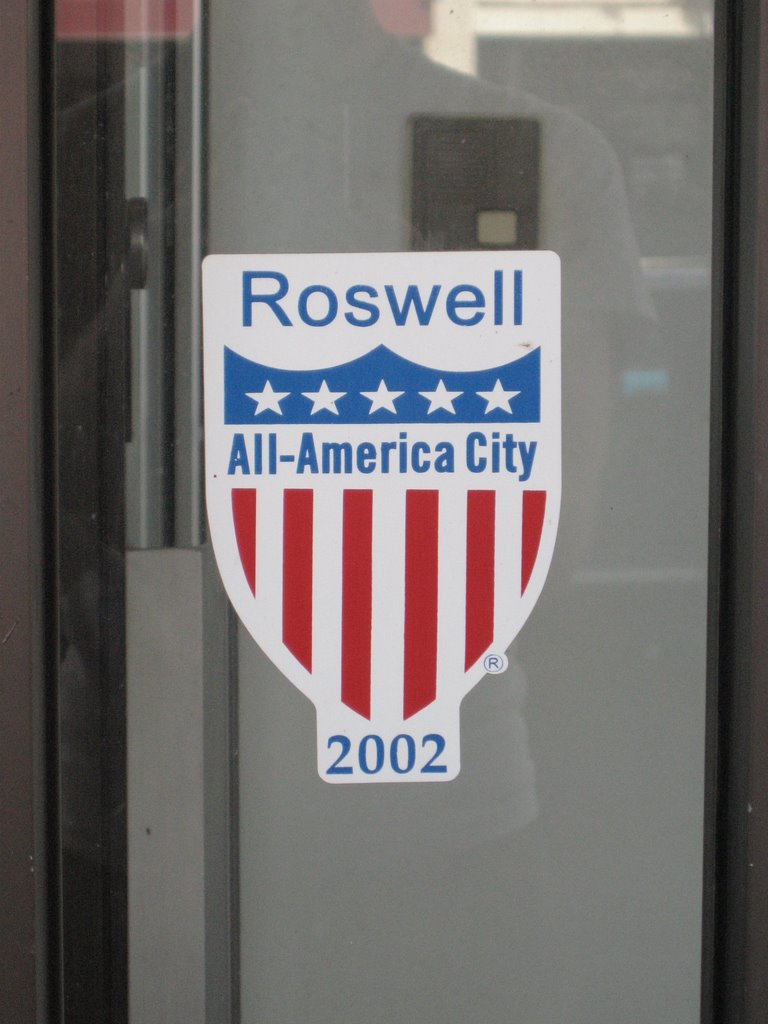
    Despite all the UFO kitsch (and complimentary government mistrust), Roswell's still a conservative small town. The one coffee house closes at 5:301 and has a petition for "Ten Commandments Day" on the counter. The bike shop has closed, and the library is a beautiful space with few books. The most happening place on a Friday night seems to be the parking lot at the Walmart.

    Outwardly, the town's identity is built on the UFO fans who come from near and far just to be near the crash site.2 But except for the museum, it's all kitsch, even for UFO enthusiasts. Does anyone go in the gallery of black light UFO art seriously?

    I don't think that's even possible.


    1 Except for Friday, when it closes at 5:30 and reopens at 6, and closes again at 9.

    2 Footnote only because I am unsure whether to put quotations marks around "crash."

    Monday, June 12, 2006

    Fort Sumner, New Mexico

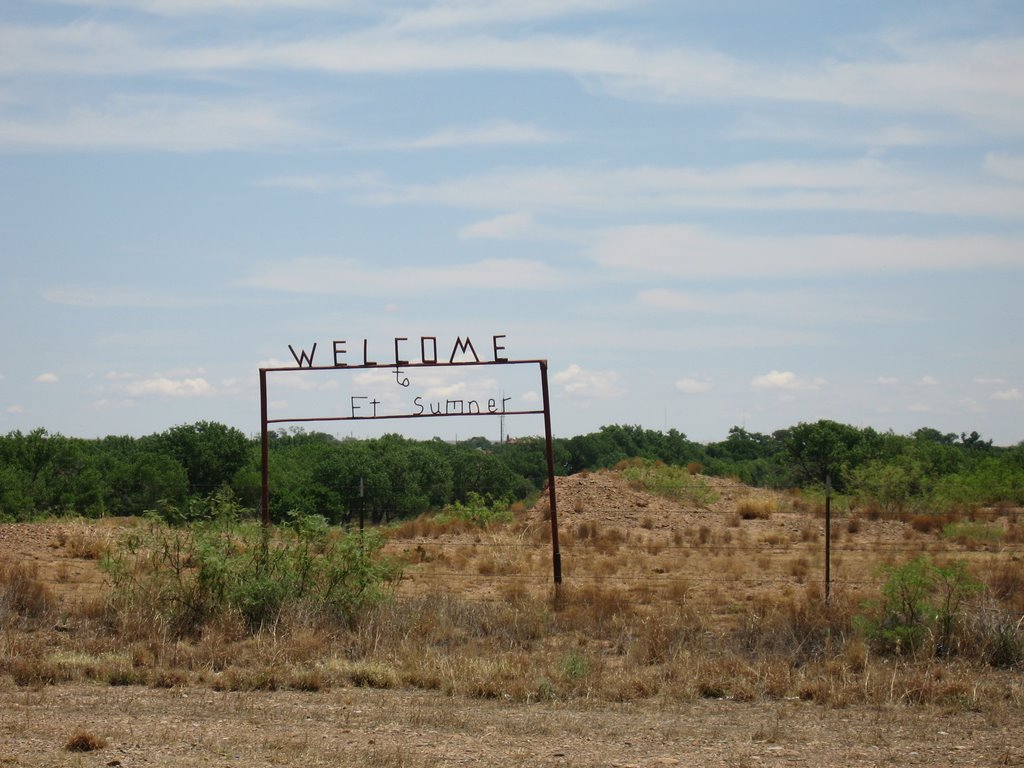
    When I mention to Donald Sweet, proprietor of the Billy the Kid Museum, that the Old Fort Sumner Museum doesn't mention what actually happened at Fort Sumner—namely, that 3000 people died there—he looks at me crossly.

    "It's all history," he says, and I think I might be the biggest troublemaker Fort Sumner's seen in years. On the other hand, the Billy the Kid Museum giftshop is also the site of my second Confederate flag sighting, on a bumper sticker that reads "Never Say Die."

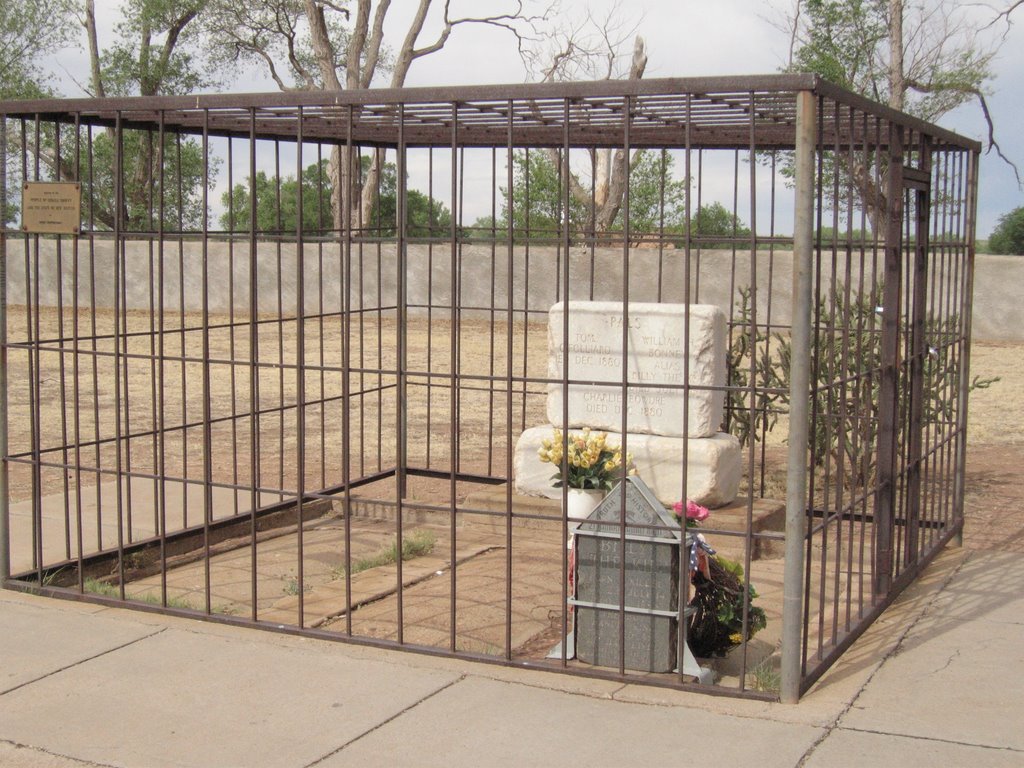
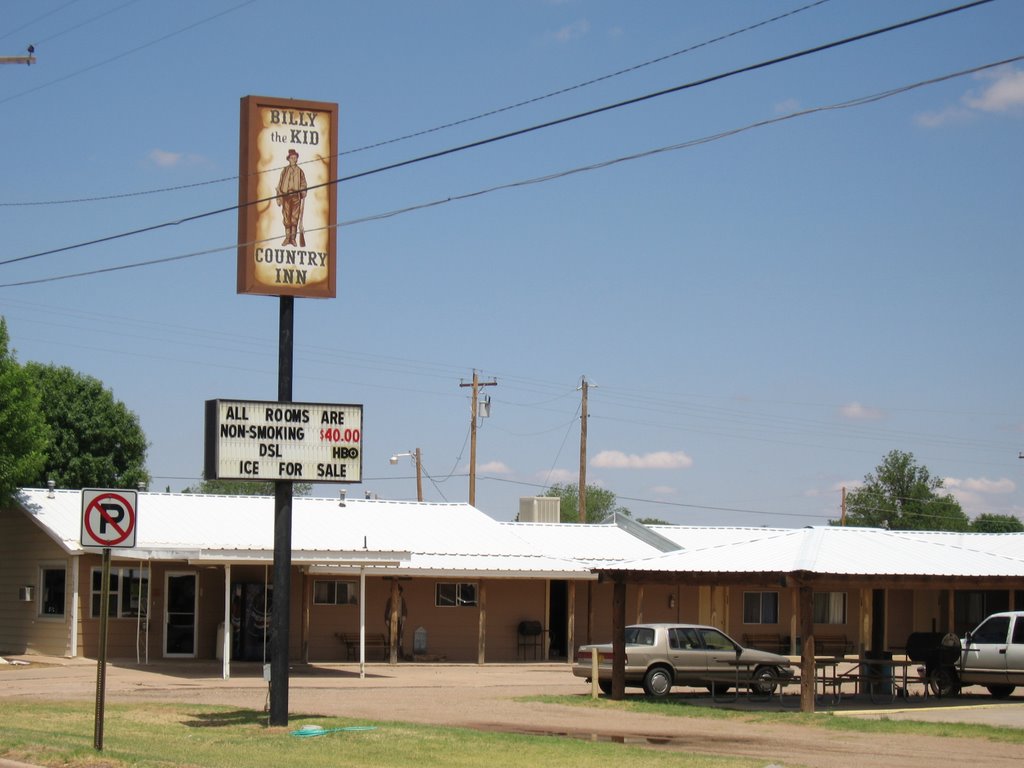
    Fort Sumner's preocccupation is Billy the Kid, whose "authentic 'real'" grave is at Old Fort Sumner. The town of Fort Sumner contains the Billy the Kid Museum; the Billy the Kid Country Inn; The Billy the Kid Tombstone Race ("The World's Richest Tombstone Race"); and the Billy the Kid Road, which leads from US 60/84 to the Old Fort. Billy the Kid makes for good tourist business, obviously, more so than the real fort.

    The thing about Billy the Kid is that, historically, he's not that interesting. He's only more interesting than the actual Fort Sumner if by more interesting we mean that everyone has heard his name. He was a ranch hand in New Mexico at a time when killing people was the norm; he killed people. Though he did once escape from jail, his story just doesn't have the panache of Butch Cassidy, Jesse James, or (late) Bonnie and Clyde.

    Fort Sumner is captivating, but only if you can find information on it. The Indian internment is memorialized at the Bosque Redondo, which is the name of the (former) reservation near Fort Sumner. Bosque Redondo is three miles away from the Old Fort, and if you don't know what it is, well, you don't know what it is. A brown sign points the way, but you have to be going anyway.

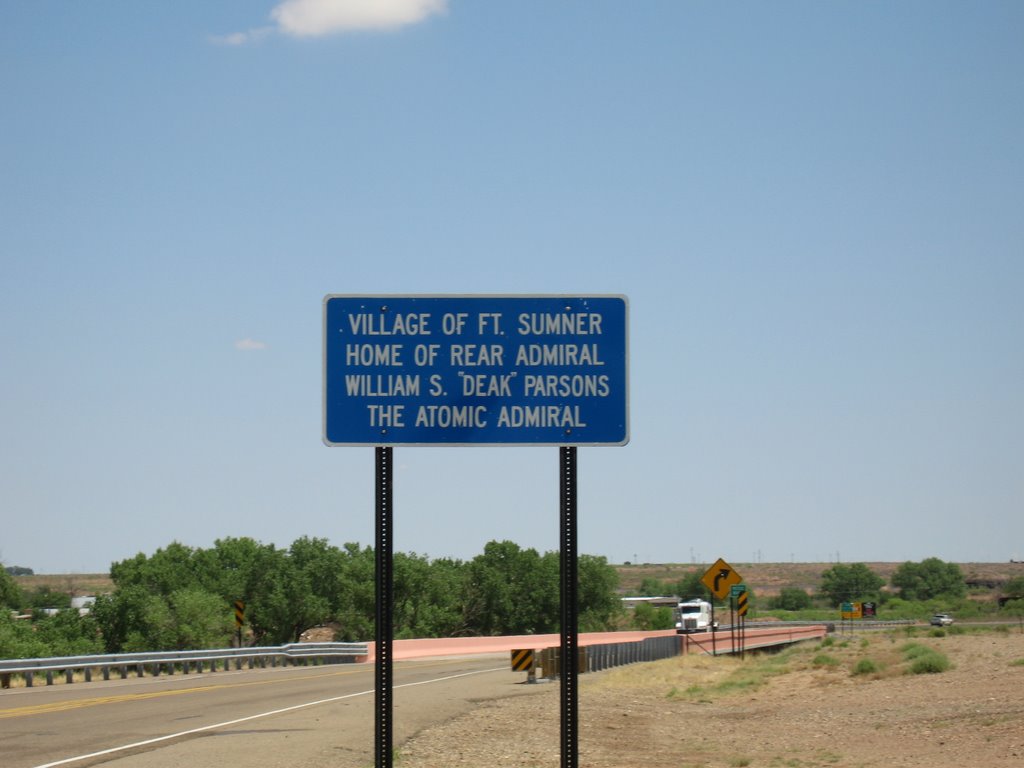
    The town of Fort Sumner tends to ignore this history, no matter what Donald Sweet might say. Everything else tends to be celebrated, from Old Fort Days to William S. "Deak" Parsons, the Atomic Admiral. In retrospect, I'm curious how much the children of Fort Sumner learn in school, whether the prevailing attitude is more pride than honesty, or shame.

    One final irony: for all the hubbub about Billy the Kid's grave, we don't actually know where it is. A flood came though many years ago and scattered all the grave markers, so where the tombstone is now is just a best guess. If you wanted to resurrect Billy, you wouldn't actually know which body was his.


    Saturday, June 10, 2006

    Albuquerque, New Mexico

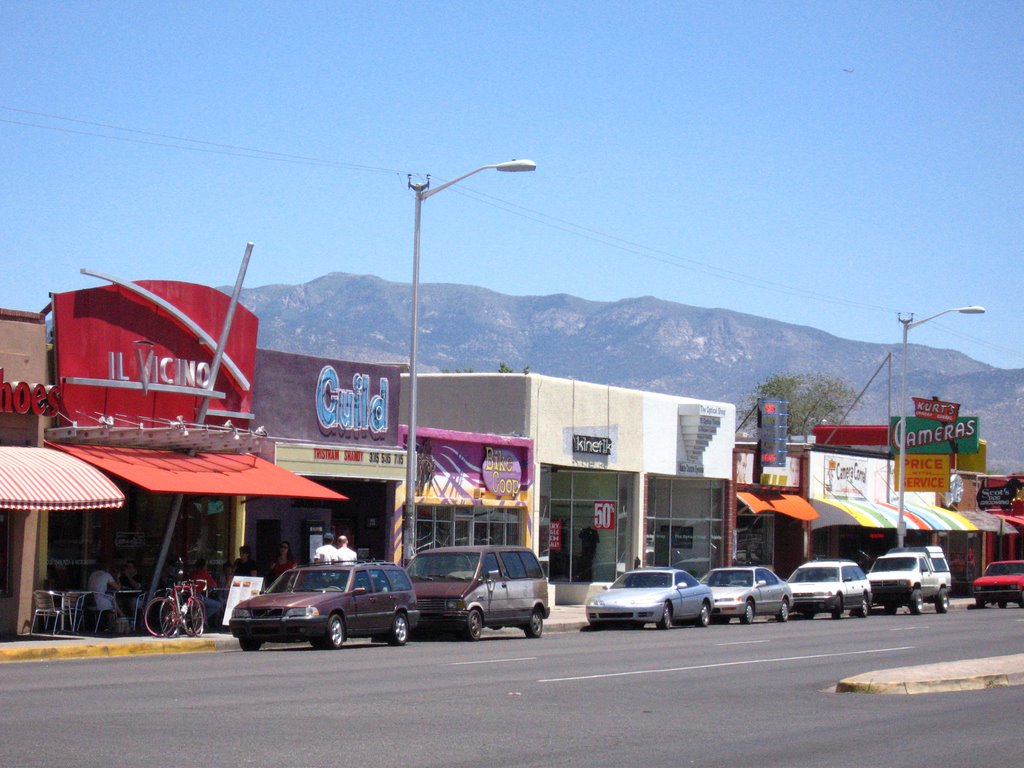
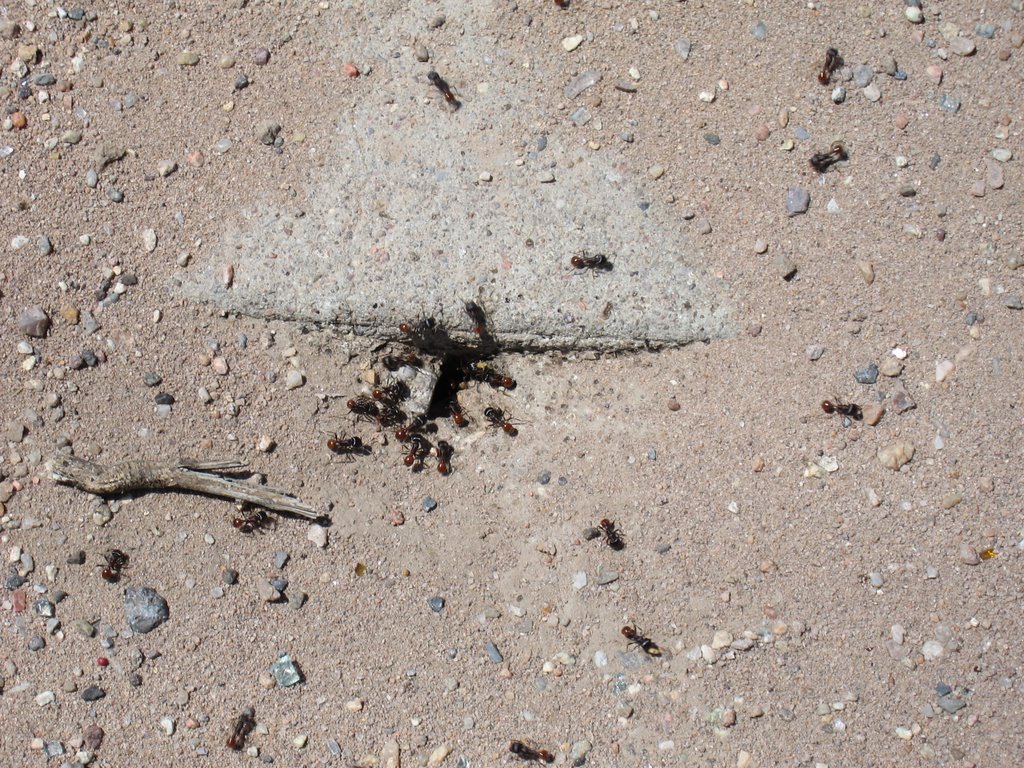
    I don't know how many different species or subspecies of ant live in Albuquerque, but not because I didn't ask. I count at least four: small red, small black, large red, large black. The large black ants are as long as my thumbnail.1 The carry away anything: bread crumbs, scraps of paper, bits of tobacco from cigarette butts, feathers. From these objects, it is hard to know if they are building farms, warehouses, factories, barracks.

    If you are an ant you can find something to do on every yard on every block. Half the city is building upwards, toward the stars, and if you wish you can climb the metallic skeletons and glass-and-granite skin to great heights. The view here is quite something, though safely returning to the ground can be difficult. Your half of the city is building downwards, toward the center of the earth, and if you wish you can travel there as well. The tunnels are dark and you have to navigate by smell and touch alone.

    Where do your tunnels lead? How many of you are there? Something is going on below the surface. If only you'll tell us just what.


    1 Trimmed.


    Chilili, New Mexico

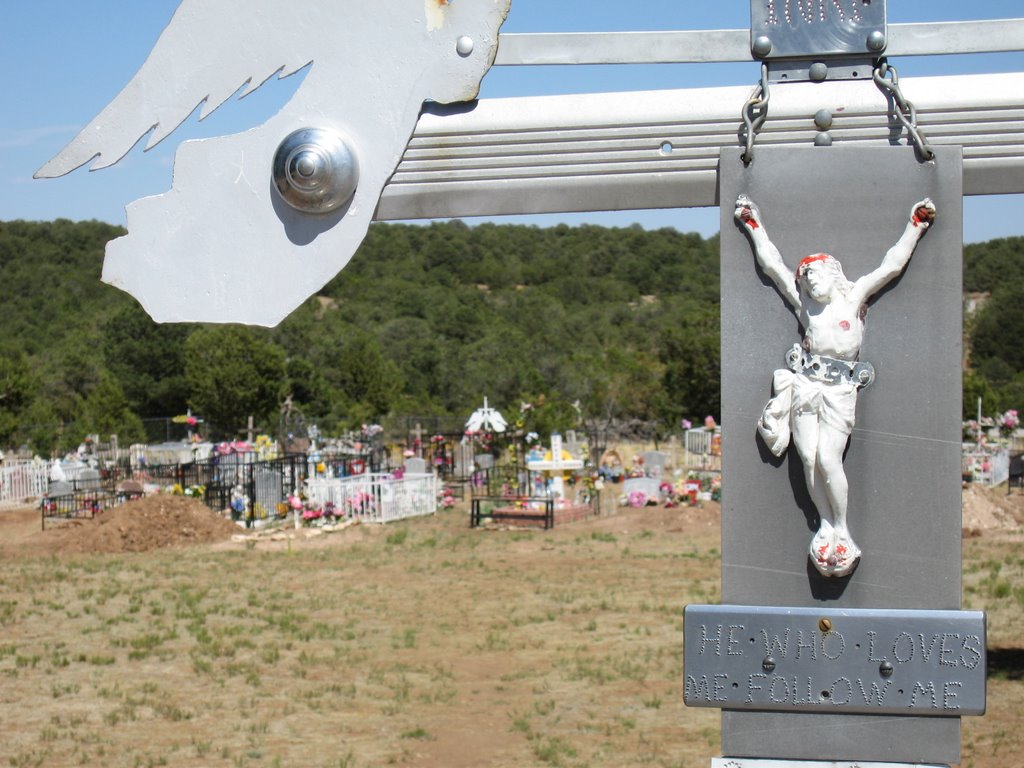
    Idon't know the story of the town of Chilili, and based on the welcome sign—which declares Chilili a self-governing community based on the Chilili Land Grant and asks for no photographs of town, among a long list of nos—I didn't want to stop and ask. Chilili's a town full of photogenically dilapidated buildings, as well as a yard for older yellow school buses and, of course, that sign, and even with only a hundred or so residents it seems that you could spend a few happy hours walking around and watching.

    The cemetary is just outside of town. Unlike the town of Chilili, the cemetary has a sign that says visitors are welcome and photos allowed. You can't see the sign from the road, though, so you might spend a few minutes avoiding the Chililians if you don't know you can go in.

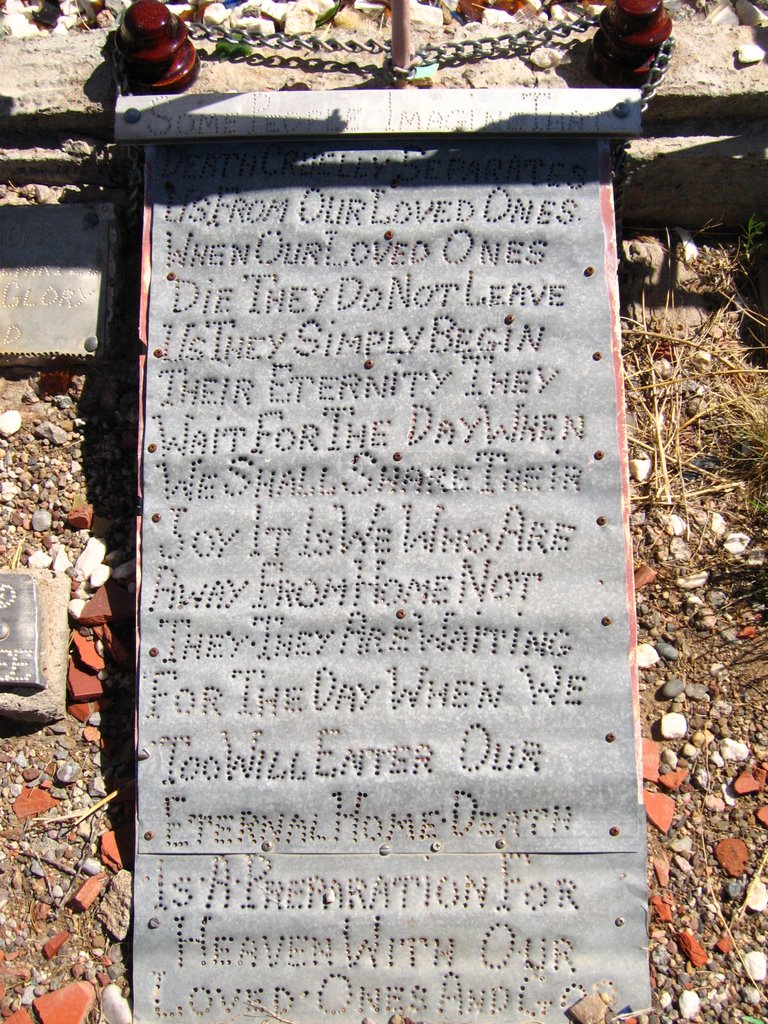
    It's safe to say that the graves prior to Horace McAfee aren't particularly interesting; the same is true for the graves after his death. They're just crosses and rounded stones.

    McAfee's, though, are special. You can identify them both by style and by the large "Made by H. McAfee" sign on each one. The text on the grave markers is a tin sheet pounded with a nail, often on a cement base. The metallic rails often describe the coffin aboveground.

    As I watch, lizards scuttle across, around, and over McAfee's graves. Did he plan for this? But this is true of the newer graves as well.

    A regret: If only I had asked someone for McAfee's story, to disclose his motivation beyond the religious conviction spelled out on the larger tin sheets. Some of the more recent graves are now mounds rather than pits, without true markers, markers that will last. This could have been true in McAfee's day as well, and he has been dead 50 years. Are the people too poor for proper graves? Was this McAfee's way of enriching his people? The answers lie with him, here, in Chilili.

    Wednesday, June 07, 2006

    Santa Fe

    The Georgia O'Keeffe Museum in Santa Fe is surprisingly small, only eight rooms, if I remember correctly, and it's easy to think that there must be more to it, especially for eight dollars. (Indeed, as I was leaving, a man with a broad drawl asked an attendant, "Darlin', is there more someplace?") That the most arresting pieces in the museum were Alfred Steiglitz's photos of O'Keeffe only added to the disappointment.

    I tired of Santa Fe after about six hours, so I left. I couldn't find the real town among the Navajo blankets and ceramics and women's clothing stores. The Jean Cocteau Theatre is closed. The Ghost Ranch Presbyterian complex had cut-rate Klaus Oldenburg imitations outside, complete with bright red cherries. The river had no water, but the promenade was still picturesque.

    It occured to me that Santa Fe is a honeymoon city, a beautiful place for quiet self-indulgence in a shaded courtyard or hotel room with a breeze on the curtains.

    Let me tell you what the city felt like: a traveling carnival, a movie set, Southwestland. Like a paper-maché city; or a computer simulacrum. As if I could find a special door to take me to Florence, or Tomorrowland, or Cinecittà, where the actors may be dressed differently and speak differently, but the soil beneath is all the same.


    Bernalillo, New Mexico

    Ahem.

    Tuesday, June 06, 2006

    Farmington, New Mexico

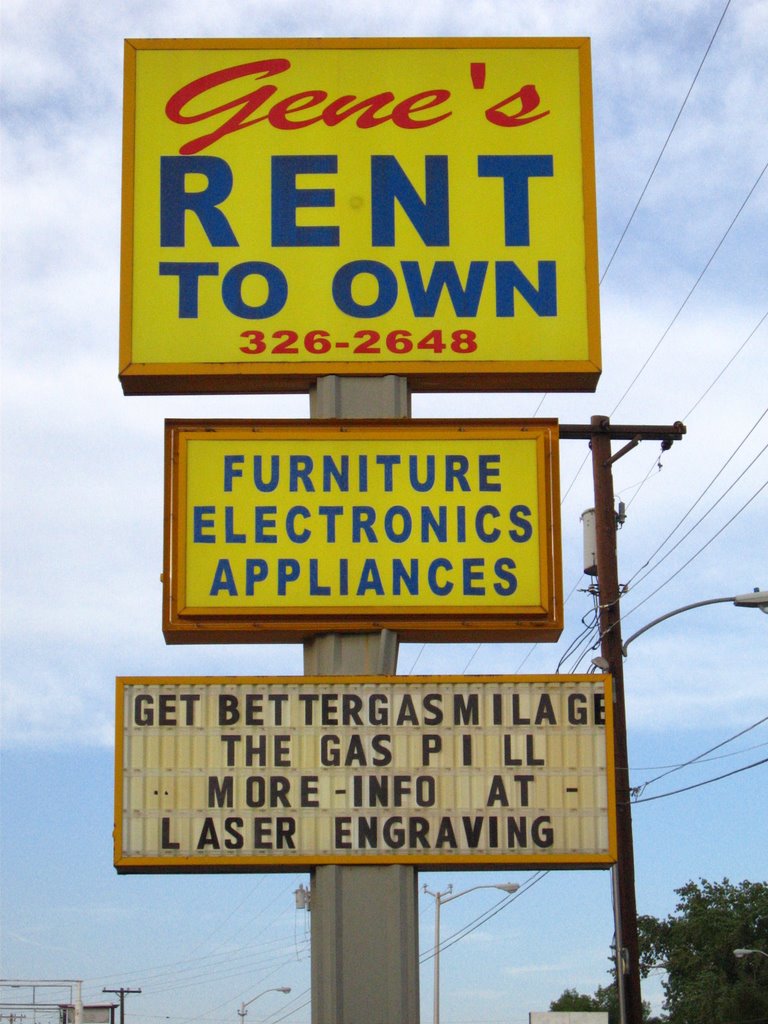
    It would be easy enough to disparage Farmington. The same strip mall with a "permanent makeup" store has a marqee that advertises a "gas pill" that will suddenly grant you tens, if not hundreds, of extra miles per tank. Teenage boys lean out the passenger windows and yell at you—"What's uuuupppp?"—then circle back around to do it again. Sometimes they shout "Jesus!"—well, "gee-zuss"—but it's unclear whether that's some sort of ecumenical call to arms or just the sort of thing the teenage boys of Farmington shout from cars at 25 mph.

    It would also be easy to defend Farmington in a lazy, faux-populist, David Brooks sort of way, where these are salt-of-the-earth people and as a big city interloper I just don't get it. I could even cite Farmington's two brewpubs as evidence of rural sophistication and belief in craftsmanship.

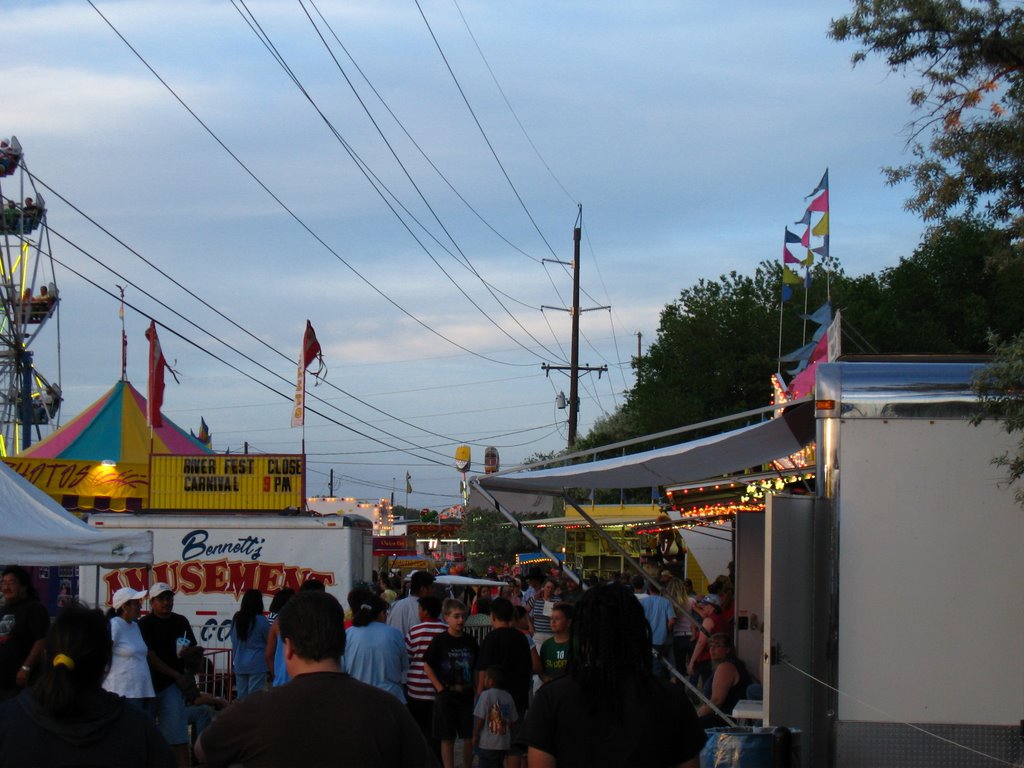
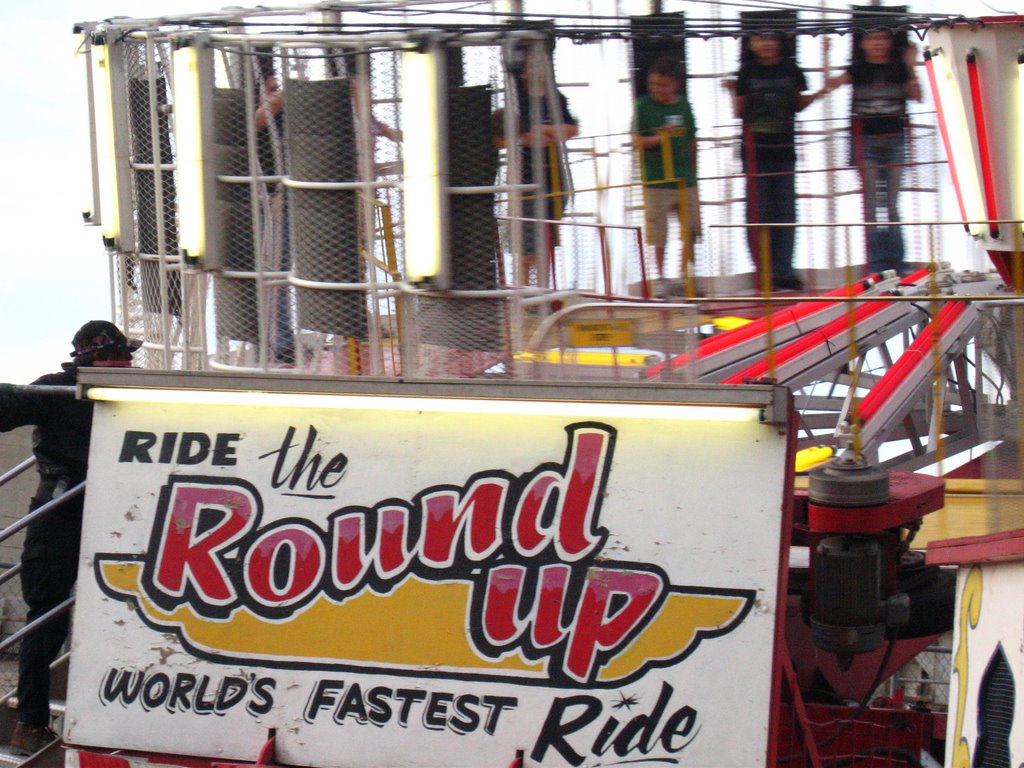
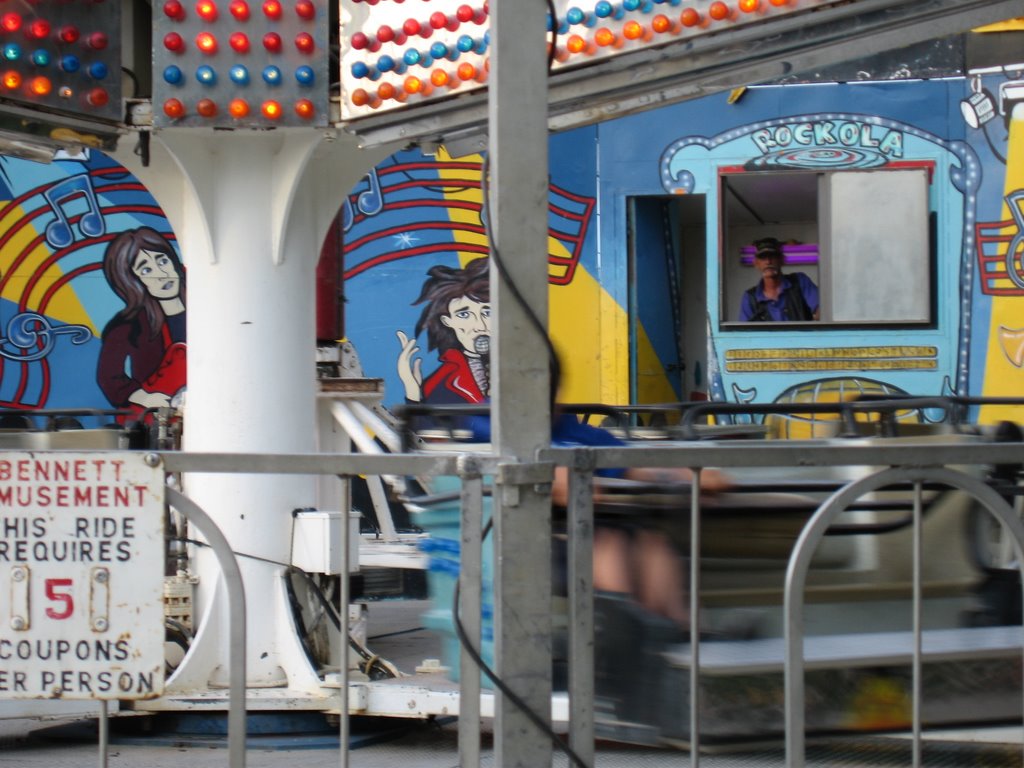
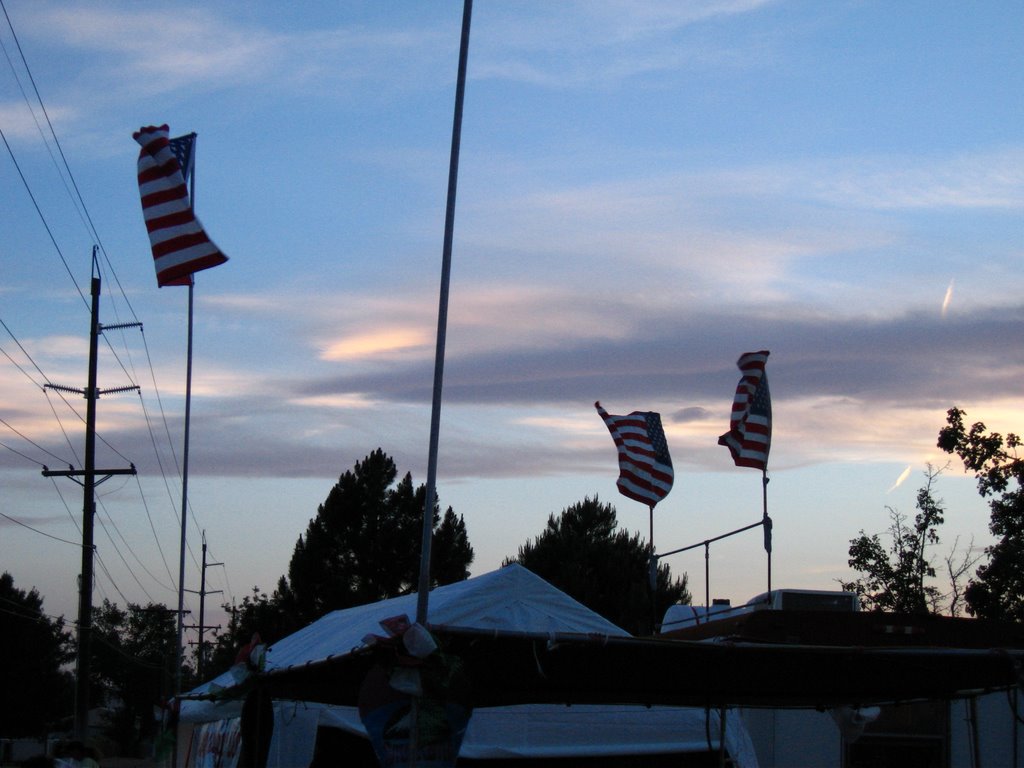
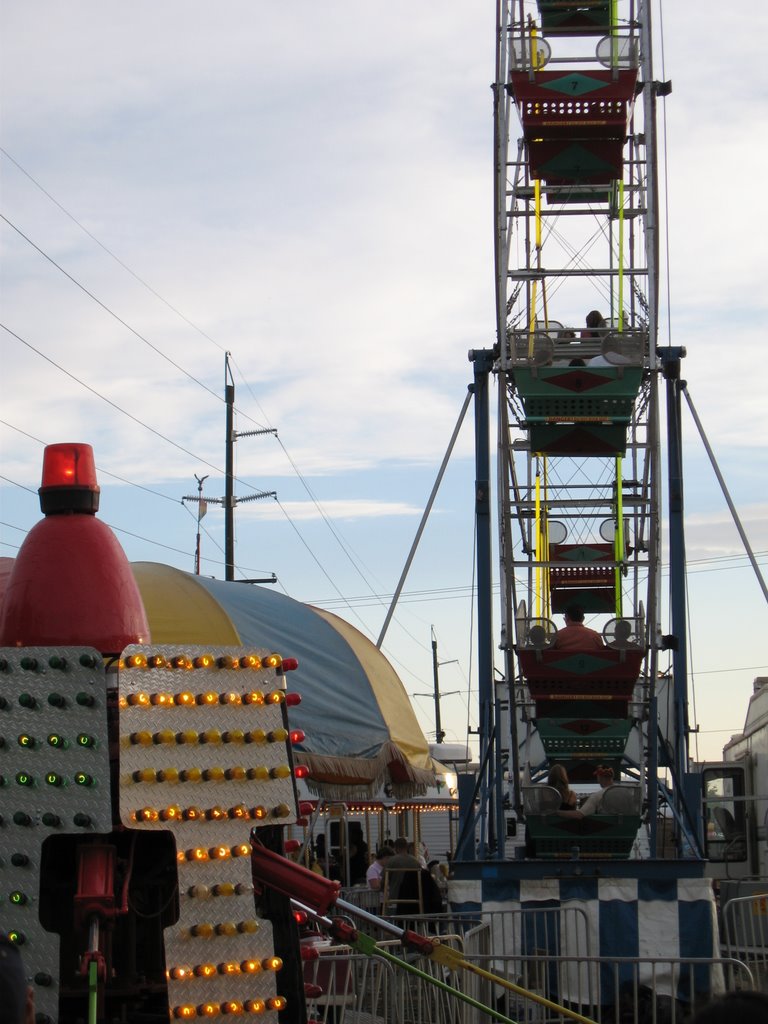
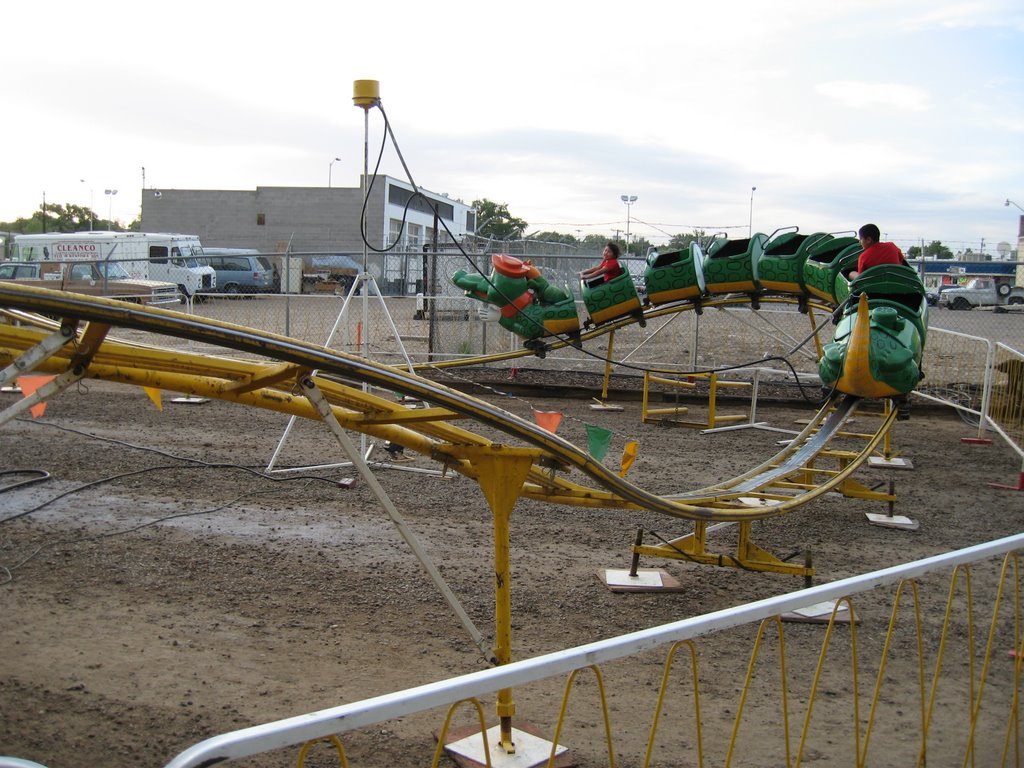
    Instead, I stumbled upon the Riverfest Carnival, which was on a downtown creek. And the carnival was just so, well, earnest.

    Carnivals are like that. They feel almost anachronistic now, not just because cars, jets, and computers have shrunk the world but also because, really, who gets their kicks from skeeball? Even the prizes (inflatable alien, cap gun, giant stuffed The Roadrunnertm) aren't particularly worth it.

    Which is why carnivals are greast, especially carnivals in smaller towns like Farmington (population: 37,844) where the four teenagers with eyeliner and dyed black hair hang out with a Navajo cowboy and a red-headed kid in a "Dance for Him" sweatshirt ("Him" meaning the crucified Jesus in the picture). Everyone above the age of 10 knows the games are fixed, but that's okay, it's a carnival. As if everyday judgements of who to associate with and what to avoid are altered in the hypnotic call of the carnival barker.

    Perhaps the most uncomfortable thing I saw was a man wearing a t-shirt that read "Bull riders ride anything horny" while holding the hand of his daughter or granddaughter.

    Perhaps the most disturbing thing everyone else saw was me, taking pictures of the children as they ran out of fun houses and were twirled by the Tilt-A-Whirl.

    In "A Ticket to the Fair," David Foster Wallace theorized that rural folk go to fairs precisely for the crowds, the lines, the hucksters. Fairs are a little bit of city bustle, for them, a change of pace. A carnival, like a fair, is a city created overnight, an empty field that suddenly has bright neon lights and confusion and extreme density.

    But it's a city of the rural imagination, of the same people at the Ben Franklin or the Sonic Drive-in, a city that is small and familiar and easy to navigate. A city where the band plays not something new and perhaps difficult to like but instead covers Lynyrd Skynyrd and George Strait and Santana. A city where the food is fried and easy to pronounce, even if a funnel cake runs $5. A city where you can go back home and not be changed.