Saturday, May 20, 2006

Travelogue: Reno

Black Label Reno is a bicycle gang. A tall bike gang, specifically, which means that they weld together two (or more) frames, and ride around town, causing mayhem by riding really slowly and not dismounting until absolutely necessary.

Unfortunately I missed the Poker Run, and didn't ask my acquaintances at Cyclecide to introduce me before I left, so I had no way of getting in contact with them. Accordingly, there wasn't much for me in Reno.

Reno's an odd town. It's surprisingly clean, yet it feels dirty, at least downtown. Three pawn shops line the street across from the El Dorado, for instance, which isn't really news, and doesn't make a great picture, but was and is still odd to see in person.

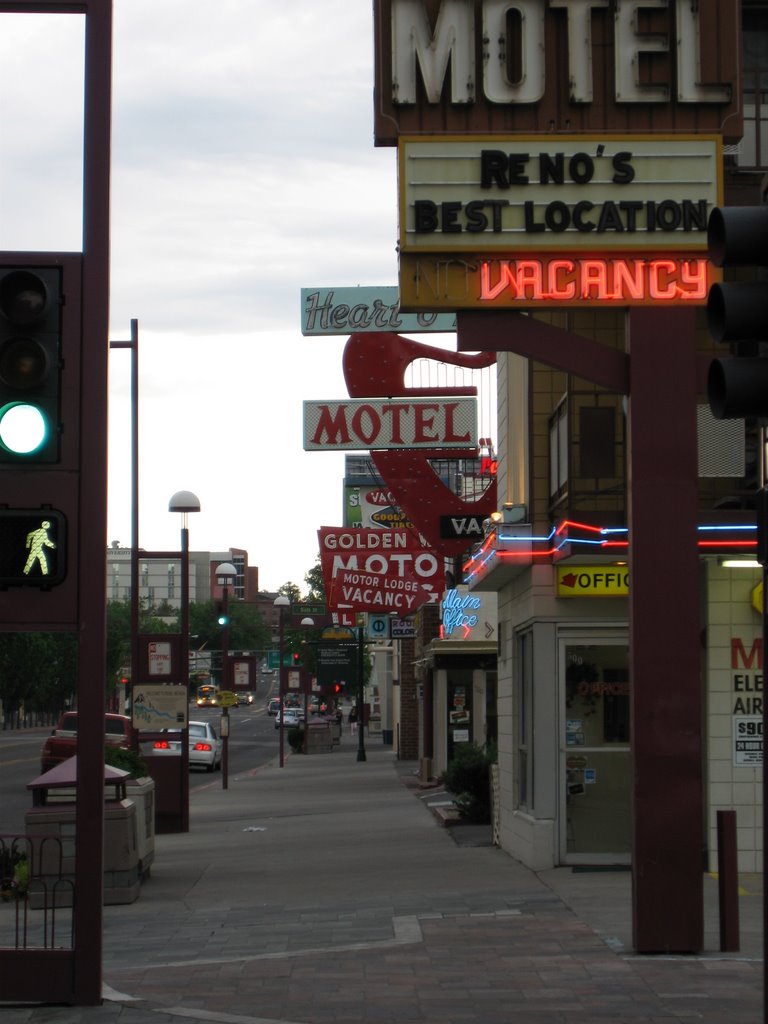
Walking around—meandering through the part of Reno that the tourist board wants you to visit—I became more interested in the Reno of 40 or 50 years ago than the Reno of today. Shuddered motels fringe the downtown area, sometimes under construction, sometimes just vacant. Many of them have left their signs lit, buzzing day and night.


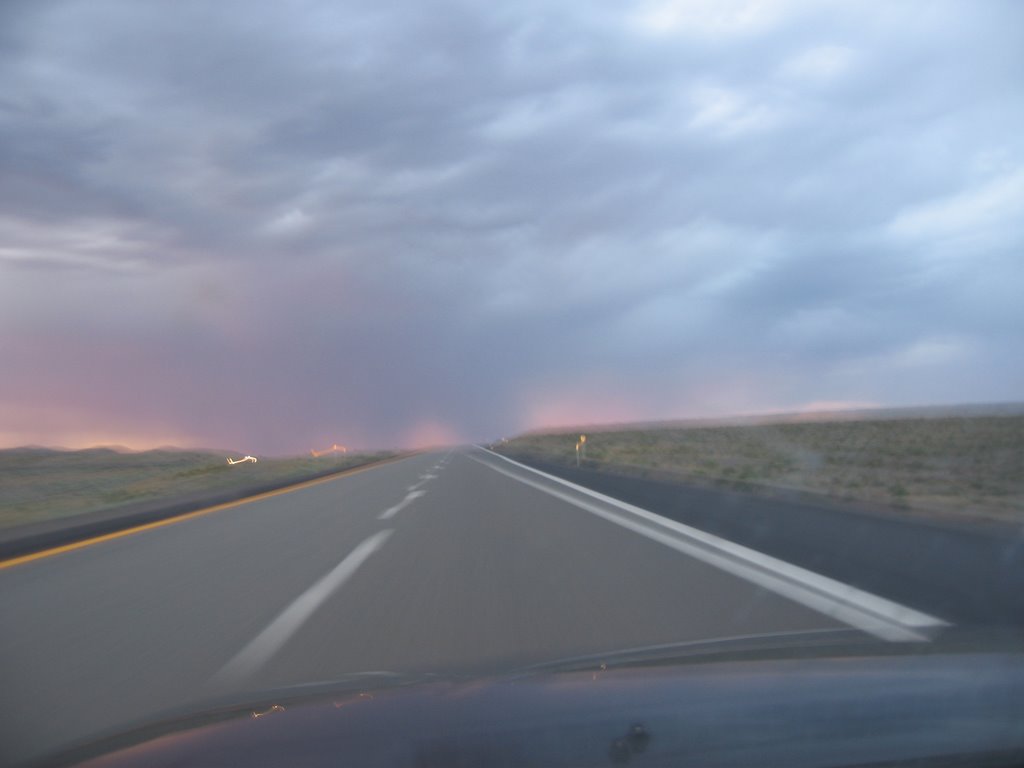
Travelogue: I-80 East of Reno


Friday, May 19, 2006

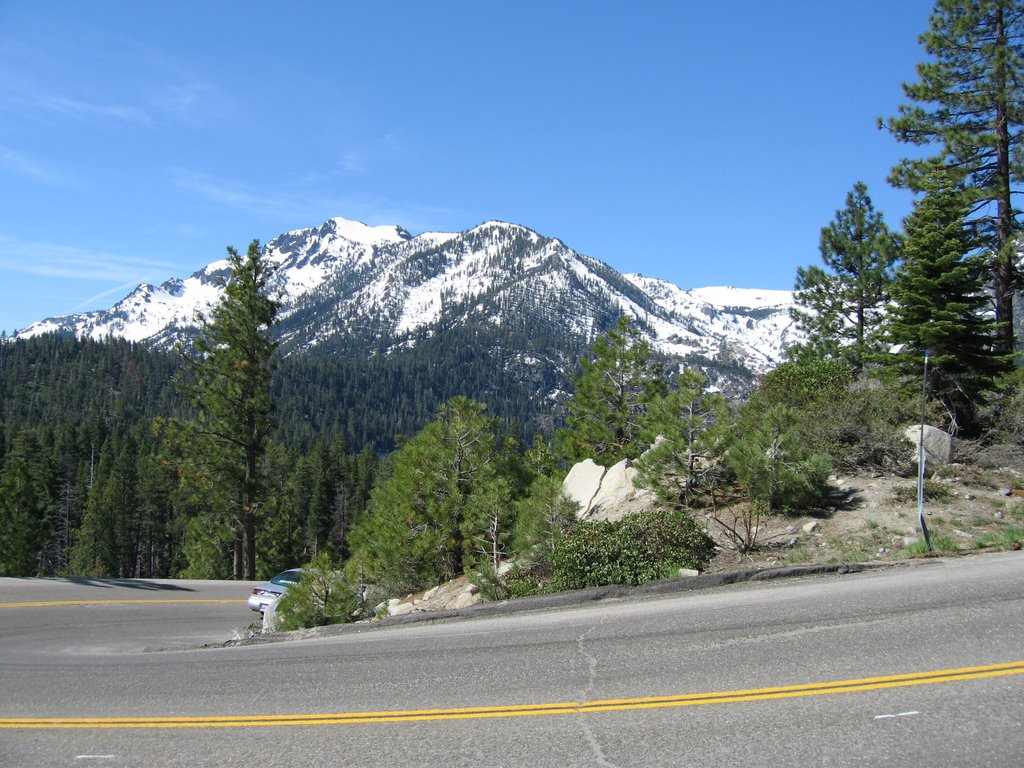
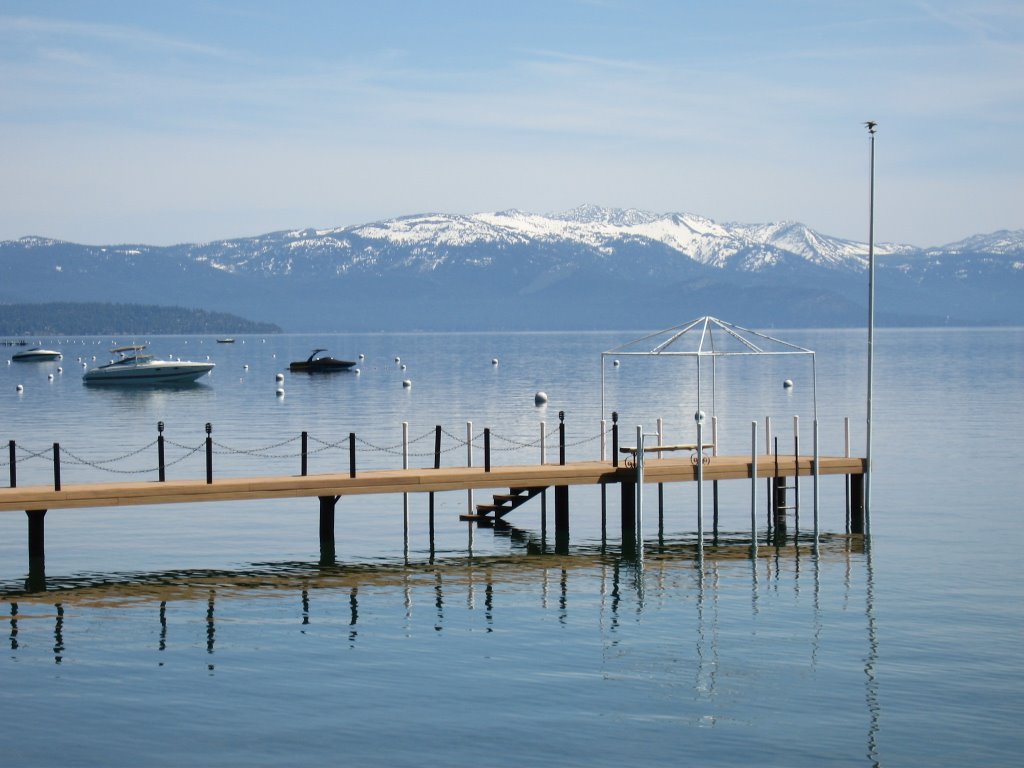
Travelogue: Lake Tahoe

Biking around Lake Tahoe took me about 4 on-bike hours, and a little under five hours total. The highway on the Nevada side is reduced to one lane at times for construction, and sometimes the delays reach 20 minutes, as I discovered when I was leaving town on 50. On the bike, though, the most I waited was about five.

The round trip was just over 70 miles, but at 6500 to over 7000 feet of elevation. The flat sections were well paved, save for one area near Incline Village, and the speed was quick. Anytime I tried to work a little harder, such as climbing out of the valley, I couldn't hack it. Too much time near the ocean, not enough time in the mountains, perhaps.


Mario's Wayfaring Map

Thursday, May 18, 2006

Wednesday, May 17, 2006

In Winnemucca

I'm in Winnemucca—and going to bed shortly.

Just wanted to let everyone know I'm still kicking.

Tuesday, May 16, 2006

Travelogue: Fare-Thee-Well, San Francisco

Before leaving, I though it might be helpful to take some pictures of San Francisco. The underlying idea of this trip, I suppose, is one of strangeness, that I am looking for the things that are far different from what I know.

I like quirky Americana, of course, and I expect to see a fair bit of it on this trip. But it's not really the point to see only Halls of Fame and other attractions meant for tourists like me. I sometimes wonder how many people stop at the "World's Biggest" anything simply because it's kitschy, because anyone can be ironic about seeing the World's Largest Ball of String or the World's Largest Fruit Cocktail Can or what have you.

Familiarity

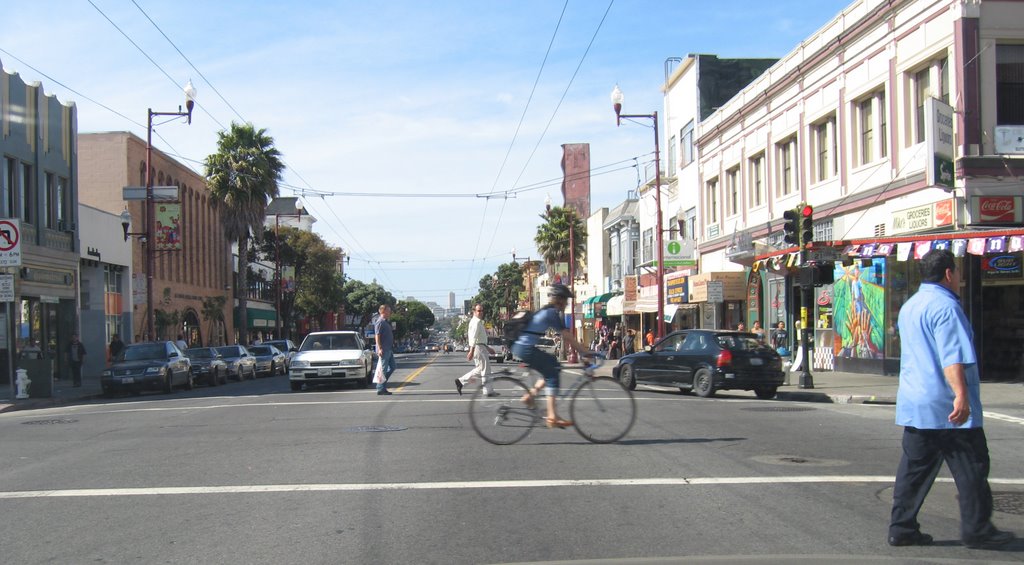
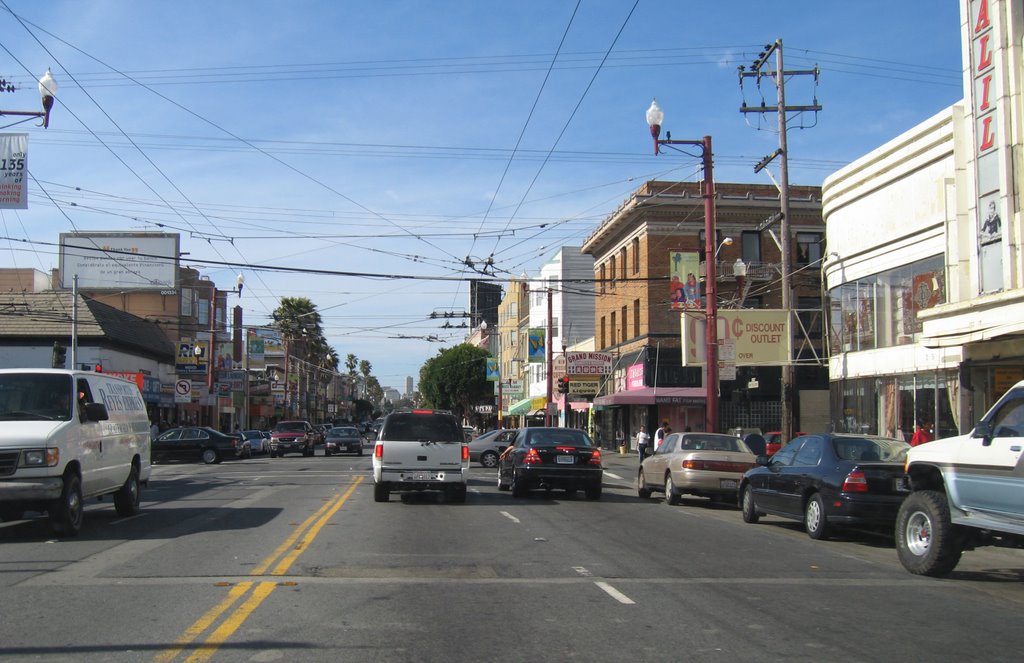
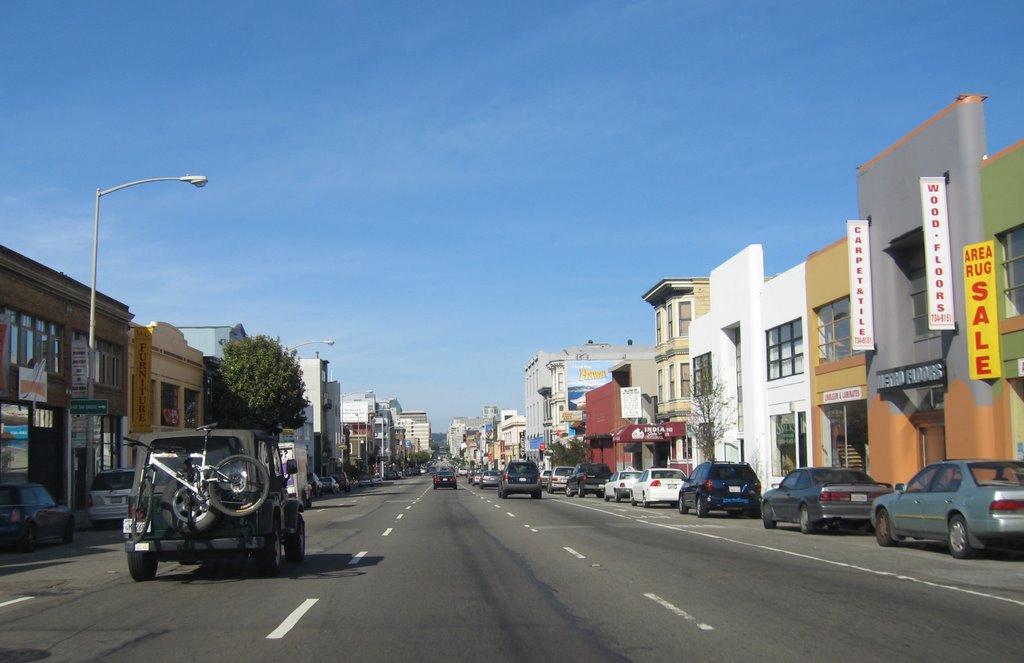
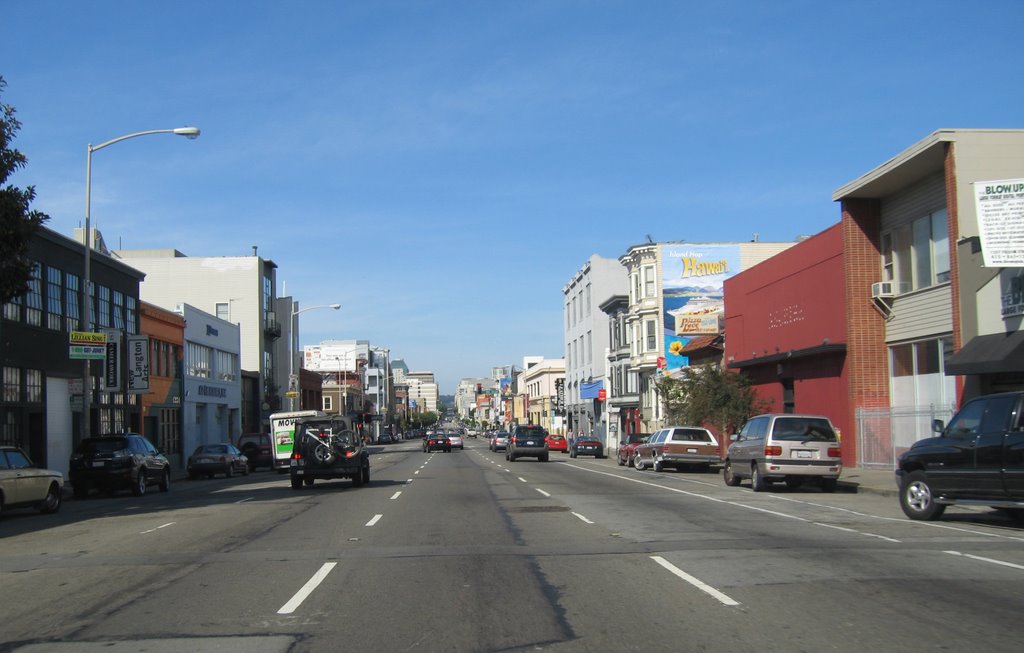
Rather than describe positively what I am looking for, I thought that I might show here some pictures of what I know. They are, I admit, partly for me when I get homesick for California.


Pictures from my rooftop

Bernal Hill

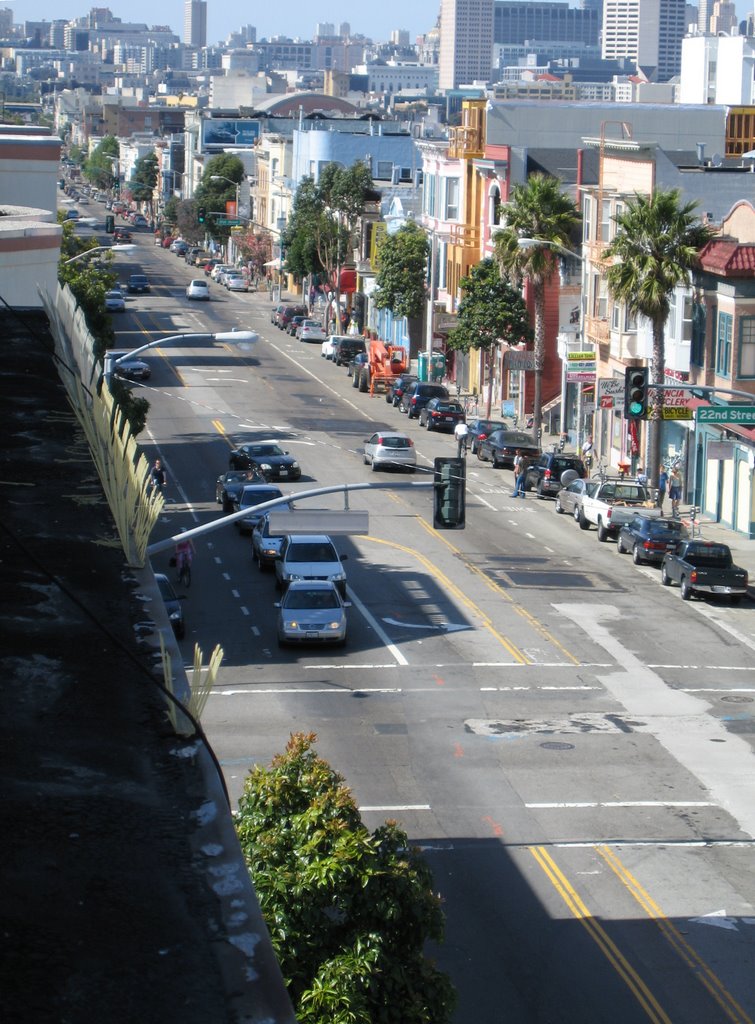
Valencia Street


A few more pictures of the city...

Coming down Mission Street


The wide-open feel of SOMA


Through the Tenderloin


Without the department stores of Union Square, where would tourists get cold in the fog and have to buy overpriced sweatshirts?


...into the ever-rousing Financial District...


And a staircase on the sidewalk in North Beach.


Finally: Sunset

A Note on my Travels and This Site, which Shall Record Them

After today's main post (above), I don't know how often I will be able to access the internet. Perhaps all the time, perhaps only rarely, I'm not sure.

I don't yet know whether I will update the site one story at a time, as I would prefer; Blogger can't yet receive entries at one time and automatically post them at a specified date. I will be updating as regularly as I can, however.

On a personal note, I've been amazed at how many people have been supportive of me in this crazy adventure. Thanks for your kind words and well-wishes!

Monday, May 15, 2006

Talents I Have Met: Aimee Bender

On one hand, taking this picture could be symptom of silly fandom. On the other hand, it really is completely awesome. So awesome, in fact, that I made it my profile picture to the left.

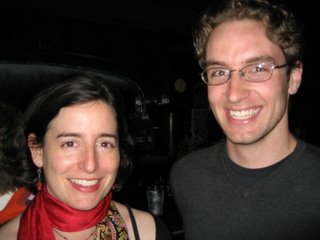
As promised long ago, a picture of me and Aimee Bender at the Make Out Room in San Francisco.
Last Monday night was the second installment of the Progressive Reading Series, which is an benefit for LitPAC, Stephen Elliott's political action committee. When you try to enter the bar, a cadre of LitPACers stop you and make you fill out a form: The admissions fee is a political donation, apparently. LitPAC, it turns out, raises money for Congressional candidates like Zach Space and Nick Lampson, the latter of whom is running for Congress in Tom DeLay's (former) district.

I've gone for the past two months, and the lineups have been stellar both times. April was ZZ Packer, Peter Orner, Daniel Alarcon, Po Bronson, and Stephen Elliott. This month was Pam Houston, Steve Almond, Peter Rock, someone I can't recall (sorry!), and Aimee Bender. Both readings were packed.

Seeing so many people at readings is heartening for me, especially because I haven't seen any "name" writers at them, no David Foster Wallace or Chuck Palahniuk or Neil Gaiman types, writers who have cults and will bring out a crowd wherever they go.1 Most lit readings are lucky to get 20 people, and it often feels that writers or aspiring writers comprise much of the audience. This insularity worries many, and is one of the reasons that literature is widely understood to be in decline.

But literary fiction has always been "in decline." When I was taking Latin, I remember a teacher of mine quoting an ancient that everything worthwhile had already been written, and was in the Library of Alexandria. (Google is failing me, but I'll work on the citation nonetheless.) I've heard it since then, as well, often coupled with a lament that no one reads anymore, literary novels don't sell, and so on and so on and so on.

I disagree with the "nothing left to write" camp—in brief, I feel that they are absurdly reductionist—but I do not otherwise dispute the facts. Literature has been trending toward cultural irrelevance for decades. Entertainment comes in other forms; news comes in other forms. But the internet has made writers——content producers, in internet-speak——important again. Let me put it this way: Because of the internet, writing, in all its forms, is now more important than television.

The business of writing books

Writing literature is, of course, a business. Writers may love the work they do, but they shouldn't have to do it for free. To my mind, then, we need to find novel ways to make money doing what we love.

Writers tend to be artistic types, and artistic types tend to shy away from business. There are many exceptions, of course—as I recall, Carver was an oilman and Wallace Stevens was in insurance—but looking at writing as a commercial product still seems anathema to many of the writers I know. How can you commercialize art? they ask.

The answer, I think, is not in the product, but in the delivery. I believe in the Long Tail, which proposes, in short, that profits from every niche product collectively outweigh profits from popular, blockbuster products. It's a complex and interesting idea. Literature is a niche market, and will continue to be a niche market, but some people want to buy books that are good and different from what everyone else is reading.

What are the economics of being a writer right now? For the most part, it involves a day job. Office work, temping, publishing, editing, teaching: All of these are jobs that are not writing. Even journalism or magazines, for a novelist, can be a day job. If you are working for someone else, you are not working for yourself. Period. Sometimes this is okay, but sometimes it is detrimental, and in any case writers should have the opportunity to make a career from writing and writing alone.

I therefore propose that writing full-time is a better career for a writer than not writing full-time.

Readings like this are a great beginning. Publishing, like the music industry, is based on a boom-or-bust model right now; unlike the music industry, I think there is still money to be made for publishers. But literature doesn't really have booms, and the literary equivalent of James Patterson or John Grisham or Michael Crichton is who? Toni Morrison? Normal Mailer? Jeffrey Eugenides?

Furthermore, writers aren't publishers. What is good for writers may be different from what is good for publishers. Publishers make balance-sheet decisions about authors on a regular basis, as part of normal operations, and authors should not believe otherwise.

Perhaps, then, the business model of being a writer should be changed. With the Progressive Reading Series, I think that we've stumbled upon the literature-as-indie-rock model. Writers with Drinks is similar to the Progressive Reading Series in this regard.

The music industry, widely construed, has many similarities to publishing. Most importanly, there is no lack in demand for content for either, simply lacks in demand for older, and often outdated, delivery of that content. People still listen to music, and they certainly read.

For those that can get by as musicians, how do they do it? For the most part, it is not with album sales, as Steve Albini made clear in his influential article. Instead, musicians make their living via performance; for the musician, the album is actually something of a loss leader, designed to attract and maintain interest among those fans who would and do pay to see a live concert.

But musicians also have a vested interest in putting out great albums, beyond creating a lifelong audience/revenue stream. Albums are how musicians are remembered, how greatness is achieved. Authors, especially those writing literature, could adopt this model closely.

It's not going to be for every writer, and it doesn't have to. But a lineup of writers packed the Makeout Room in San Francisco twice, at $10-20 a pop. So why not see this as a sign that you can make money doing readings? For minor writers it will be a reading before your girlfriend and her parents, but so what? Starting out in a band is the same way.

Don't misunderstand: these performances are not really about performance. Instead, they are a chance for the people who admire you and your work to come out and meet you. It's about developing a way for people to get close to literature again, by making writers eminently accessible. Aloofness and solitude work for Pynchon and Salinger, but those two are great exceptions.

Yes, what I'm proposing means that writers have to be nice. But if you're trying to sell books, why wouldn't you be nice to the people buying them? If you want to be recognized as the greatest writer since Nabokov, make it enjoyable for your readers to buy your books for their friends, and get them signed, and have their friends come to meet you.

Oh, and as long as we're on the indie-rock model, bring merch. When I meet a someone wearing a Marilynne Robinson t-shirt or a Gary Shteyngart bra, I'll know it's someone special.


1 All the writers I listed, I think, have similar fan bases—mostly male, white, educated, often science-y. Malcolm Gladwell has a different audience, and could probably bring 100 people out most places, but in trying to think of writers who could bring out 100 people anywhere in the country, I come up with very few names.

Sunday, May 14, 2006

Southern Music and Resistence

Again with the procrastination. Well, to be fair, not so much procrastination as trying very hard to get my objects and affairs in order before I leave, and therefore haven't completely thought through the post I mentioned a couple of entries back.

In any case, Amanda Marcotte at Pandagon has a very interesting post on why pseudo-populists in the South tend to ignore Southern music.

Robert Johnson’s legend about selling his soul to play the blues is the classic example of this, a legend that speaks volumes about the stubborn existence of these forms in resistance to authority. Of course, it’s way more complex than that with regards to Johnson’s legend, because the “good” music of gospel is also a music that gave space to resistance. Black people were converted to Christianity in the slave days by slave owners who intended to use it to control them and turn them into joyless, obedient workers and there’s little doubt, I think, that gospel is part of a larger process of reclaiming religion...

The legendary stories of women scraping up from poverty and making it in Nashville–the two biggies being Loretta Lynn and Dolly Parton–are stories that are only possible because the love of music in their communities was so great that they didn’t interfere with women who wanted to play so long as they were good at it....

The tension between Southern music traditions and the attempts of the Republican party to co-opt out culture completely are sufficient to make me imagine Karl Rove just wishes Southerners didn’t like music at all.

The full article can be found here.

Saturday, May 13, 2006

Google Bombing

I have sucessfully google bombed myself.

Google bombing is now in the dictionary, by the way.

Stencilismo: Photos of San Francisco

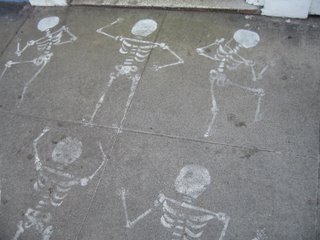
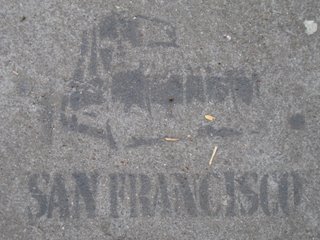
As I prepare the last fairly long entry before I skip town, I would like to make some recognition of all the interesting stencils that you can find on the sidewalks of San Francisco, throughout the Mission District, where I live.

Sometimes the stencils are political,

and sometimes they are advertising,

But more often they are little pieces of art.

And sometimes there is even hand-drawn graffiti made to look stenciled.

All of these photos were taken in an area bounded by 17th and 24th Streets to the north and south and Bartlett and Dolores to the east and west.

Thursday, May 11, 2006

The Ethicist misunderstands the situation

In the most recent installment of Randy Cohen's column in the New York Times Magazine, the first question he chooses to answer is, uh, curiously easy:

I am an administrative assistant who is required to open and log all incoming mail except that marked "confidential." But some mail not so-marked is clearly personal, and I feel guilty reading it. My boss shrugs off my discontent. Is it ethical to read other people's mail just because it arrives at a place of business?
Anonymous, New York

Cohen, in part, replies:

Your boss's legitimate interest in tracking business correspondence does not allow him to violate the privacy of his employees, even those imprudent enough to receive personal mail at work....

Even unmarked mail is entitled to privacy, both legally and ethically. As soon as you realize that you are perusing a personal letter (possible clue: it includes a vivid description of a someone's anatomy and yours is not a doctor's office), stop reading and forward the letter to the co-worker.

The Easy Answer

Perhaps Cohen doesn't know this, but opening mail addressed to someone else is a felony. It seems to be that an ethical obligation to follow the law, even if we rate it as only a secondary duty, is clearly in force here. Furthermore, no one can compel felonious action without risk of clear and immediate harm if one does otherwise, so the boss is clearly in the wrong on this count as well.

Playing More or Less Fair

I am not a lawyer, but can imagine a tendentious legal argument1 that by taking this job, the employees are waiving their right to privacy. Let's assume this is true somehow, so that we are in the same position that Cohen puts himself in.

There is an operative issue in the ethics of this situation: Whether the employees know that non-confidential mail will be opened. If the rule is clear, i.e., it is repeatedly and publicly stated that any mail not labeled “confidential” will be opened and logged, then it seems that the burden to label private materials fall on the sender. Writing those 12 extra letters isn't particularly difficult, and there's no real way to put the burden of determining private materials on the employer.

Also, the correspondents have an opportunity to warn one another of barriers like this. After all, who has personal correspondence with someone they don't know?

More than anything else, I'm not sure how Cohen has anything to say about this at all. The boss is clearly wrong. He could and should have closed this one with one paragraph.


1 Tendentious because this is not a civil right, but a felony. If you can “give up” your right to not be the victim of a felony, we have even more problems as a society than I thought.

I make an analogy like this: We all know that of all postal employees, a very small number go crazy and shoot their co-workers. If every new hire knows that they may be shot and killed on the job before they agree to the job, and agree anyway, they've clearly waived their right to not be killed by a fellow employee.

Because the new employee tacitly consented to it, see?

Wednesday, May 10, 2006

A Real Foreign Language

Among things that didn't happen yesterday: Mario making gphoto2 work. So the picture of me and Aimee Bender will have to wait until my new workaround/toy arrives.
In the meantime, Der Spiegel has a fascinating article on the Pirahãs of the Brazilian Amazon:

...But the language of the forest dwellers, which Everett describes as "tremendously difficult to learn," so fascinated the researcher and his wife that they soon returned. Since 1977, the British ethnologist at the University of Manchester spent a total of seven years living with the Pirahãs -- and he's committed his career to researching their puzzling language. Indeed, he was long so uncertain about what he was actually hearing while living among the Pirahãs that he waited nearly three decades before publishing his findings. "I simply didn't trust myself..."

His findings have brought new life to a controversial theory by linguist Benjamin Whorf, who died in 1914. Under Whorf's theory, people are only capable of constructing thoughts for which they possess actual words. In other words: Because they have no words for numbers, they can't even begin to understand the concept of numbers and arithmetic.

The full article is available here.

Tuesday, May 09, 2006

Obsidian Wings on Ethics

Since I'm on an ethics kick, what's one more post?

Hilzoy at Obsidian Wings offers an excellent primer on ethics:

We all perform actions. And whether or not we reflect on the kinds of actions we think we should perform, the kinds of principles we think we should live by, or the kinds of persons we think we should be, we will end up performing some actions and not others, living in accordance with certain principles, and developing a particular character. It will be true of one person that she ruthlessly pursues her own interests; of another that she drifts along, allowing her actions to be determined by the preferences of those around her; of another that she tries to preserve her image of herself as 'virtuous' only as long as it is not too inconvenient to do so; and of another that she tries to respond to others with generosity and honesty and respect, even when this is difficult. Even someone who tries to live by no principles at all—say, by flipping coins instead of making choices—still lives by the principle of allowing her actions to be determined by chance....

It is hard to understand other people, and the difficulty increases as their experiences become more remote from one's own. And it is easy to wander around blithely passing judgment on people whom one has not made the slightest effort to understand. Such judgments are usually glib, shallow and disrespectful. But this shows only that we should try to understand other people, to develop the capacities of empathy and imagination which this requires, to realize that understanding other people takes effort and hard work, and to be aware of the possibility that our views about other people are not always right. To throw up one's hands and decide that understanding other people is just impossible is, I think, just a way of avoiding this task. It also lets people who don't bother to try to understand others off the hook, by taking their failures to be inevitable, not the result of insufficient effort or imagination.

I'm jealous. More can be found here.

Coming up tomorrow: A picture of me and Aimee Bender! (Hey, I'm a book nerd—what else can I say?)

Monday, May 08, 2006

Newspapers Alter Headlines for Google

If papers like the New York Times essentially have one headline for their print version and another for the web, is this a step towards the disentanglement of print writing and online writing? And if so, is this good or bad?

"Week in Review," April 9, 2006:

Some news sites offer two headlines. One headline, often on the first Web page, is clever, meant to attract human readers. Then, one click to a second Web page, a more quotidian, factual headline appears with the article itself. The popular BBC News Web site does this routinely on longer articles...

In the print version of The New York Times, an article last Tuesday on Florida beating U.C.L.A. for the men's college basketball championship carried a longish headline, with allusions to sports history: "It's Chemistry Over Pedigree as Gators Roll to First Title." On the Times Web site, whose staff has undergone some search-engine optimization training, the headline of the article was, "Gators Cap Run With First Title."

...

In journalism, as in other fields, the tradition of today was once an innovation. The so-called inverted pyramid structure of a news article—placing the most important information at the top—was shaped in part by a new technology of the 19th century, the telegraph, the Internet of its day. Putting words on telegraph wires was costly, so reporters made sure the most significant points were made at the start.

Yet it wasn't all technological determinism by any means. The inverted pyramid style of journalism, according to Mr. Schudson, became standard practice only in 1900, four decades or more after telegraph networks came into use. It awaited the rise of journalists as "an avowedly independent, self-conscious, professionalizing group," confident of their judgments about what information was most important, he said.

The new technology shaped practice, but people determined how the technology was used—and it took a while. Something similar is the likely path of the Internet.

The title for the article, suitably, was wonderful: "This Boring Headline is Written for Google."

Sunday, May 07, 2006

On Caitlin Flanagan

Before these past seven days, I had never heard of Caitlin Flanagan. I haven't heard of a lot of semi-important to important personages in the journalism world, so this might be no surprise at all. She's a writer for the New Yorker, writes about books for the Atlantic, and in sum has far more credentials than I am ever likely to accrue.

Lindsay Beyerstein has an excellent takedown of Flanagan's recent article for Time, in which she posits that Democrats are driving working women out of the party because they have infinite disdain for housewives and “traditional families.” Lucky, Beyerstein is on the case:

Allow me to suggests an alternate hypothesis: Flanagan doesn't command respect because she's a lightweight and a hypocrite.

Flanagan is so self-centered that she mistakes personal insecurity for consensual reality. Since when has the Democratic Party rejected the traditional family? All politicians heap praise on home, hearth, and parenthood. Marriage is practically mandatory for anyone seeking higher office.

Distinguishing Basic and Secondary Moral Values

I have little to add to Beyerstein's critique, except this: Flanagan commits the common sin of confusing basic and secondary moral values.1 I am going to use a very simple example, based heavily on one of Peter Singer's in “Famine, Affluence, and Morality”:

Suppose I am walking to work one morning. As I walk by a school, a teenager begins insulting me rather viciously: I look frail, have poor skin, poor taste in clothes, and so on. I never feel threatened, ignore him as best I can, and continue on my way.

On the way home from work that evening, I stop by a local pond. As I sit there, a teenager runs by me on the bank of the pond. It is the same person I saw this morning!

All of a sudden, he gets distracted, still running at full speed. He is not looking where he is going, and he hits his head on a low-hanging tree branch, falling face-first into the water. He does not move after a short time, and if I do not help him, it is clear that he will drown.

Because I recognize him as the insulting teenager, I let him sit there. He drowns, and I walk home.

I am clearly morally remiss here. This is true regardless of his insulting, indeed intentionally unpleasant, behavior that morning.

This follows Singer's second premiss: “If it is in our power to prevent something bad from happening, without thereby sacrificing anything of comparable moral importance, we ought, morally, to do it.” In my example, we have two consequences to weigh by Singer's “calcuation,” one implied: the bad I can prevent from happening (a teenager drowning), and whether I am sacrificing anything of comparable moral import by doing so, such as my self-esteem, the shoes I might ruin in wading into the pond, and so forth. Any loss I might sustain is nowhere near the bad I have the power to prevent; therefore I am obligated to save the teenager.

The error expressed in the example, where I confuse the weight of two wrongs, is exactly the same error that Flanagan makes.

I am a 44-year-old woman who grew up in Berkeley who has never once voted for a Republican, or crossed a picket line, or failed to send in a small check when the Doctors Without Borders envelope showed up. I believe that we should not have invaded Iraq, that we should have signed the Kyoto treaty, that the Starr Report was, in part, the result of a vast right-wing conspiracy. I believe that poverty is our most pressing issue and that we should be pouring money and energy into its eradication. I believe that allowing migrant women and children to die of thirst in American deserts is a moral transgression that will stain us forever.

[T]here is apparently no room for me in the Democratic Party. In fact, I have spent much of the past week on a forced march to the G.O.P...

Here's why they're after me: I have made a lifestyle choice that they can't stand, and I'm not cowering in the closet because of it. I'm out, and I'm proud. I am a happy member of an exceedingly "traditional" family. I'm in charge of the house and the kids, my husband is in charge of the finances and the car maintenance, and we all go to church every Sunday.

Time magazine, May 8, 2006

Flanagan clearly knows that the Republicans support a number of positions that she finds wrong: the positive action of the war in Iraq, for example, as well as negligence with regards to poverty and the deaths of migrants. But she feels that Democratic “contempt” is sending her on a “forced march to the G.O.P.”

Doing so, then, weighs the nebulous and intangible wrong of contempt more than that of the very real “ allowing migrant women and children to die of thirst in American deserts.” This is seriously flawed, as my example is meant to illustrate.

One could say that Flanagan is not making this calculation, however, as she refers to herself as a Democrat still. Even if I grant that point, she still weighs them closely enough—and sympathizes with those women who make the errant calculation—that her sense of basic moral values is seriously compromised.

Flanagan, I suspect, would make a terrible triage nurse, treating patients in order of unhappiness rather than likelihood of survival.

Flanagan's errors are far from unique. Indeed, they're very common. Most people who are single-issue voters in this country are acting irrationally, even if we accept without question their underlying assumptions—presuming, of course, that voting at all is a rational choice. (Environmentalists, human rights activists on the left and right, and millenarian Christian groups comprise the exceptions I can think of straight away.) Indeed, it's very possible that most voters are acting irrationally, even if we don't try to argue for each individual's discrete ethical values. Think of it this way: Anyone who voted for Bush in 2004 because they didn't want to "undermine America's troops" committed the same error as Flanagan above. It was clear even then that many innocent Iraqis had died because of Bush's actions, and that many more would, yet these lives carried little weight with Bush voters.

So let's have one more experiment for today. Take the pond story above, but instead of insulting me, let's have the teenager insult the military, and especially the active duty troops.

Does the conclusion change when I refuse to help him?


A Disclaimer that Applies to All Ethics Postings

I have exactly zero formal training in philosophy. I'm an autodidact, and, as hard as it is to admit, not particularly expert in this field, though I have read a lot of books. Also, I like to argue. I write about ethics because I'm interested in ethics, and I do my best to make solid arguments.

All I can say in my defense is that I like understanding why I am wrong.


1I am giving Flanagan the benefit of the doubt, and presuming that in fact she does not believe that “don't be snobby” is on par with “don't kill.” I have no evidence other than my own experience and intuition that she is making the errors I attribute to her, though I don't believe that my thesis is indeed controversial.

As I am not a relativist (obviously), I feel free to say this: If Flanagan were being ethically consistent, I believe she would be an abhorrent person.

Saturday, May 06, 2006

"Pedaling Away" in Los Angeles

From Steve Lopez's "Points West" column in the L.A. Times, May 3, 2006:

And as my colleague Steve Hymon noted in Monday's paper, Jaime de la Vega, L.A.'s deputy mayor in charge of transportation and mass transit, drives a Hummer....

Our destination, 15 miles away, was a diner in Playa del Rey, and when I wasn't gasping for breath, the experience was altogether lovely. So what about it? Could Los Angeles and other Southern California cities lay down more bike lanes that don't force you to put your life on the line and pry more people out of their cars?

It's a tricky challenge, Riordan said, because a lot of major byways just don't have the width to accommodate bikes. He said he used to cycle along Olympic to downtown Los Angeles but gave it up because it was downright dangerous and about as enjoyable as a City Council meeting.

But sure, Riordan went on, a smart mayor could redo the landscape, pedal to work on occasion and encourage others to do the same, if not take the bus or train, telecommute or carpool.

What Riordan means by his "tricky challenge," I think, is that the major byways don't have the width for bike lanes without removing a lane of traffic for bicycles.

Lopez writes well. I'll let the rest of the article speak for itself.

Friday, May 05, 2006

Striking My Fancy: Scorsone/Drueding Posters

Like many people, "art"—meaning what you find on the walls of a gallery—isn't really in my budget. It's sad, but that's how the market fot it is. I've just never made enough money, or had the type of eye that I trust to know what it's like to live with a work. (I did, however, have a Chagall sketch on my wall for a few months, but that's another story.)

So I buy beautiful posters. Or did, while I still was salaried. There's so much great graphic design now, most notably in the indie rock world, that it's inexpensive enough to buy a bunch of cool pieces.

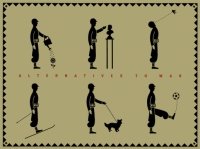
Many companies put out great, and limited, posters-as-art as well. I particularly like Scorsone/Drueding, whose poster "Alternatives to War" you see above.

Ethnic Cleanser is especially good, and a little uncomfortable.